
Werecat beliefs do not form a single unified origin story but a family of locally specific explanations. In European contexts the category was often conflated with witchcraft during witch-trial eras (shapeshifters identified socially and legally as witches). African variants (werelion, wereleopard, werepanther) may be described as manifestations, offspring, or masquerades of leopard or lion deities and can be linked to royal lineage or divine agency. In South and Southeast Asia and China, weretiger accounts are variously attributed to sorcery (e.g., oil made by sorcerers in Thailand that produces a Suea Saming), hereditary curse, or vindictive ghosts; Chinese narratives also describe 'Chang' (伥) — ghosts of people killed by tigers — who drive tigers to kill and can result in man-eating weretigers.
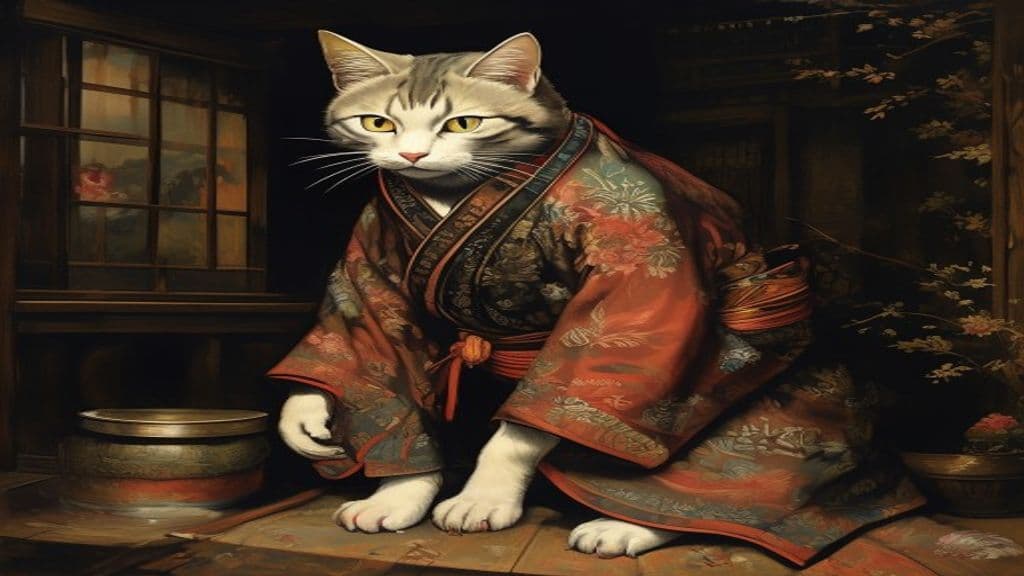
Reported forms vary by region. European tales commonly describe people who become domestic cats or occasionally very large cat-like domestic forms. African accounts emphasize big cats — lions, leopards, or panthers — sometimes indistinguishable from ordinary large felids and in some reports exceptionally large (e.g., Nunda/Mngwa phenomena). South and Southeast Asian and Chinese traditions center on tigers: humans who become tigers or tigers that are also people (weretigers); Japanese material mentions bakeneko as shapeshifting felines with humanlike behaviors. Modern fictional depictions expand visual variety but are separate from traditional descriptions.
Core behaviours recorded across traditions are transformation between human and feline forms and predation on humans or livestock. European material often associates transformation with witchcraft rather than additional supernatural powers. African variants link feline transformation to political and sacred power. In Indian and Southeast Asian contexts weretigers are often portrayed as dangerous sorcerers or man-eaters; Thai Suea Saming can be created by topical 'Saming oil' applied by sorcerers and are reported to stalk and kill people. Chinese traditions describe hereditary weretigers or those caused by vengeful ghosts (Chang) that compel tigers to kill more humans. Sources in the corpus note localized attributions of sorcery, curse, ancestral/divine origin, or ghostly agency rather than uniform capabilities beyond shapeshifting and predation.
Weaknesses
- conditionThai-Specific — reversion-interruption before human-eating
Wards
- ritualThai Suea Saming countermeasure (shoulder pole hit or covering footprints with coconut shells)
Black Dog (folklore)
A class of supernatural canine apparition in British vernacular folklore, often associated with liminal places and regarded as an omen-bearing or guardian hound. Local named forms (Black Shuck, Barghest, Gurt Dog, Gallytrot) show a range from malign, death-portending hellhounds to benevolent guide-figures.
Black cat
A domestic cat with black fur that functions both as an ordinary companion animal and as a versatile folkloric symbol. In many traditions it is an omen of good or bad fortune, is associated with witches and seafaring luck, and has been repurposed in modern political and cultural symbolism.
Changeling
A changeling is a human-like substitute left by nonhuman beings (fairies, trolls, demons, etc.) after they abduct a human—most often an infant. Found throughout much of European folklore, the changeling functions as an uncanny domestic replacement whose presence explains sickness, developmental difference, or sudden loss.
Devil
A cross-cultural mythic personification of evil and hostile forces, used in religious, literary, and popular contexts to explain temptation, moral corruption, disease, death, and misfortune. Its exact cosmological status varies by tradition, ranging from an independent principle of evil to a created being that became evil or a symbolic embodiment of human wickedness.
Fairies
Fairies are a category of anthropomorphic spirit-beings from European folklore, described as possessing magical or preternatural qualities and appearing across a range of traditional stories and modern cultural expressions. The motif spans cautionary folk beliefs (often concerning protection from their spite) and contemporary festival, musical, and literary uses.
Fox spirit
A widespread class of mythical beings associated with foxes (often represented by red-fox imagery in many traditions) characterized by cunning, shapeshifting, trickery, and ambiguous moral roles; prominently attested in East Asian folklore and present in modern literature and media as romantic, vengeful, or matchmaking figures.
Imp
An imp is a small supernatural being in European folklore, typically characterized as a mischievous, lesser spirit or attendant rather than a major deity. Traditionally associated with pranks and household or local disturbance, the concept shifted over time toward associations with familiars and infernal attendants in Christianized contexts.
King in the Mountain
A widespread folklore motif of a ruler or hero who lies hidden or sleeping inside a mountain and is expected to return in a future time of need. Treated by folklorists as a comparative motif or tale type (e.g., the 'Kyffhäuser type') rather than a single named supernatural being.
Rhinemaidens
Three water sprite sisters from Germanic mythology, known for their enchanting singing and association with the Rhine river. (Note: 1. Power tier should be Primordial, as they are associated with a major river and not specified to have regional or local power. 2. Appearance: "No physical description is provided in sources" should )
Shape-shifters
A cross-cultural motif and capability in mythology, folklore, and speculative fiction describing beings or persons who can physically transform themselves through unnatural means. Appears across ancient ritual contexts, foundational epics, and modern popular culture rather than as a single unified species or entity.
Werewolf
A figure of European folklore of a human who can change into a wolf or wolf–human hybrid, variously portrayed as voluntary shapeshifter, cursed afflicted person, or clinical delusion (lycanthropy). Belief in werewolves was entwined with medieval and early modern witchcraft accusations and persisted into Gothic and popular fiction.
Wepset
Wepset (wps.t, "she who burns") is an ancient Egyptian goddess who personifies the royal uraeus cobra and functions as one of the Eyes of Ra. She appears in funerary literature (the Coffin Texts) as "the Eye" and in New Kingdom texts is said to destroy the enemies of Osiris; in the Greek and Roman periods she is also depicted in anthropomorphic composite forms.
Community Record
- [1]Werecat — Wikipedia. Wikipedia, 'Werecat' (summary of regional traditions, etymology, and Thai Suea Saming material)wiki
- [2]Wikidata entry — werecat. Wikidata item Q2093615 (database record noting the concept of werecat)other
- [3]Archive: Toralei Stripe Dress Up (character described as daughter of a Werecat). Archive.org character description referencing modern fictional usageliterary
- [4]Ghostbusters Wiki — Werecat Ghost. Fan-wiki page documenting a fictional werecat ghost (modern fictional portrayal, not primary folklore)literary