
In Maya cosmological contexts Kʼawiil functions as a lightning deity involved in creation: lightning deities are implicated in myths that fashion the earth from primordial waters and release life. Sources link Kʼawiil (classic glyphic name read kʼawiil) to cosmogenic lightning figures (the broader 'Heart of the Sky' lightning deities in regional mythic traditions), and later Yucatec sources infer a role under the name Bolon Dzacab in New Year ritual contexts. The scholarship treats these associations as part of a network of lightning/creation figures rather than asserting a single uniform origin narrative.
Iconographically Kʼawiil is identified by a zoomorphic head with large eyes, a long upturned snout, and a distinctive attenuated serpent foot in place of one leg. A forehead device—rendered as a torch, stone celt, or cigar—projects from his brow and symbolizes the spark of life. In ritual and codical imagery Kʼawiil's head can appear as a held emblem (axe or scepter‑like object) and an infant form (unen k'awiil) is depicted being held by rulers and nobles. Ceramic scenes also show complex composite imagery, including an instance where an aged figure emerges from the serpent foot.
Kʼawiil personifies lightning and raw divine power and is implicated in both creative and potentially destructive processes. Textual and iconographic evidence connects him to making maize and cacao seeds available to humans (for example, lightning/rain gods opening a sacred mountain where seeds were kept) and to legitimizing political authority—kings display or present Kʼawiil imagery (including presentation of his head) in accession and period‑ending (k'atun) ceremonies. The serpent‑foot motif in imagery suggests a generative capacity (another being emerging), though sources treat the precise meaning of those scenes as uncertain or ritualistic rather than narratively fixed.
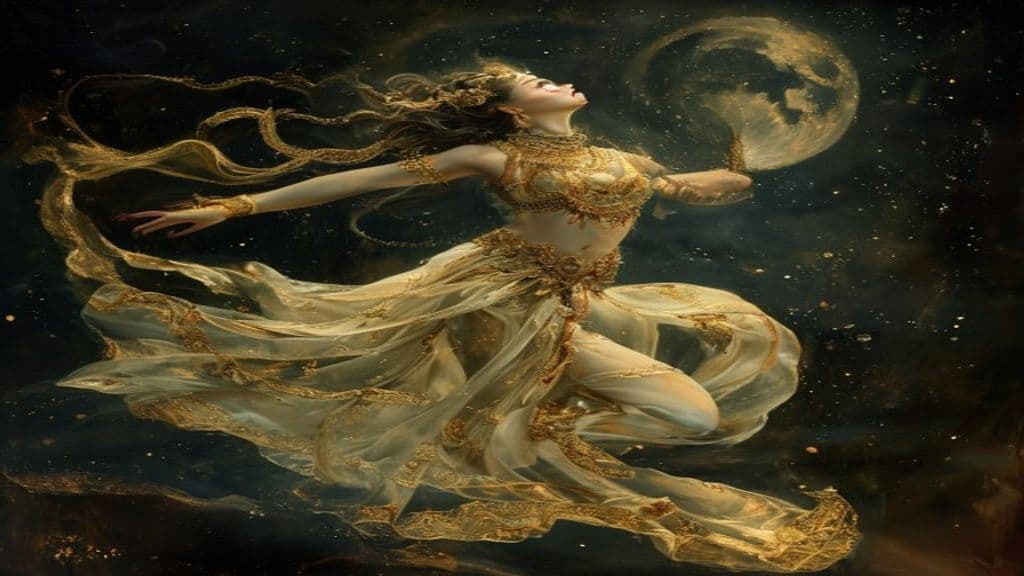
Apsara
Celestial dancers and water nymphs of Hindu cosmology — beautiful semi-divine beings who dance at the court of Indra and, by his command, descend to earth to distract sages from excessive asceticism.
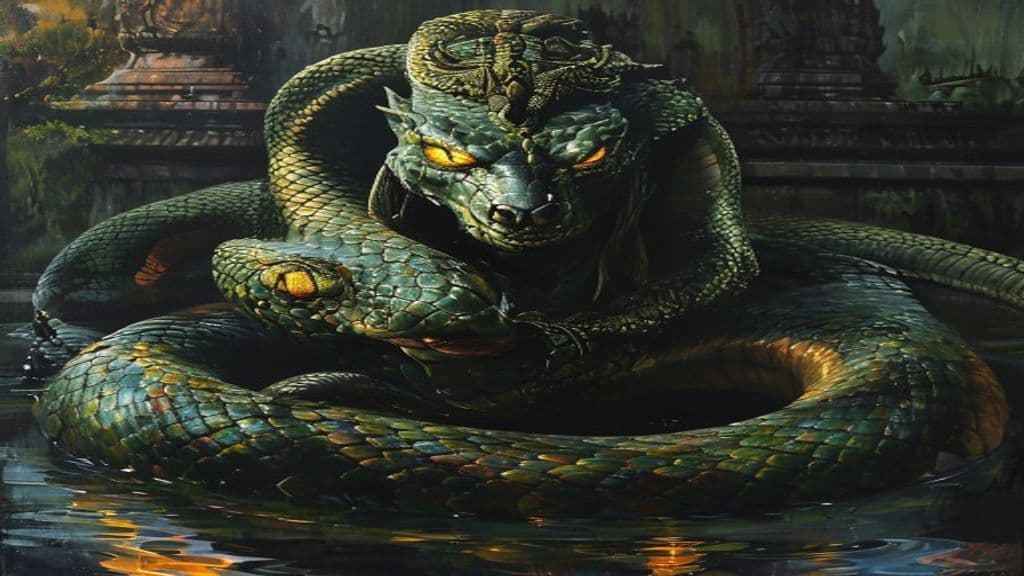
Naga
Divine serpent beings of Hindu, Buddhist, and Jain cosmology — powerful guardians of water, earth, and underground treasures. Revered as deities in South and Southeast Asia.
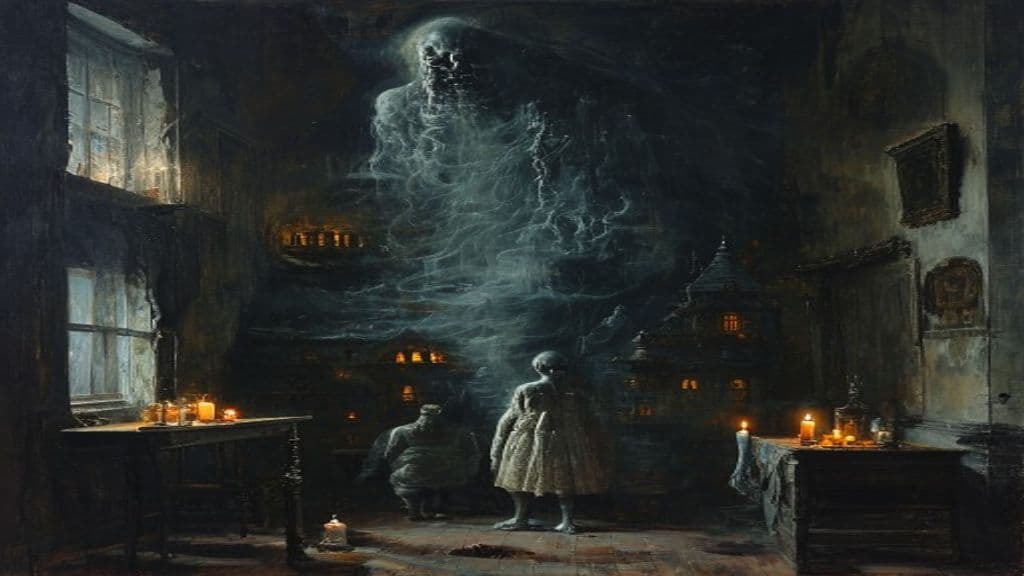
Mahapreta
The 'great ghost' — in Bihar and UP folk classification, a Mahapreta is a preta of exceptional power, born from a death involving multiple injustices simultaneously: wrongful killing, incomplete rites, and unresolved family debt combined. It commands lesser spirits and can cause harm across an entire lineage.
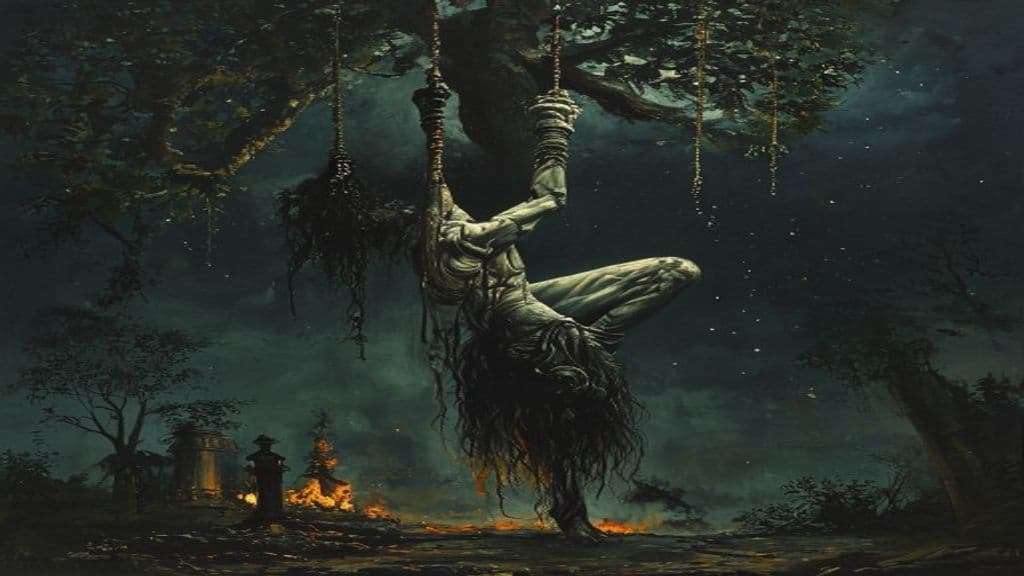
Vetala
A spirit that inhabits and reanimates corpses, possessing supernatural knowledge and the power to prophesy. One of the most feared beings in Shaiva tradition.

Preta (Hungry Ghost)
A post-mortem supernatural being associated with extreme, unremitting hunger and thirst. In Hindu usage the Sanskrit term can mean a deceased person, while Buddhist traditions develop the category into a distinct realm of hungry spirits whose condition illustrates karmic consequences for demeritorious action.
Chaac
Chaac is the Maya god of rain, thunder, and lightning, a central agricultural deity who produces storms by striking clouds with a lightning axe. He appears as both a singular figure and as multiple directional Chaacs, is associated with subterranean waters (cenotes and caves), and is the focus of communal rain-request rituals and specialist rainmaker practices.
Goddess I (Taube designation)
Goddess I is an important Maya deity, chiefly attested in the Dresden Codex and in Classic‑period imagery. She is represented as a youthful woman who presides over feminine vital functions—eroticism, human procreation, and marriage—with an aged aspect associated with weaving.
Kukulkan
Kukulkan is the Maya Feathered Serpent deity — a plumed serpent figure functioning as a divine animal, a mediator in Classic royal ritual (the Vision Serpent), and a territorial/political divinity in Postclassic Yucatán (notably Chichén Itzá and Mayapán). The cult circulated across the Maya area and appears in archaeological, iconographic, and folkloric sources.
Kārūba / Karubah (no attested folkloric entity in provided sources)
The provided source set contains no evidence that a supernatural being called Kārūba or Karubah exists in Coptic tradition. References returned under similar spellings instead point to a modern board game (Karuba), place names, and unrelated items; no folkloric, hagiographic, or ethnographic materials about household protective spirits or angels by this name were found in the supplied materials.
Kātouzian
In Zoroastrianism, Kātouzian refer to a specific class of priests who served during the reign of King Jamshid. (Note: 1. The article states "In Zoroastrianism" but then refers to a specific historical event (the reign of King Jamshid), suggesting that this is not a general article about Zoroastrian practices. 2. Powe)
Kātyāyanī
Kātyāyanī is a martial aspect of the Hindu Great Goddess (Mahādevī/Durga), venerated as the sixth form of the Navadurgā and celebrated for slaying the asura Mahīśa. She is ritually worshipped on the sixth day of Navarātri and is associated with divine power and protective force.
Kōtuku
Kōtuku is the Māori name for the white heron (the eastern great egret, Ardea alba modesta) in New Zealand. The provided sources identify the term as the local name for this bird species but do not document mythological narratives or supernatural attributes in the cited material.
Kʼakʼ Tiliw Chan Yopaat
Kʼakʼ Tiliw Chan Yopaat was the ajaw (ruler) of the ancient Maya city-state Quiriguá who reigned in the 8th century AD. He is documented as having declared Quiriguá's independence from Copán, receiving the K'awiil sceptre at accession (734 AD), defeating Copán and capturing its ruler in 738 AD, and presiding over a prolific period of monumental sculpture at Quiriguá.
Kʼinich Ahau
Kʼinich Ahau is the Classic and post‑Classic Maya sun deity — a personified solar force associated with the day, calendrical patronage, rulership/apotheosis, and a set of iconographic types (monumental stucco masks, codex imagery of 'God G', and aquatic/eastern sunrise scenes). He appears in epigraphic, colonial, and modern Lacandon traditions with overlapping cosmological roles rather than a single fixed persona.
Kʼinich Yax Kʼukʼ Moʼ
Kʼinich Yax Kʼukʼ Moʼ is the historically attested dynastic founder and first ruling kʼul ajaw of the Classic-period Maya polity centered at Copán (ruled 426–c.437 CE). He functions in the Copán inscriptional and monumental program as the sacred legitimizing ancestor of the dynasty; archaeological remains attributed to him were recovered from the Hunal tomb in Temple 16.
Kʼinich Yoʼnal Ahk I
Kʼinich Yoʼnal Ahk I was a historical ajaw (king) of the Classic Maya polity Piedras Negras who reigned from 603–639 CE. Monumental inscriptions and stelae portray him with royal solar titulary and record military victories, ritualized destruction of prior monuments, and his association with a mortuary pyramid identified as his burial (muk).
Kṣitigarbha
Kṣitigarbha (Sanskrit: क्षितिगर्भ; Chinese 地藏 Dìzàng; Japanese 地蔵 Jizō) is a Mahāyāna bodhisattva primarily venerated in East Asian Buddhism, known for a great vow to instruct and liberate beings in the six realms after the historical Buddha's parinirvāṇa and to postpone his own Buddhahood until all hells are emptied. He is central to funerary and memorial practice in East Asian temples and, in some regional adaptations, a guardian of children and deceased or aborted fetuses.
Community Record
- [1]Kʼawiil (Wikipedia). Wikipedia contributors, 'Kʼawiil,' Wikipedia, The Free Encyclopediawiki
- [2]K'awiil (Wikidata). Wikidata entry Q5575902other