
Epigraphic and monumental programs at Copán identify Kʼinich Yax Kʼukʼ Moʼ as the founding kʼul ajaw of the Copán dynasty, installed in 426 CE and memorialized as the first position on dynasty lists such as Altar Q. Later Copán rulers retrojected prestigious foreign connections onto him (notably Teotihuacano visual motifs) as part of a legitimizing strategy. Bioarchaeological strontium isotope analysis of the individual interred in the Hunal tomb indicates formative years near Tikal in the Petén Basin, complicating a simple Teotihuacan-origin narrative and showing the historical-ideological character of later origin claims.
On Copán monuments Kʼinich Yax Kʼukʼ Moʼ is commonly depicted with regalia that includes a prominent 'goggle-eyed' headdress motif — an element visually comparable to highland/northern-central Mexican rain-deity iconography cited in scholarship. The Hunal tomb (Temple 16) burial assemblage attributed to him included elite grave goods such as jade and shell jewelry and a headdress-like regalia element consistent with the monumentary representations.
Sources treat Kʼinich Yax Kʼukʼ Moʼ as a historical political actor rather than a supernatural agent: he is recorded as the founder and first king of Copán (installed 426 CE, ruled until c.437 CE), a dynastic legitimizer whose image and name anchor later rulers' authority. The inscriptions attribute to the founder the installation of other regional rulers in the historical record (for example, sources report he installed a ruler at Quiriguá in the retrospective narrative). Osteological evidence for healed fractures in the skeleton attributed to him has been interpreted as indicating participation in elite activities (surmised ballcourt injuries), but this is an archaeological inference rather than a claim of supernatural ability.
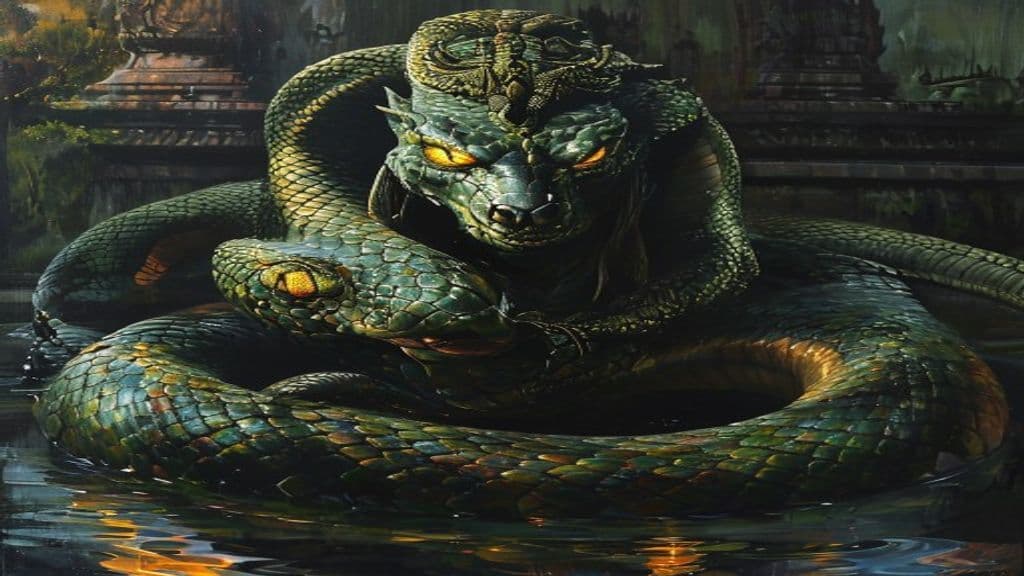
Naga
Divine serpent beings of Hindu, Buddhist, and Jain cosmology — powerful guardians of water, earth, and underground treasures. Revered as deities in South and Southeast Asia.
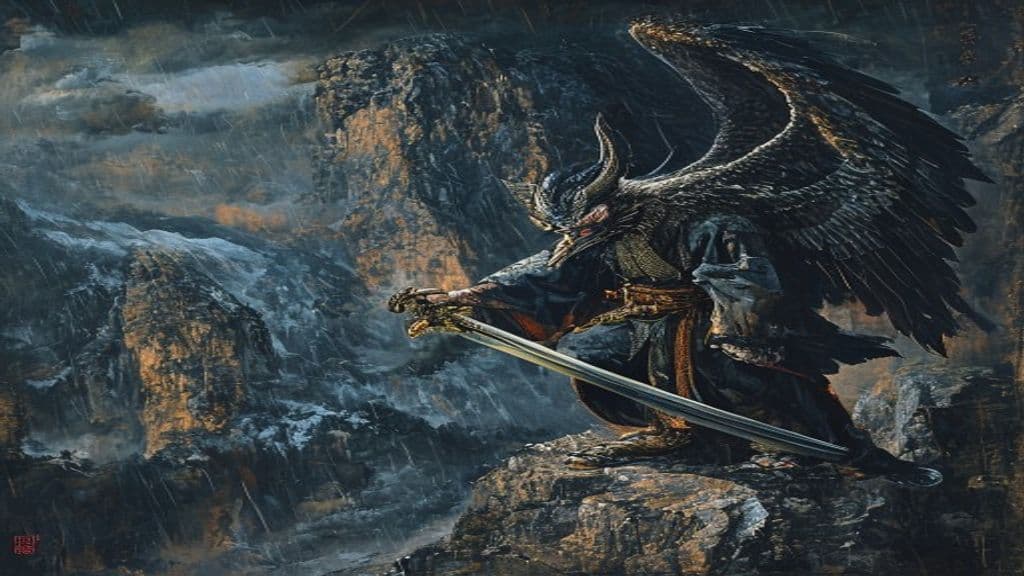
Tengu
Proud, warrior-like mountain spirits of Japan, associated with martial arts, pride, and the wild mountains. Neither fully good nor evil — they test and train warriors and monks, but punish the arrogant.
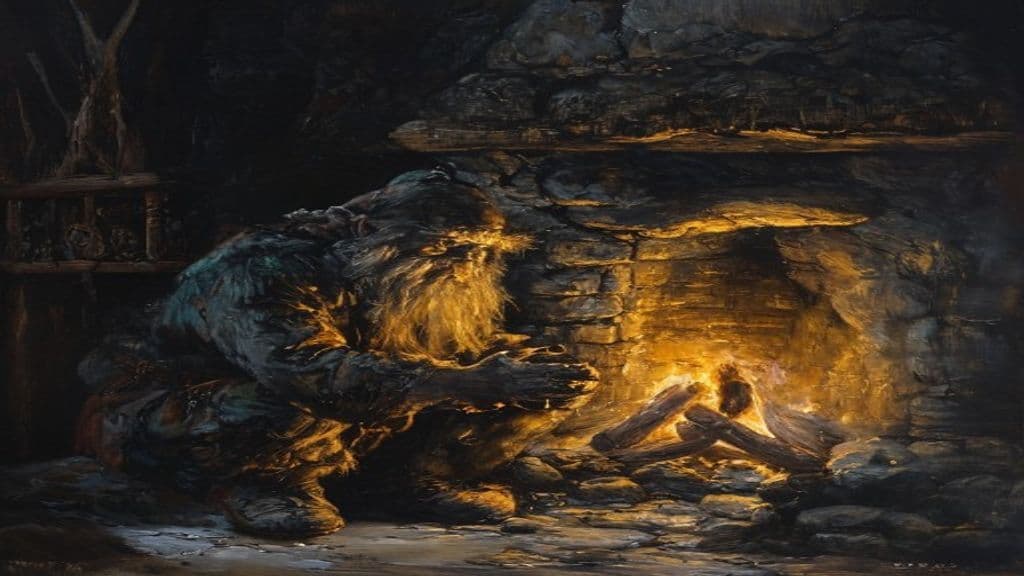
Domovoi
The house spirit of Slavic tradition — a small, invisible guardian of the home bound to a specific dwelling and its family. Protective when respected; dangerous when insulted or forgotten.
Kātouzian
In Zoroastrianism, Kātouzian refer to a specific class of priests who served during the reign of King Jamshid. (Note: 1. The article states "In Zoroastrianism" but then refers to a specific historical event (the reign of King Jamshid), suggesting that this is not a general article about Zoroastrian practices. 2. Powe)
Kātyāyanī
Kātyāyanī is a martial aspect of the Hindu Great Goddess (Mahādevī/Durga), venerated as the sixth form of the Navadurgā and celebrated for slaying the asura Mahīśa. She is ritually worshipped on the sixth day of Navarātri and is associated with divine power and protective force.
Kōtuku
Kōtuku is the Māori name for the white heron (the eastern great egret, Ardea alba modesta) in New Zealand. The provided sources identify the term as the local name for this bird species but do not document mythological narratives or supernatural attributes in the cited material.
Kʼakʼ Tiliw Chan Yopaat
Kʼakʼ Tiliw Chan Yopaat was the ajaw (ruler) of the ancient Maya city-state Quiriguá who reigned in the 8th century AD. He is documented as having declared Quiriguá's independence from Copán, receiving the K'awiil sceptre at accession (734 AD), defeating Copán and capturing its ruler in 738 AD, and presiding over a prolific period of monumental sculpture at Quiriguá.
Kʼawiil
Kʼawiil is a named Maya deity personifying lightning, generative power, and political/ancestral potency. He appears in Classic and Post‑Classic iconography and codices connected with cosmogony, the release of maize and cacao seeds, and the legitimization of rulers.
Kʼinich Ahau
Kʼinich Ahau is the Classic and post‑Classic Maya sun deity — a personified solar force associated with the day, calendrical patronage, rulership/apotheosis, and a set of iconographic types (monumental stucco masks, codex imagery of 'God G', and aquatic/eastern sunrise scenes). He appears in epigraphic, colonial, and modern Lacandon traditions with overlapping cosmological roles rather than a single fixed persona.
Kʼinich Yoʼnal Ahk I
Kʼinich Yoʼnal Ahk I was a historical ajaw (king) of the Classic Maya polity Piedras Negras who reigned from 603–639 CE. Monumental inscriptions and stelae portray him with royal solar titulary and record military victories, ritualized destruction of prior monuments, and his association with a mortuary pyramid identified as his burial (muk).
Kṣitigarbha
Kṣitigarbha (Sanskrit: क्षितिगर्भ; Chinese 地藏 Dìzàng; Japanese 地蔵 Jizō) is a Mahāyāna bodhisattva primarily venerated in East Asian Buddhism, known for a great vow to instruct and liberate beings in the six realms after the historical Buddha's parinirvāṇa and to postpone his own Buddhahood until all hells are emptied. He is central to funerary and memorial practice in East Asian temples and, in some regional adaptations, a guardian of children and deceased or aborted fetuses.
LGBTQ Themes in Hindu Mythology
Hindu mythology represents a diverse range of entities and themes that challenge traditional binary notions of sex and gender, reflecting the tradition's emphasis on diversity, inclusivity, and acceptance. (Note: - Power tier: Primordial is likely an overestimation; given that the sources describe LGBTQ themes as "not a distinct category" but rather a spectrum within Hindu mythology, it's unclear if these enti)
La Cegua
La Cegua is a Central American folkloric shapeshifting female apparition, commonly told in Nicaraguan and wider Mesoamerican oral traditions. She appears as an attractive woman from behind to lure certain men (notably drunk men and womanizers) along lonely roads at night, then reveals a horrifying true face—often described as a horse head or a skull—preceding harm or dire consequences. The figure functions primarily as a moral cautionary tale enforcing social norms around intoxication and sexual conduct.
La Chasse-galerie (The Flying Canoe)
A French-Canadian folktale about a bewitched or enchanted bark canoe that flies through the night after men make a pact with a malign supernatural agent (often identified as the Devil). The story functions as a Wild Hunt–type narrative fused with Indigenous legends of a flying canoe and serves as a moral test about taboos, sobriety, and bargaining with otherworldly powers.
La Condená
A sparsely documented feminine-named restless spirit attested in a small set of tertiary sources. The only clear descriptive line in the supplied corpus calls her a "ghost doomed to walk the earth in penance for carnal sins." Other claims about regional rooting or attributes come from a single unverified fandom entry and are not corroborated in the provided materials.
Community Record
- [1]Kʼinich Yax Kʼukʼ Moʼ — Wikipedia. Wikipedia contributors. "Kʼinich Yax Kʼukʼ Moʼ". Wikipedia, The Free Encyclopedia.wiki
- [2]Copan — World Archaeology (feature). World Archaeology. "Copan" (feature summarizing Copán and its founding by Kʼinich Yax Kʼukʼ Moʼ).other
- [3]Dynasty Founder Yax K’uk’ Mo’ According to the Inscriptions — Expedition Magazine (Penn Museum). Expedition Magazine, Penn Museum. "Dynasty Founder Yax K’uk’ Mo’ According to the Inscriptions."academic
- [4]Copán's Dynastic History: Altar Q — Expedition Magazine (Penn Museum). Expedition Magazine, Penn Museum. "Copán's Dynastic History: Altar Q."academic