
Within the Ramayana tradition and related retellings, Nila is described as a son of Agni, the Vedic god of fire, giving him a semi‑divine genealogy. Accounts of his extraordinary ability to make stones float while helping construct the Rama Setu vary across texts: the Valmiki Ramayana credits Nala alone as builder, while the Ramacharitamanasa and other traditions credit both Nala and Nila; variant etiologies explain the floating‑stone power either as Varuna's assurance that both brothers could make stones float (sometimes with a proviso) or as a sage's decree enacted after Nala and Nila threw sacred images into water as children. These variants are presented across Ramayana recensions rather than as a single unified mechanism.
Sources identify Nila as a vanara — a simian/monkeylike warrior people — and describe him performing distinctive martial actions rather than providing extended physiognomic detail. Narrative episodes attest that he hurls great rocks and boulders in battle, once seizes the chariot wheel of the rakshasa Nikumbha and kills him with it, mounts enemy chariots (including an episode of jumping onto Ravana's chariot), and at times is depicted engaging in direct assaults on rakshasas alongside other vanara leaders such as Hanuman and Angada.
Nila is portrayed as a foremost vanara in effulgence, reputation, and prowess and functions as commander‑in‑chief of Sugriva's vanara army. He is credited with significant battlefield feats: killing rakshasas including Nikumbha (killed by a chariot wheel hurled by Nila), Mahodara (killed by a rock), Prahasta (struck down after withstanding arrows), and Pramathi in some sources; he fights on the front lines in the Yuddha Kanda and is at times described as directly assaulting Ravana's chariot. In bridge traditions he (sometimes together with his brother Nala) is said to possess the ability to make stones float and so contribute to the construction of Rama Setu; textual traditions differ on whether this power is Nala's alone or shared, and on whether it is explained by a sage's decree or by Varuna's assurance with conditions. Later Jain retellings record Nila as taking diksha and attaining moksha at Mangi‑Tungi, showing his adaptation into different religious frameworks.
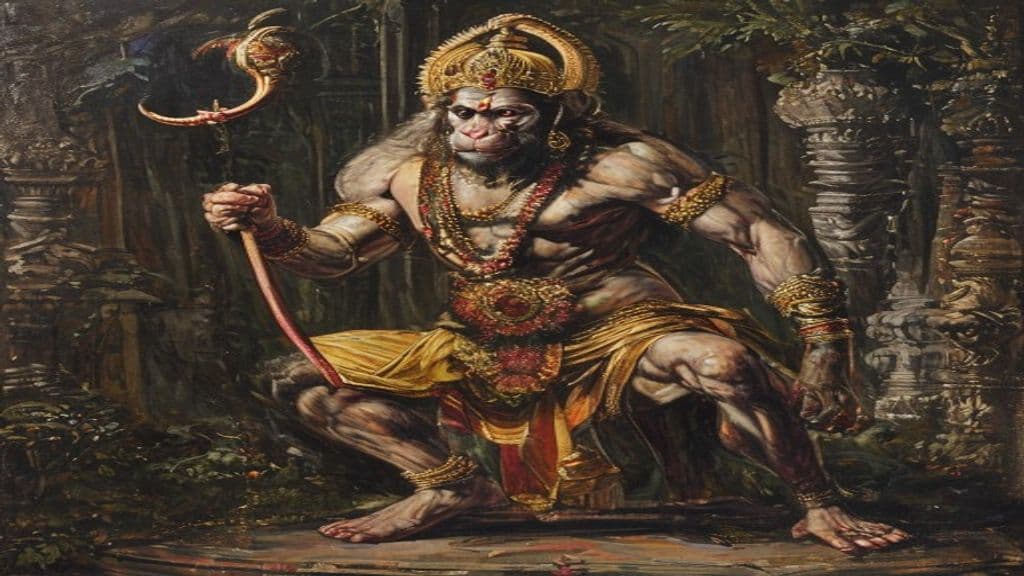
Hanuman
Hanuman is a divine vanara (monkey‑like being) in Hindu literature, foremost companion and devoted servant (Rama-dūta) of Lord Rama in the Ramayana. Revered in later Bhakti traditions, he is worshipped as a protector and exemplar of devotion, strength, and service.
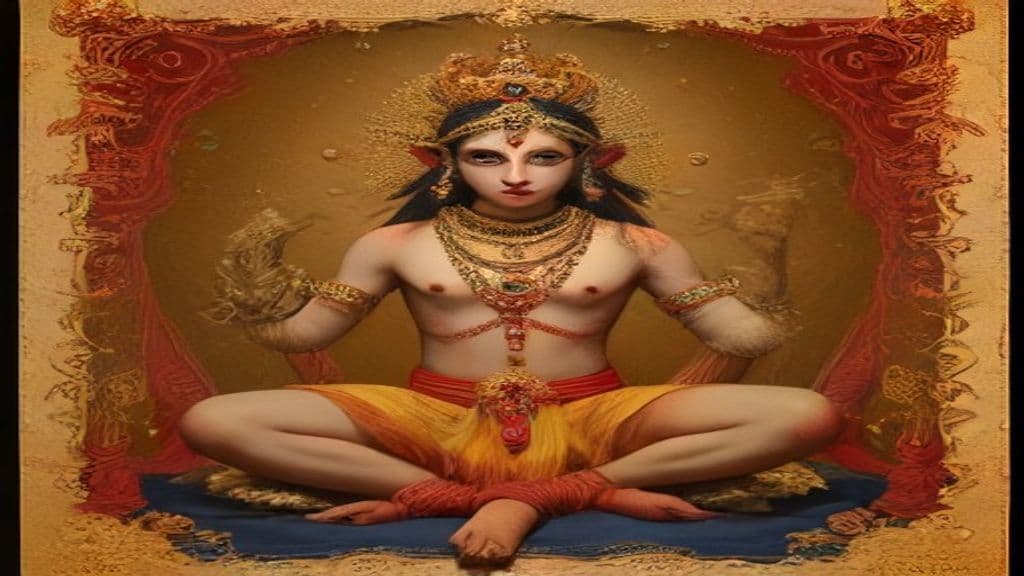
Angada
Angada (Sanskrit: Aṅgada) is a legendary vanara prince in the Rāmāyaṇa tradition who serves as a warrior, envoy, and later king of Kiśkindhā. He is presented as the son of Vāli and Tārā, nephew and lieutenant of Sugrīva, a commander in the expedition to Laṅkā, and a dramatic figure in later literary and performative adaptations.

Prahasta
Prahasta (Sanskrit: प्रहस्त, IAST: prahasta, lit. "he who has extended hands") is a powerful rakshasa warrior in the Ramayana tradition, presented there as Ravana's chief commander who leads Lanka's armies in campaigns against gods, asuras, and the invading forces of Rama. Variants across traditions differ on his precise kinship to Ravana and on ethical portrayal, with some later retellings depicting him as a virtuous figure who counsels restraint.
Añjanā
Añjanā (Sanskrit: अञ्जना; also Anjani, Anjali) is a semi-divine figure of the Ramayana cycle, described as an apsara reborn among the vanaras and the mother of the hero Hanuman. She figures both in pan-Indian epic narratives (as wife of Kesari and devotee of Vayu) and in regional cultic practice (notably a temple tradition in Himachal Pradesh) and is adapted in Javanese wayang as Dewi Anjani.
Kusha
Kusha (Sanskrit: कुश, IAST: Kuśa) is the elder of the twin sons of Rama and Sita in the Hindu epic the Ramayana. Presented in canonical Uttara Kāṇḍa material as a human prince raised at Valmiki's ashram, he functions as an heir and founder-king who preserves dynastic continuity and helps transmit the Ramayana as a cultural text; a small number of later or regional variants give alternate birth legends or expanded territorial claims.
Kuśadhvaja
Kuśadhvaja is a human royal figure in the Ramayana tradition, described as the younger brother of King Janaka of Mithila, husband of Chandrabhaga, and father of Mandavi and Shrutakirti. He is named as King of Samkasya after Janaka defeats Sudhanvan and appears in the narrative context of the Sita–Rama marriage.
Lakshmana
Lakshmana is the younger half-brother and devoted attendant of Rama in the Ramayana tradition. Portrayed as an ideal companion and protector during Rama’s fourteen-year exile and the war with Ravana, the Puranas also describe him as an incarnation (avatara) of the serpent Shesha, linking him to the divine order surrounding Vishnu.
Night raven
A class of nocturnal raven-shaped folkloric presences from central and northern Europe variously described as giant raven-like birds, skeletal flying revenants, or revenant souls manifesting in bird form; associated with death, unquiet burials, and used in cautionary tales about children at night.
Nightmarchers (Huakaʻi Pō)
In Hawaiian tradition, Nightmarchers (Huakaʻi Pō) are described as the deadly ghosts or spirit ranks (ʻoiʻo) of ancient tribal Hawaiian warriors. They are portrayed as an organized nocturnal procession that acts as the vanguard for a sacred king, chief, or chiefess.
Nikabrik
Nikabrik is a fictional Narnian dwarf known as the 'Black Dwarf' who appears in the film adaptation of The Chronicles of Narnia: Prince Caspian. Portrayed on screen by Warwick Davis in the film's behind-the-scenes material, he is one of the non-human Narnians who allies with Prince Caspian and the returning Pevensie monarchs in the quest to find Aslan and restore Narnia.
Nike
Nike (Greek: Νίκη, Nikē) is the personification of victory in ancient Greek tradition, represented in art and cult contexts as a winged female figure associated with triumph in military, athletic, and civic spheres.
Nilus
Nilus (Greek: Νεῖλος, Latin: Nilus) is the Greek personification of the Nile River attested in classical genealogies as a son of Oceanus and Tethys and historically referenced as a river-deity who received cultic honors in Egypt, notably at Niopolis. The name also functions separately as a Christian personal name borne by several saints and clerics; those human bearers are distinct from the river-personification.
Nimi (King)
In Hindu mythology, Nimi is a king and ancestor of the Janaka lineage of Mithila. He serves as an early ruler of the Videha kingdom and is connected to the Suryavamsha dynasty. (Note: - Power tier should be Primordial (cosmic) given that he's considered an ancestor of the Suryavamsha dynasty and connected to Manu (a primeval deity in Hindu mythology). - Summary needs minor adjustme)
Nimintabba
Nimintabba is a Sumerian local goddess attested at the city of Ur, known primarily from a temple founded by king Shulgi circa 2100 BCE and from associated foundation deposits and a dedicatory inscription.
Nimrod
Biblical figure and human king who defied God's authority, described as 'mighty' and rebellious. (Note: - Power tier should be Primordial, not Ancient, as it is unclear if he had supernatural or deity-level abilities. - Weaknesses should include 'hubris' or 'arrogance', which contributed to his downfall)
Community Record
- [1]Nila (Ramayana) - Wikipedia. Wikipedia, entry 'Nila (Ramayana)'wiki
- [2]Valmiki Ramayana - Yuddha Kanda - Sarga 58 (prose). Valmiki, Yuddha Kanda, Sarga 58 (prose translation available online)literary
- [3]Valmiki Ramayana - Yuddha Kanda - Sarga 58 (sanskrit/notes). Valmiki, Yuddha Kanda, Sarga 58 (sanskrit and commentary available online)literary
- [4]Sri Sundara Kanda is nothing but Kundalini yoga : Seshendra Sharma (archive). Seshendra Sharma, 'Sri Sundara Kanda is nothing but Kundalini yoga' (archived text)other
- [5]Who are Nala and Nila in Ramayan? (Hinduism StackExchange discussion). Community discussion summarizing variant traditions about Nala and Nilaother