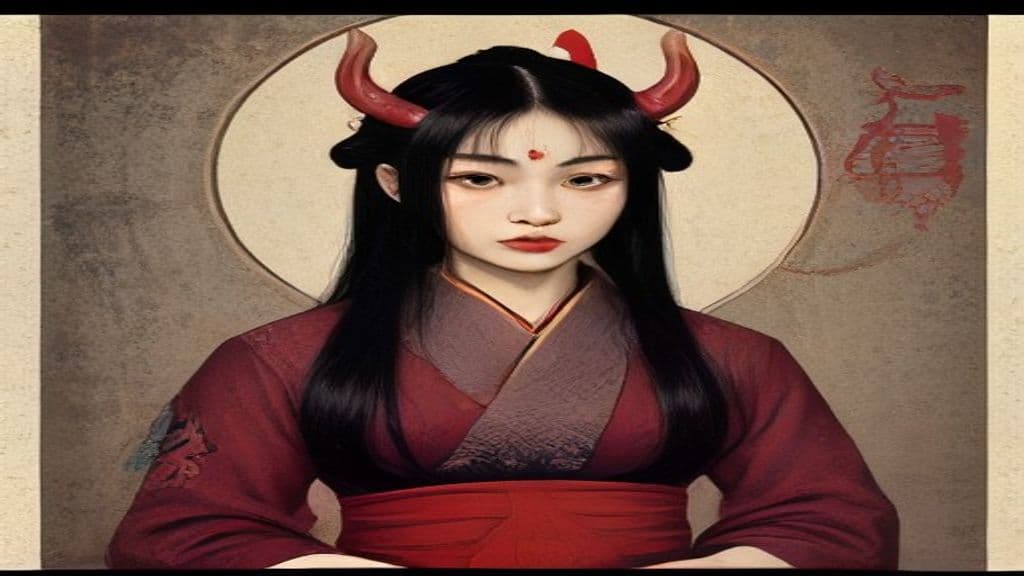
Onihitokuchi is not a single originating mythic biography but a recurring narrative motif found across Heian-era setsuwa collections (such as The Tales of Ise, Nihon Ryōiki, and Konjaku Monogatarishū). In these tales an oni from the non-human realm intrudes into the human world—often at night or during liminal circumstances—and immediately consumes a person. Later commentators and illustrators (for example, Edo-period yōkai compilers) treated the motif as a recognizable example of oni activity and the compound word came to be used idiomatically to denote great danger or an act completed in one swift motion.
Source tales treat the agent as an oni, and Edo-period illustrators have depicted the motif under the title onihitokuchi, but the supplied sources do not give consistent, specific bodily details (such as color, horn number, or exact size). Descriptions in the cited setsuwa emphasize the act (a person being eaten in one mouthful) and sometimes note that the oni may appear as a human or be concealed in a place (for example, living in a cellar).
In the source material the primary characteristic is the narrative act: an oni devours a person in a single mouthful. Tales also repeatedly show deceptive interaction modes—an oni may present as a human suitor or be a hidden inhabitant of a space (a cellar) who suddenly takes and eats a person. The motif is also used figuratively to explain sudden deaths, disappearances, or catastrophic human loss, per interpretive theories recorded in later commentary.
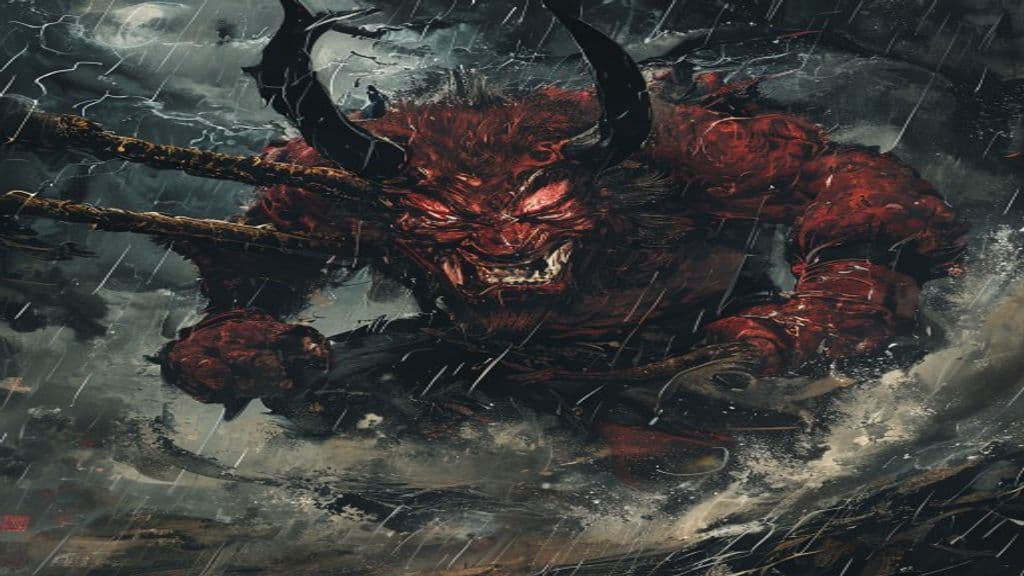
Kidōmaru
Kidōmaru (鬼童丸 / 鬼同丸) is an oni-class antagonist appearing in Kamakura-period and later Japanese setsuwa and warrior-cycle narratives. He functions as a cunning ambusher and bandit opposite Minamoto no Yorimitsu and his retainers in tales that place him in mountain caves, fields, and occasional domestic intrusions.
Olympian gods
The Olympian gods are the principal deities of the ancient Greek pantheon, traditionally numbered as twelve and conventionally said to reside on Mount Olympus. They include major figures such as Zeus, Hera, Poseidon, Demeter, Athena, Apollo, Artemis, Ares, Hephaestus, Aphrodite, Hermes, and either Hestia or Dionysus.
Onela
Onela is a semi-legendary Swedish king attested in early medieval Germanic sources (notably Beowulf and Norse saga summaries). He appears as a dynastic usurper and wartime opponent in the Scandinavian heroic-legend tradition whose actions (usurpation, killing of a rival prince, and eventual slaying in battle) structure episodes of vengeance and succession.
Onesimachus
Onesimachus (Ancient Greek: Ὀνησίμαχος) is attested in the provided source only as a personal name appearing in Greek mythic genealogical material. He is cited as an alternative father of Amarynceus in one variant; the source treats him as an ordinary mortal figure within genealogical traditions rather than a supernatural being.
Ongentheow
Ongentheow (Old English Ongenþeow / Ongenþio; Old Norse Angantýr, identified with Egil Vendelcrow in Scandinavian sources) is a semi-legendary Swedish king of the Scylfing/Yngling line attested in Old English heroic poetry and Norse/Swedish king-lists. He functions as a martial royal ancestor in Beowulf and as a figure in Ynglingatal, Ynglinga saga, Historia Norwegiae and Íslendingabók, with divergent accounts of his death.
Oni
Powerful supernatural beings of Japanese folklore — associated with misfortune, disease, and the punishment of sinners in hell. Fearsome, often depicted as guardians of the underworld.
Onibi
Onibi (鬼火, "demon fire") is a Japanese folkloric category of atmospheric ghost lights—luminous phenomena associated with corpses, resentful spirits, and liminal environments. Accounts vary widely in appearance, behavior, and danger, and the term functions as a collective label for multiple local types and stories recorded in Edo-period and later sources.
Onjo and Biryu's Baekje Creation Myth
The creation myth of Baekje revolves around the two brothers, Onjo and Biryu, who founded the dynasty. They possess human capabilities like decision-making and leadership skills. (Note: 1. Power tier: Greater (Onjo and Biryu's actions drove the founding of an entire kingdom) 2. Abilities: Add that their abilities also include diplomatic efforts and negotiations with other kingdoms 3.)
Onryō
Onryō are vengeful spirits in Japanese folklore who return after death to redress wrongs suffered in life by harming the living; they are commonly portrayed in literature and film as wronged individuals—frequently women—whose resentment manifests as lethal retribution, and in some accounts as causing wider calamities.
Opening of the Year Festival
Ancient Egyptian festival marking the beginning of the year, tied to astronomical and calendrical events, and associated with gods such as Re (Ra) and Sothis (Sopdet). The event likely represents cyclical renewal and rebirth of life. (Note: 1. Power tier should be Ancient (deity-level) given the festival's association with gods such as Re and Sothis, and its significance in establishing cosmic order. 2. Add sensory cues related to agricu)
Ophanim
Ophanim are a class of heavenly, wheel-like beings described in Ezekiel's merkabah vision and later Jewish apocalyptic literature. They are depicted as many-eyed wheels that move with and attend the divine throne, serving as perceptive, praise-offering throne-guardians rather than hostile spirits.
Opochtli
Opochtli is an Aztec deity whose name means "The Left" or "The Left-Handed." He is associated with fishing, hunting, and the technologies of lacustrine and marsh livelihoods, credited with inventing the atlatl, the fishing net, the canoe pole, and the bird snare, and is commonly depicted riding a dolphin. He is described in some sources as a representative or attendant aspect of the rain god Tlaloc and is directionally linked to the south in Aztec ritual geography.
Community Record
- [1]Onihitokuchi — Wikipedia. Wikipedia contributors. "Onihitokuchi." Wikipedia, The Free Encyclopedia. https://en.wikipedia.org/wiki/Onihitokuchiwiki