
Within the limited set of sources provided, Osangangan Obamakin is presented not through a mythic narrative but as a named predecessor in the early sequence of rulers associated with Ile‑Ife. He is listed among the forebears of Obalufon Ogbogbodirin and appears alongside figures such as Ogun in local genealogical accounts; one dynasty account (Ajilesoro) situates these early Oonis in a very remote past, phrasing them as having reigned “over 4,000 years ago” after an earlier reign, although that chronology is asserted only in that source and not corroborated elsewhere in the supplied material. The sources do not supply a fuller etiological or mythic origin for Osangangan Obamakin beyond his role in dynastic succession and ancestral legitimation.
The provided materials contain no descriptions or iconography of Osangangan Obamakin. He is referenced solely as a name in genealogical and historical listings of early Ife rulers; the sources do not record physical appearance, regalia, or portraiture for him.
The sources do not attribute supernatural powers, characteristic behaviors, or specific deeds to Osangangan Obamakin. In the excerpts given he functions as a genealogical anchor and ancestral monarch within accounts of early Ife rulership rather than as a being defined by abilities. Claims about his role derive from lineage lists that situate him prior to Obalufon Ogbogbodirin and associated early rulers such as Ogun and Oduduwa.
Weaknesses
- otherNo information in sources
Wards
- otherNo information in sources
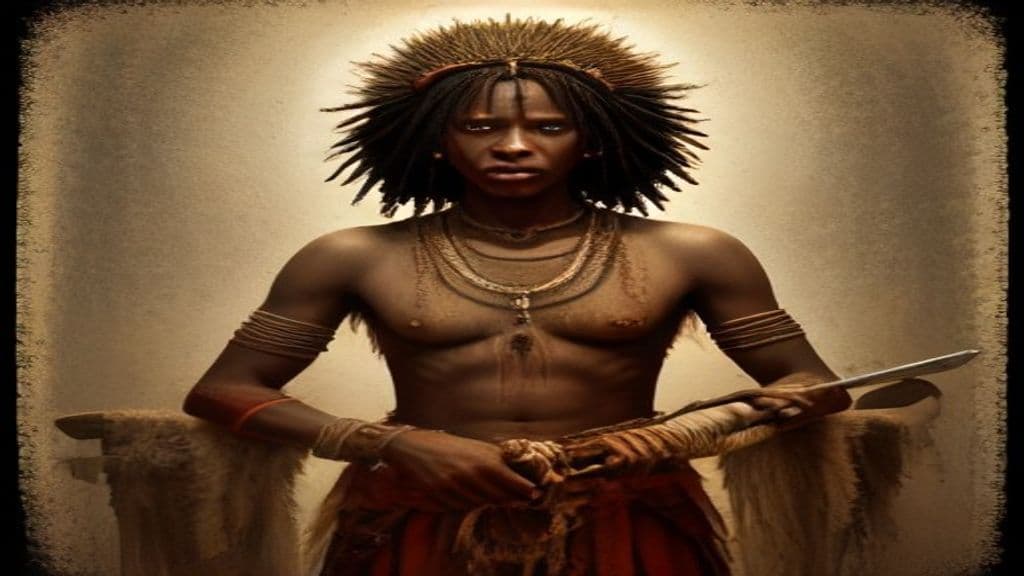
Ògún
Ògún (also Ogum, Gu, Egu) is a major West African and diaspora deity (orisha/vodun) associated with iron, metalworking, hunting, war and the crafts that use iron. In Yoruba cosmology he is described in some traditions as an Irunmọlẹ (primordial orisha) who cleared a path for other orisha and functions as patron and protector for blacksmiths, hunters, warriors, drivers and related occupations.
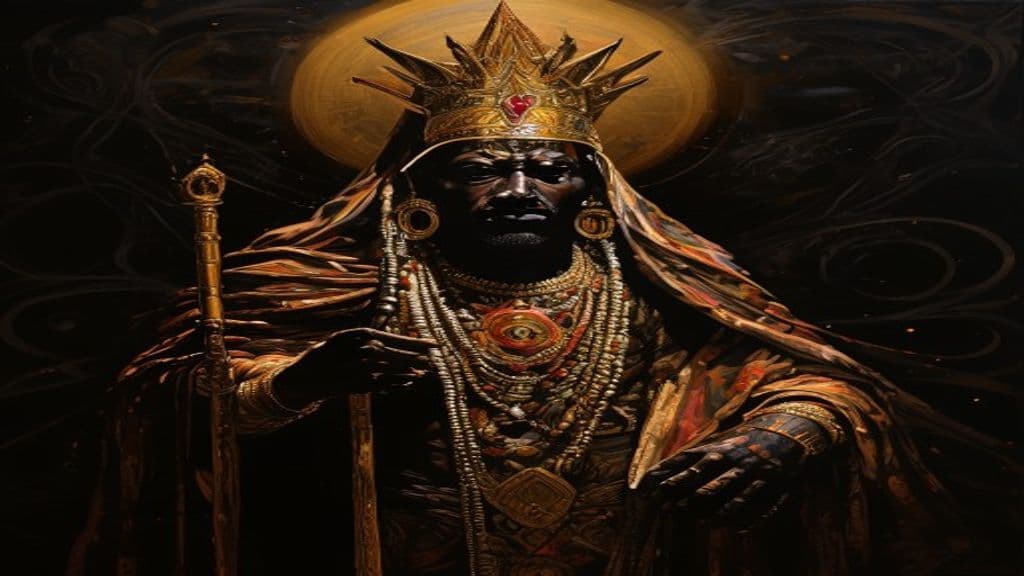
Odùduwà
Divine king and Oriṣa in the Yoruba religion, progenitor of the Ife Empire. (Note: - Power tier is uncertain; source material does not provide clear information on Odùduwà's abilities or power level. - Appearance should be included for completeness. - Abilities need to be rewritten,)

Obalufon Alayemore
Obalufon Alayemore (Ọbalùfọ̀n II, Alayemore) is a historical Ooni of Ile Ife who was deified after death and is venerated in the Yoruba religious-cultural corpus as an oríṣa and patron of art, weaving, and bronze/brass casting. He appears in royal succession lists as the third Ooni of Ife and is associated with material-culture representations such as brass heads and masks.
Orpheus
Orpheus is a legendary Thracian bard, musician, poet, and prophetic figure of ancient Greek tradition whose song charms animals, plants, and in some accounts even the powers of the underworld; he is also traditionally linked with the origin and transmission of Orphic mystery texts and rites.
Orphne
Orphne (Ancient Greek: Ὀρφνή, from ὄρφνη 'darkness') is a named nymph of the Greek underworld (Hades). She is attested as the mother of Ascalaphus by Acheron and is described in the modern summary tradition as also called Styx or Gorgyra; the available sources provide no further mythology, cultic detail, or narrative exploits.
Orseïs
Orseïs (Ancient Greek: Ὀρσηΐς) is attested in Greek mythographic tradition as a Naiad — a freshwater nymph of a spring in Thessalia — who marries Hellen and becomes ancestress of the major Greek tribal progenitors (Dorus, Xuthus, Aeolus). Her attested role is primarily genealogical and place-bound rather than narrative or cultic in the surviving sources.
Orthrus
A monstrous multi-headed hound in Greek myth who guarded the red cattle of Geryon on the far-west island of Erytheia; slain by the hero Heracles during his tenth labour. Described as an offspring of Echidna and Typhon and placed in genealogies of Greek monsters.
Osaki
A class of small, pack-moving animal-spirit (a type of yokai) in Kantō-region Japanese folk belief that attaches to families or individuals, bringing material gain (gold, rice) while imposing social stigma and sometimes producing possession-like illness. The condition can be hereditary (osaki-mochi), shaping marriage and social practice in affected communities.
Osan Kitsune
A regional fox-spirit folktale from Hiroshima Prefecture in Japan. The Osan Kitsune appears in human guise (notably as a woman carrying an infant) to deceive passersby; after entrusting the child to a helper the figure vanishes and the child is revealed to be a stone. The tale is tied to place-names and a small public statue in the Eba area of Hiroshima.
Ose
Ose appears in the supplied source corpus only as a listed entry labeled "Ose (demon)" on an English-language Wikipedia disambiguation page. No descriptive, ritual, linguistic, or cultural information about the entity is present in the available materials; the entry is therefore attested but unelaborated in the provided sources.
Oshiroibabā
A Japanese yōkai literally named "white-face-powder old woman," depicted as an elderly woman with her face thickly smeared in oshiroi (white facial powder). She appears in Edo-period yōkai imagery (Toriyama Sekien) and in localized Nara Prefecture traditions (notably a Totsukawa river account and a distinct Hase-dera temple legend).
Oshun
Oshun (Ọṣun, Ochún, Oxúm) is a major orisha and Irunmole in the Yoruba religious corpus and its diasporic traditions, associated with freshwater (rivers), love, fertility, femininity, divination, prosperity and beauty. She is honored at the Osun-Osogbo Sacred Grove and in festivals and ritual forms across Yorubaland and Afro‑Atlantic religions such as Candomblé and Regla de Ocha/Santería.
Osiris
Osiris is the major ancient Egyptian god of fertility, vegetation, death, resurrection, and the afterlife. He functions as sovereign of the realm of the dead, a guarantor of postmortem renewal and agricultural fertility, and the archetypal divine figure with whom deceased kings and mortals ritually unite to gain continuity after death.
Oswald Bastable
Oswald Bastable is a fictional human character whose name appears in two distinct literary traditions: as a child narrator in Edith Nesbit's turn-of-the-century Bastable stories (1899–1905) and as a reused, reinterpreted adult military figure in Michael Moorcock's 20th-century alternate-history/speculative fiction. Moorcock explicitly reused the name to evoke a particular Fabian liberal-imperial milieu rather than to create a direct sequel to Nesbit's tales.
Otake Dainichi Nyorai
Japanese manifestation of Vairocana, embodying wisdom and compassion. (Note: 1. Power tier should be Ancient (deity-level) rather than Primordial (cosmic). 2. Appearance should be noted as "Not specified" due to lack of source material. 3. Abilities, sensory_cues, weaknesses, )
Community Record
- [1]Obalufon Ogbogbodirin (Wikipedia). Wikipedia, Obalufon Ogbogbodirinwiki
- [2]Ajilesoro (Wikipedia) — Ajilesoro dynasty entry. Wikipedia, Ajilesorowiki
- [3]Wikidata: Yoruba monarch (Q23541181). Wikidata entry labelwiki
- [4]Heritage, Memory, and the Manifestation of Tradition: The Olufon Festival in the Historical Narrative of Yorubaland. Scholarly article discussing Olufon festival and historical narrative (provided excerpt references dynastic framing)academic
- [5]Ife people: Ancient artistic, highly spiritual and the first Yoruba people (blog excerpt). Blog post referencing Ife origins and antiquity (provided as contextual material)other
- [6]The Whistler: See How Two Powerful Yoruba Chiefs Fought. News/feature referencing local chiefly history (listed among provided sources)other
- [7]Daily Post Nigeria: Oluwo challenges BBC Yoruba over Luwo Gbagida report. News item (provided among source list)other
- [8]Class FM Online: Gas in Nigeria host exhibition, economic summit and music fiesta | Culture. Cultural news item (provided among source list)other