
Within Ukrainian lower mythology the povitrulya are presented as beings linked to the element of air and to mountain winds; sources describe them as coming from the Carpathian region and call them, in folkloric terms, 'daughters of mountain winds.' They are classed alongside other local female liminal spirits such as rusalki and mavky in a persistent layer of popular belief.
Povitrulya are described as light, able to move in the air without touching the ground, often depicted with wings and dressed in flowers from head to toe. They are mostly fair‑haired beauties but in accounts can change appearance from young to old and back. In literary reworking (V. Pachovsky) they are sometimes pictured as 'airy mermaids with wings,' a poetic hybridization rather than a strict folkloric description.
Folkloric material attributes to povitrulya an elemental affinity with wind and aerial locomotion (flight, movement through the air). Narratives record that they help lovers in love affairs and that shepherds who 'refuse them nothing' may be rewarded (keeping their sheep). Tale motifs show them gathering in groups (sisters, a mother) and forming intimate ties with humans — including marriage and bearing a child — while retaining the ability to return to aerial life by reclaiming their wings. In one tale motif the povitrulya's kin threaten violence (sisters and mother would 'tear you to shreds') if angered; this is reported as a narrative element in that story.
Weaknesses
- conditionloss or removal of wings (binding to human world)
Wards
- ritualburning the wings on a pyre
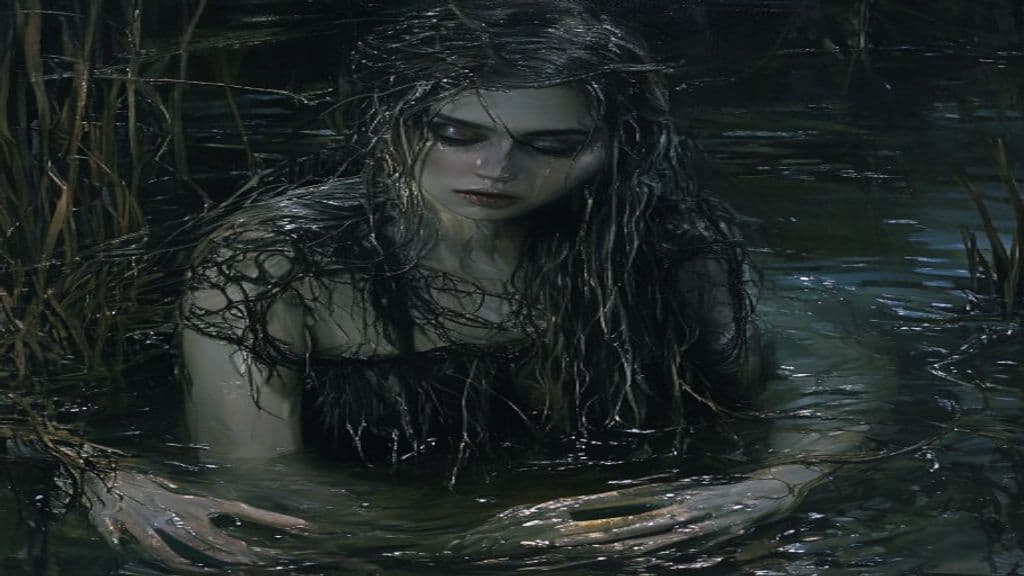
Rusalka
Water spirits in Slavic folklore — the spirits of young women who died by drowning or suicide, bound to rivers and lakes. Beautiful and dangerous, they can bewitch men to their deaths.

Mavka (Nyavka)
A female forest spirit in Ukrainian folklore, the mavka (also nyavka) represents the soul of a girl who died prematurely or unnaturally. Mavkas are ambivalent: various accounts portray them as alluring, dangerous seductresses who may lure men to death, while other local beliefs credit them with tending cattle and protecting flocks.

Swan maiden
A widespread folktale and mythic figure: a female being who changes between human form and a bird via a feathered garment (feather cloak, swan‑shirt, hagoromo). The motif appears across many cultures and is classed in folktale catalogues under ATU 400 and related 'magic wife' narratives.
Poroniec
A hostile supernatural being in Slavic folklore believed to arise from stillborn fetuses or improperly buried infant remains; considered especially dangerous because of the unrealized potential of the life lost and connected to taboos and household burial practices.
Porphyrion
Porphyrion (Ancient Greek: Πορφυρίων) is a Giant (one of the Gigantes) in ancient Greek myth who is repeatedly marked as one of the greatest of his kind and a principal combatant against the Olympian gods in the Gigantomachy. Ancient authors variously describe him as attacking gods (notably Hera and Heracles) and as being slain by divine force or a hero.
Portunes
Portunes are a group of small, nocturnal household beings attested in Gervase of Tilbury's Otia Imperialia (medieval Latin). Gervase lists them among uncanny creatures—calling them 'demons' while also allowing they 'might instead be a mysterious ghost'—and describes them as performing heavy domestic work for peasants, warming themselves at hearths, roasting small frogs from their pockets, and sometimes playing malicious pranks on travellers.
Poseidon
Poseidon is a principal deity of the ancient Greek pantheon, counted among the Twelve Olympians; he presides over the sea, storms, earthquakes and horses and functions as protector of seafarers and guardian of cities and colonies.
Pothi Amma (unattested in supplied sources)
The supplied source set does not contain a folkloric, ethnographic, or lexical attestation of a supernatural figure named 'Pothi Amma' or 'Poṟi Amman'. The available excerpts only record occurrences of the lexical element 'pothi' in Tamil song texts and commentary on rural musical repertoire; no information about a spirit or goddess by this name is present.
Poutini
Poutini is a taniwha (water spirit) in Ngāi Tahu oral tradition associated with the West Coast (Te Tai o Poutini) of New Zealand's South Island. In the cited sources Poutini is described primarily as a guardian or kaitiaki of the people and of valued resources such as pounamu (greenstone).
Power animal
A contemporary New Age / Neoshamanic category for animal-form spirit-allies adopted in modern Western shamanic-style practices and also a phrase circulating in popular culture; not a single traditional indigenous entity and lacking a unified cosmology in the provided sources.
Prahasta
Prahasta (Sanskrit: प्रहस्त, IAST: prahasta, lit. "he who has extended hands") is a powerful rakshasa warrior in the Ramayana tradition, presented there as Ravana's chief commander who leads Lanka's armies in campaigns against gods, asuras, and the invading forces of Rama. Variants across traditions differ on his precise kinship to Ravana and on ethical portrayal, with some later retellings depicting him as a virtuous figure who counsels restraint.
Prajapati
Prajapati (Sanskrit: प्रजापति) is a Vedic-Brahmana creator figure whose name means "lord of creatures." In Vedic and Brahmana texts he functions as a primordial creative principle and progenitor; in later Puranic layers the term becomes a flexible title applied to multiple creator‑figures (including Brahma and others).
Praxithea
Praxithea (Ancient Greek Πραξιθέα) is a personal name borne by multiple women in classical Greek narrative traditions: several distinct figures include a freshwater nymph (Naiad), an Athenian queen or royal matron in different genealogical accounts, a daughter who with her sisters was linked to a civic-sacrificial legend at Athens, and a named witness who cries out during Demeter’s attempt to make Demophon immortal. The name thus indexes liminal roles between natural/divine landscapes and Athenian civic and household myth.
Prenomen (Ancient Egypt)
The Prenomen is one of the five royal names of ancient Egyptian pharaohs, used to signify their divine authority and power. (Note: 1. Power tier: Lower to Greater (as it's tied to the pharaoh's identity and power, but not explicitly stated as deity-level). 2. Abilities: Remove claim that Prenomen has no supernatural abilities or )
Preta (Bhūt)
A bhoota (bhūt) is a supernatural being in Indian popular culture and some ancient texts, typically understood as the restless or perturbed spirit of a deceased person that has not properly moved on after death. Their existence is linked to failures in funerary practice, violent death, or unresolved matters in life.
Community Record
- [1]Povitrulya. Wikipedia: Povitrulyawiki
- [2]Povitrulya (Wikidata). Wikidata: Q12141293wiki
- [3]V. Pachovsky — literary depiction summarized. Summary of Pachovsky's poetic reworking as cited in the Wikipedia articleliterary