
In Slavic tradition porońce are thought to come into existence following the death of a fetus (stillbirth) or from infants who died and whose remains were improperly buried. Folk accounts indicate that treatment of the remains affects outcome: a stillborn fetus buried under the house threshold was said not to become a poroniec but instead to become a kłobuk, a protective household spirit. Belief in porońce is therefore tied to customs and taboos surrounding pregnancy, childbirth, and burial.
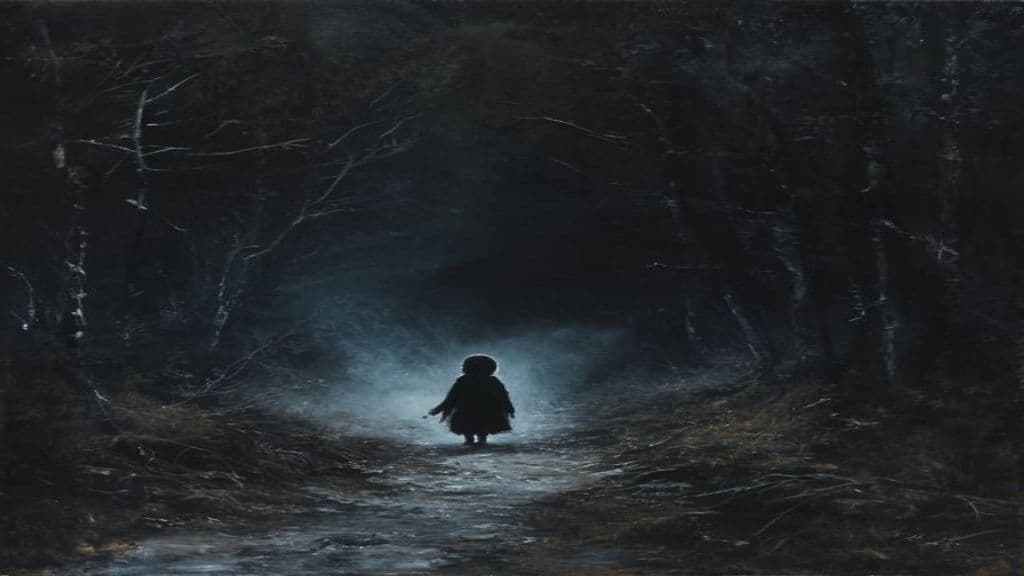
Source accounts do not provide consistent physical descriptions. Modern summaries describe porońce as 'hostile and malicious' and 'extremely powerful,' but no detailed size, form, or visual traits are recorded in the cited material. Folkloric comparisons note similarity to other child‑derived revenants (e.g., the Scandinavian myling) which in other traditions are sometimes depicted as ghostly child figures.
Cited sources emphasize hostility and dangerous potency rather than specific magical feats. Porońce are portrayed as malicious toward people and 'extremely powerful' because they embody the potential of unrealized life. Belief in porońce influenced many taboos and preventative practices aimed at protecting pregnant women, infants, and households; specific combative or supernatural actions are not detailed in the provided sources.
Weaknesses
- ritualburial under the house threshold (prevention rather than cure)
Wards
- ritualburying a stillborn fetus under the house threshold to prevent formation of a poroniec (resulting instead in a kłobuk)
- conditionobservance of pregnancy/newborn taboos (avoid drawing water from a well, avoid leaving home with an infant, abstain from sexual intercourse during pregnancy) as preventative community practice
Myling
The ghost of an unbaptized or abandoned infant in Scandinavian tradition, doomed to haunt the place of its death until it receives a proper Christian burial.

Drekavac
A South Slavic night-haunting revenant-like creature whose name means "the screamer"; traditionally linked to the restless souls of improperly buried or unbaptised dead (including sinful adults and unbaptised children) and reported in many regional variants that foretell death or disease and frighten the living.

Konaki-jiji
Konaki-jiji (子泣き爺) is a yōkai from Japanese folklore, originating in the mountain regions of Tokushima Prefecture on Shikoku and later recorded in national yōkai collections. It is known for luring compassionate travelers by imitating the cry of an infant and then suddenly becoming a crushing heavy weight that kills the carrier.

Pontianak (Kuntilanak)
A Southeast Asian female vengeful spirit common in Malay‑language traditions, often portrayed as the restless ghost of a woman who died in traumatic circumstances; she commonly appears as a beautiful woman who may reveal a monstrous form and is associated with banana and banyan trees.
Baba Yaga
Baba Yaga is an ambivalent female figure of East Slavic folktale tradition, depicted variously as a fearsome, child-eating crone or as a helpful, maternal donor. She is associated with the deep forest, a hut described as standing on chicken legs, and the motific accoutrements of a mortar and pestle.
Bald Mountain (Slavic)
A location in Slavic folklore associated with witchcraft and the Witches' Sabbath. (Note: 1. Power tier should be Primordial since it's associated with witchcraft and has connections to deities (witches are often seen as having deity-level powers). Greater is too low of a power level. 2. A)
Bannik
A place-bound spirit of the Slavic banya (bathhouse) that inhabits the steam room and related spaces; he mediates divination, presides over births within the banya, and must be appeased by offerings or he may harm or otherwise vex users and the building.
Boginka
A Slavic/Polish female nature-spirit category: personifications of wild natural forces (forests, fields, mountains, fresh and sea waters) that appear in folklore as ambivalent beings—often hostile toward humans, especially pregnant women and infants, but also recalled in some sources with neutral or protective aspects.
Błędnica
A Slavic forest demoness who misleads travelers, abandoning them deep in the woods to die of exposure, starvation, or be taken by wild animals. She is typically depicted as a young, attractive woman and is countered in tradition by strong spells or by making sacrifices at home or during the hunt.
Cornflower Wraith
A Slavic field spirit associated with midday who enforces proper conduct in cultivated grain. Described as a young woman in azure with cornflowers in her hair, she punishes workers who trample crops or use sharp tools at the wrong time, often by inducing sleep followed by pain or by causing broken limbs.
Fiery Serpent (Slavic)
A supernatural entity from Slavic folklore, described as a manifestation of fire in the sky or air. (Note: 1. Power tier should be adjusted from Primordial to Ancient, as it appears to be a deity-level entity rather than a cosmic one. 2. Add sensory cues for sounds associated with the entity (e.g., roaring)
Firebird (Slavic folklore)
A marvelous luminous bird from Slavic folktales, the Firebird (zhar-ptitsa) is a glowing, often fire‑colored bird whose appearance initiates quests and whose possession brings both wonder and misfortune. It functions as a coveted wonder and a dangerous omen within tale cycles.
Geira
In Slavic tradition, Geira was a Wendish princess attested by Old Norse sagas who ruled over territory near the border of Germania and married a young Óláfr Tryggvasonr. (Note: * Power tier: Not provided in source material, but can be inferred as Primordial given the lack of detailed information and Geira's significance in Old Norse sagas. * Summary: Inaccurate; correct summ)
Hag
A hag is a folkloric figure typically depicted as an old, wizened woman who appears across European traditions in multiple roles: a nightmare spirit, a witch-like or fairy-type being, a river or household monster, or (in some cases) a form adopted by sovereignty or storm goddesses. The figure functions variously as a cautionary monster, an explanation for sleep paralysis and nightmares, and a liminal test-figure in myth.
Kikimora
A female house spirit in Slavic folklore that functions as a domestic agent: helpful in well-kept homes and disruptive or dangerous where household morals or order fail. Variants include a domestic (house) kikimora paired with the domovoy and a swamp (bolotnaya) kikimora associated with marshland spirits.
Koschei the Deathless
Koschei (also Koshchei, Kashchei), commonly called "the Deathless" or "the Immortal," is an archetypal male antagonist in Russian and wider Slavic folklore. He functions in folk narratives as a legendary villain whose name and legend persist into modern cultural works and references.
Community Record
- [1]Poroniec — Wikipedia. Wikipedia contributors. "Poroniec." Wikipedia, The Free Encyclopedia.wiki
- [2]Poroniec — Wikidata. Wikidata entry Q11824092 for Poroniec.other
- [3]Poronin - archive soundscape (contextual reference). Archive.org item referencing Poronin (place name) included in research notes for modern cultural traces.other
- [4]Biały Dunajec (river) — Wikipedia (place-name context). Wikipedia contributors. "Biały Dunajec (river)." Wikipedia, The Free Encyclopedia.wiki
- [5]The Witcher 3: Wild Hunt — botchling reference. Discussion noting that the botchling in The Witcher 3 is based on the poroniec motif; cited in research notes.other