
The sjörå is a member of the broader Scandinavian class of rå — territorial custodial spirits who 'keep' particular natural domains. As the lake-warden, she personifies the agency of a given freshwater body (a lake, mountain pool, or similar site) and functions within a cultural model in which humans negotiate access to natural resources through respectful reciprocal behavior toward the place-keeper.
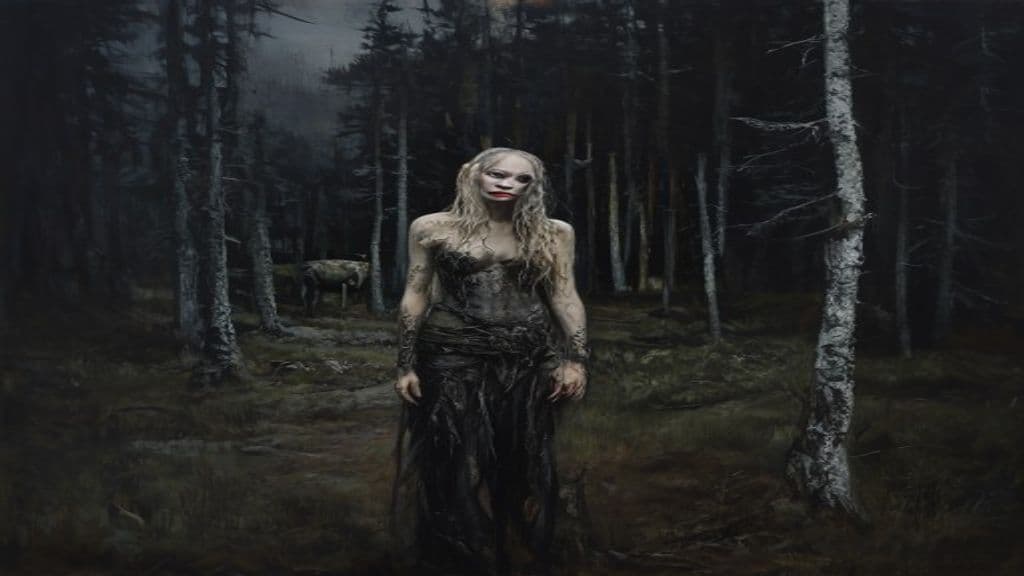
Described as a feminine, humanoid water spirit, the sjörå is commonly depicted as a seductive lake woman often seen sitting by the water and combing her long, sweeping hair. Sources emphasize her female personhood and seductive aspect; no consistent, detailed descriptions of clothing, exact size, or other fixed corporeal traits are provided in the cited materials.
As a rå she protects and enforces her domain: she rewards those who treat the lake kindly with prosperous fishing, good luck, and preservation from drowning. Conversely, she is described as a seductive figure who may lure and drown men who are unkind, unfaithful, or disrespectful to her or the lake. She actively interacts with visitors (for example, in winter she may lift a hand through the ice to solicit a mitten), and beliefs about sexual or intimate relations with a sjörå have had social and legal consequences in historical record (notably the documented Peder Jönsson case).
Weaknesses
- conditionbound by reciprocal customs; harm avoided by respectful treatment
Wards
- ritualgive a mitten (winter hand-gift)
- conditionrespectful conduct toward the lake
Bergsrå
A place-bound mountain spirit (a form of Scandinavian 'rå') thought to inhabit and preside over a mountain, often described as keeping a household or court within the mountain and known for luring or taking humans into the mountain (bergtagning).
Church Grim
A site-bound guardian spirit in English, Scottish and Nordic/Scandinavian folklore that watches over an individual Christian church and its churchyard, defending the consecrated ground from profanation and hostile spirits. Forms and origin accounts vary by region, including a large black dog in English tradition, the bound spirit of an animal (often a lamb) in Scandinavian accounts, and in some Scottish strands the spirit of the most recently buried person acting as a temporary watcher.
Skogsrå
A female forest rå in Swedish folklore who rules the woods and its game; she appears as a beautiful woman from the front but reveals non-human features when seen from another angle. She interacts with hunters, woodcutters and charcoal-burners, offering favors (hunting luck, help with work, offspring) or ensnaring men who follow her into the forest.
Ysätters-Kajsa
A localized Swedish wind-being from the province of Närke, presented in late 19th/early 20th-century sources (notably Selma Lagerlöf) as a singular, personified 'wind-troll' who delights in gales and whirlwinds and plays mischievous but sometimes protective roles in local life.
Situa Festival
The Situa was a festival in the Inca Empire, held in Cusco to promote health and ritual purification. (Note: 1. Add a specific origin story or mythological reference to the "Origin Story" section. 2. Power tier: Given that it's an important festival and its rites are described by chroniclers, it's unlikely t)
Six‑Eared Macaque
A supernatural primate antagonist from the Ming‑dynasty novel Journey to the West who impersonates Sun Wukong. Described in the text as one of four special "spiritual primates," he demonstrates near‑omniscience and perfect mimicry of the Monkey King until revealed and subdued by the Buddha.
Siyah Div (Black Div)
Siyah Div (Persian: سیاه دیو), rendered in English as 'Black Div', is a named Div‑figure attested in Persian epic tradition (the Shahnameh). In the available sources he is identified in the manuscript/illustration cycle of the Shah Tahmasp Shahnameh and remembered by the epithet 'Slayer of Siamak.'
Sjtuf
Sjtuf is a Roermond processional giant — a 6‑metre-high anthropomorphic effigy (also called Christoffel) used in Dutch/Flemish giants' processions. It functions as a civic and religious pageant figure personifying Saint Christopher and is documented in archival descriptions and a Wikidata entry as a constructed parade giant rather than an autonomous supernatural being.
Skald (Norse Poet)
In Norse tradition, a skald is a poet who composes poetry in the form of skaldic verse, often honoring kings and mythological figures. (Note: - Power tier: Downgrade to Ancient (deity-level), as the abilities described do not match Primordial level. - Appearance: Clarify that formal attire was worn during performances, but provide more spec)
Skanda
Skanda is a prominent South Asian divine figure: in Hinduism he is the war-god son of Śiva and Pārvatī (also worshipped regionally as Murugan, Kartikeya, Subramanya) and the eponym of the large Skanda Purāṇa; in East Asian Mahāyāna Buddhism he appears as a monastery guardian known as Weituo (韋馱) or Idaten (韋駄天).
Skaði
Skaði is an Old Norse mythic figure, daughter of the jötunn Þjazi who is also treated as a goddess. Associated with mountains, winter, skiing and bowhunting, she becomes the wife of the sea-god Njörðr as part of compensation for her father's death and appears among the Æsir in mythic narratives (including the binding of Loki).
Skeleton (undead)
An articulated, physically manifested collection of bones animated as an undead agent. Appears across folklore, visual art, literature, and modern popular media where it functions variously as a personification of death, a symbol in cultural practices, and a commonly used hostile creature in games and fiction.
Community Record
- [1]Sjörå. Wikipedia entry 'Sjörå' — summary of sjörå as female lake-keeper, seductive motifs, rewards/punishments, mitten anecdote.wiki
- [2]Peder Jönsson. Wikipedia entry 'Peder Jönsson' — historical case of execution after confessing sexual intercourse with a sjörå (died 1640).wiki
- [3]Vaesen: 'A Glimpse of Sjora' product description. Commercial/modern reception noting sjörå as 'Lake Wife' ruling freshwater fish and requiring respect from fishermen.other
- [4]Scandinavian folklore forum discussion (huldra and rå taxonomy). Forum discussion situating the huldra as a kind of rå and thereby contextualizing sjörå within the broader rå category.other