
No mythic origin narrative is recorded in the supplied sources. Ethnographically, the suangi concept functions as a category of social accusation and explanation: individuals (reported principally as men) are suspected of secretly harming others by extracting life — blood, organs, or the soul — and the label is applied within communities to make sense of unexplained illness and death. The category therefore appears to be more a social/diagnostic role within local moral cosmology than a mythic progenitor tale.
The supplied sources do not give a distinctive supernatural appearance for suangis; they are described as ordinary men who are suspected and accused of being witches. Outward appearance is therefore not presented as a reliable marker in the recorded materials — the suangi is primarily a social identity attached to a person accused of secret harmful acts rather than a visibly different species or form.
According to the available accounts, suangis are believed to attack people by eating their blood and/or internal organs, stuffing the emptied corpse with leaves and grass, and devouring the person's soul. Attacked persons may return home appearing 'zombified' or mysteriously ill. The sources describe these functions as beliefs held in local communities rather than independently verified phenomena.
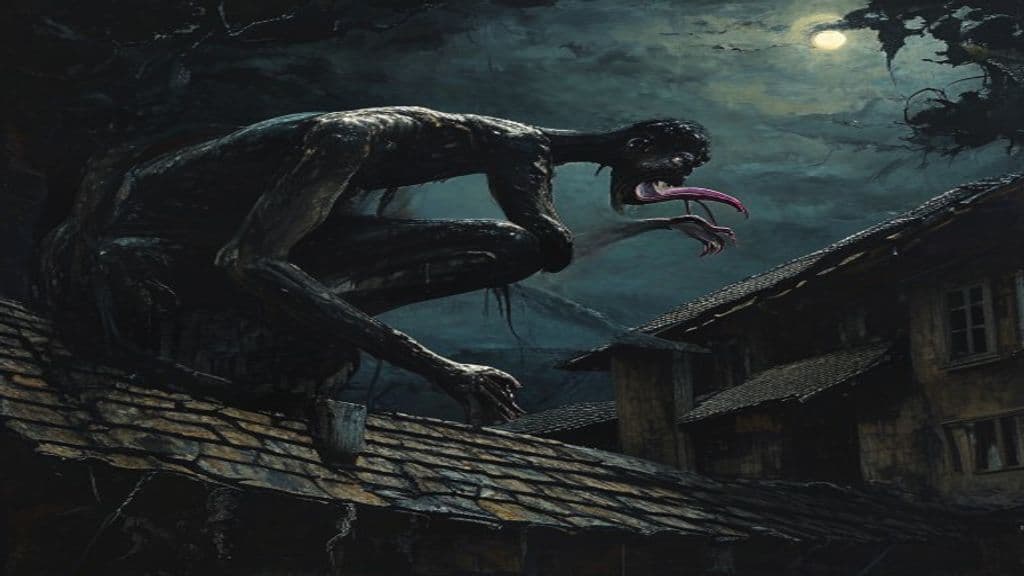
Aswang
The most feared supernatural being in Philippine folklore — a shape-shifting monster that appears human by day but transforms at night to prey on pregnant women and children.
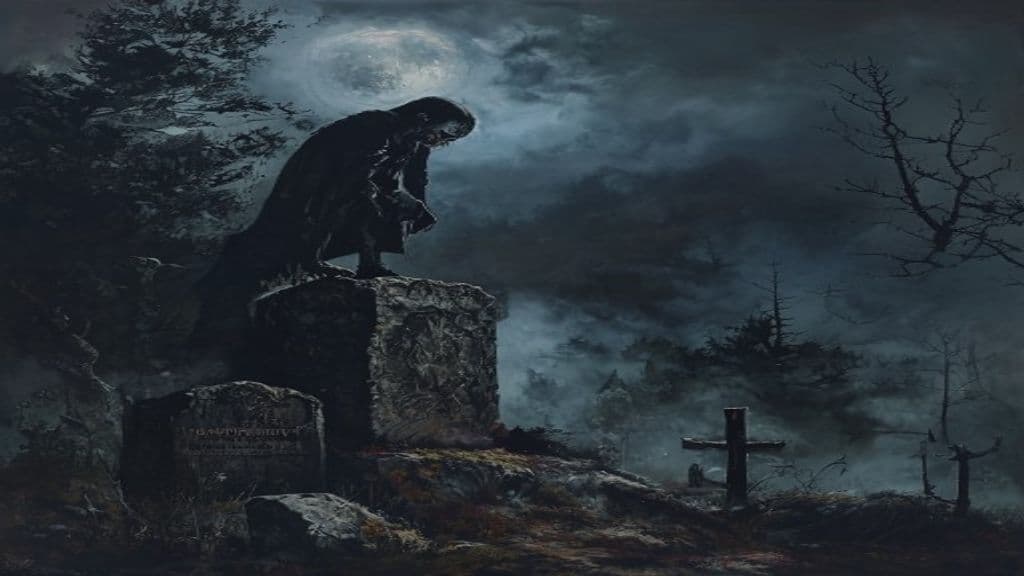
Strigoi
The vampire of Romanian folklore — either a living witch (strigoi viu) or an undead blood-drinker (strigoi mort). The source tradition from which the literary vampire emerged.
Strzyga
A malefic night-being in Polish and Silesian folk belief associated with certain anomalous births and with revenant activity after death. Traditions portray the strzyga variously as a vampiric, blood-drinking revenant that flies at night (often imagined as an owl), or alternatively as an omen that heralds imminent death; communities employed a mix of popular and Christian measures to prevent or neutralize suspected strzygi.
Stymphalian birds
A swarm of dangerous, man‑eating birds of Greek myth associated with the marsh/lake of Stymphalia in Arcadia. They ravage crops and people, are said to have beaks of bronze or exceptionally powerful beaks and sharp metallic feathers that can be launched as darts, and are best known from Heracles’ sixth labour in which Athena provides a rattle to flush them and Heracles shoots many down.
Stymphalus (son of Elatus)
Stymphalus (Greek: Στύμφαλος) is a mythic, eponymous founder and heroic-age ancestor in Arcadian local tradition. In surviving sources he is presented as a son of Elatus (sometimes by Laodice), a grandson of Arcas, and the name-giver of a spring, a lake/region, and a city in Arcadia; he is treated as a mortal genealogical figure rather than a supernatural creature in the cited material.
Styx
In Greek myth Styx is both a divine river-goddess and the underworld river she embodies; her waters form an ontological and ritual boundary of Hades and serve as the medium for the most solemn divine oaths, with specified punitive consequences for perjury.
Su İyesi
Su İyesi is a Turkic water spirit — a localized guardian (iye) of bodies of water such as rivers, lakes, ponds and springs. It appears in male and female personifications (Su Ana, Su Ata) and is associated with both beneficent functions (bringing rain) and dangerous actions (drownings, floods, wrecks) when offended.
Suanggi
A malevolent spirit from Indonesian folklore, known for its harmful intentions towards humans. (Note: * Power tier should be Lesser, as it's only described as a "malevolent spirit" without any indication of regional or deity-level power. * Sensory cues, weaknesses, and wards are not mentioned in the s)
Succubus (Jewish Tradition)
Female demon that seduces male humans through dreams, potentially leading to a hybrid child and the man's decline. (Note: 1. Power tier should be Ancient, not Primordial (Primordial powers are cosmic, while Ancient powers are deity-level). 2. No information on physical appearance is missing because it's simply not mentio)
Suen
Suen (also vocalized Sin or Nanna) is the Mesopotamian lunar deity who personifies the moon, widely worshipped in the Mesopotamian pantheon and associated with the lunar month, pastoral life, and in some texts with adjudication of the dead.
Sugaar
A male deity associated with storms and thunder in pre-Christian Basque mythology. (Note: 1. Power tier: Lower power_tier (e.g., Ancient or Greater) as Primordial implies a level of cosmic influence not described in the source. 2. Summary should be revised to indicate Sugaar is associated )
Suijin
Suijin (水神, also Mizugami 水神 / みずがみ) is a general name in Japanese/Shinto practice for water deities and water-associated spirits. The term covers heavenly and earthly manifestations enshrined at springs, wells, rivers, ponds, irrigation works and in Suitengū shrines, and is connected with purification, safe water provision, fishing, fertility, and childbirth.
Suiko (水虎)
Suiko (水虎, literally "water tiger") is a Chinese legendary river creature described in the cited sources as inhabiting river systems in areas such as Hubei Province. The available descriptions are minimal and chiefly record its riverine habitat and a single physical detail: it is said to be the size of a three- or four-year-old child.
Suitors of Penelope
A collective of mortal young men in Homer's Odyssey who occupy Odysseus' household during his long absence, pressuring Penelope to remarry, consuming the oikos' resources, and plotting against Odysseus' family until Odysseus and his allies kill them to restore order.
Community Record
- [1]Suangi. Wikipedia contributors, 'Suangi', Wikipedia, The Free Encyclopedia.wiki
- [2]Suwangi (Wikidata). Wikidata entry Q12516435 'Suwangi'.other