
In the canonical Purāṇic account of the Dakṣa yajña, Śatī (Sati) immolates herself after Dakṣa insults Śiva. Hearing of her death, Śiva produces Virabhadra as a violent emanation of his wrath—variously described as formed when Śiva plucks a lock of his matted hair and casts it down (hair-lock origin) or as an emanation from the god's bodily efflux in different tellings. Virabhadra is sent to the sacrifice to punish Dakṣa and the yajña participants; after the rampage Śiva recalls or pacifies him and restores order (sources: Wikipedia summary; Hare Kṛṣṇa retelling; Purāṇic summaries such as the Skanda Purāṇa; Padma Purāṇa note on variant origins).
Purāṇic summaries depict Virabhadra as a fearsome, martial figure: three‑eyed and bearing many arms, entwined with great serpents, and attended by vast chariots and mounts — descriptions in some sources give epithets such as 'bearing a thousand arms' and a chariot drawn by thousands of horses and multitudinous lions (Skanda Purāṇa as summarized). Devotional retellings describe his incandescent emergence when Śiva snatches a blazing strand of hair and laughs like a madman. Regional sculpture and bronze repoussée plaques portray him as a supreme warrior-hero in temple art in some South Indian contexts (museum/gallery description).
Virabhadra functions as a specialized warrior and agent of divine punishment: he lays waste to Dakṣa's sacrifice, slaughters devas and sacrificial participants, attacks principal gods (confronting Indra and other devas), and in variants assaults or plucks out the eyes of specific deities. He marshals heterogeneous troops — lists in the Purāṇic accounts include ganas, rakṣasas, yakṣas, piśācas (pishachas), hosts of bhūtas, yoginīs, and guhyakas — and can overwhelm the sacrificial order until checked. In some versions Viṣṇu intervenes with the Sudarśana cakra to oppose him (Skanda Purāṇa summary); other variants narrate complex interactions in which the cakra is swallowed and later returned or in which Virabhadra recognizes the unity of Viṣṇu and Śiva (different Purāṇic accounts). After his mission Śiva pacifies him and restores the victim (Dakṣa), showing Virabhadra's authority is derivative and recallable by Śiva (sources: Skanda Purāṇa summary; Wikipedia; Padma and Kurma Purāṇa reports as summarized).
Weaknesses
- conditionrecall/pacification by Śiva
- otheropposition by Viṣṇu (Sudarśana cakra) in some versions
Wards
- otherDivine protection by Viṣṇu (defense with Sudarśana cakra)
- otherPresence/invocation of Śiva
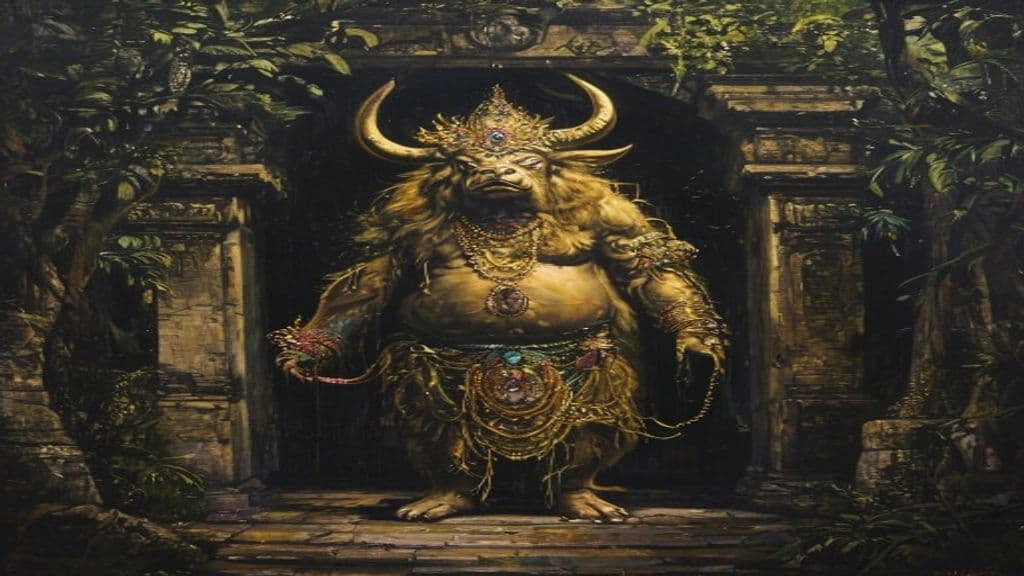
Yaksha
Nature spirits of Hindu, Buddhist, and Jain cosmology — guardians of forests, treasures, and wilderness. Ambivalent beings, capable of great benevolence to the respectful and terrible harm to the greedy.
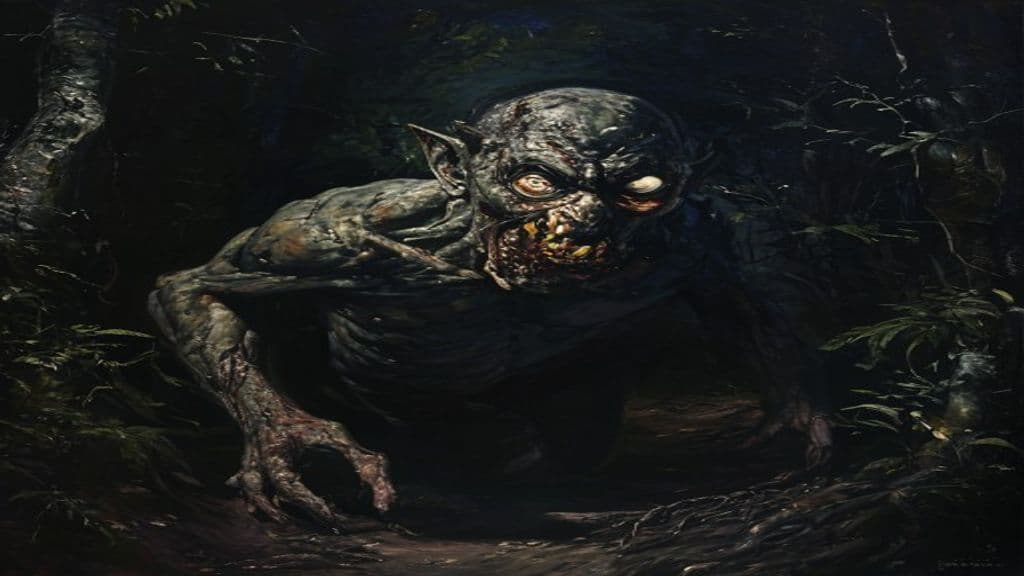
Pishacha
Flesh-eating spirits of Hindu mythology that haunt cremation grounds and are associated with disease, madness, and possession. The lowest class of demon in the Vedic hierarchy.
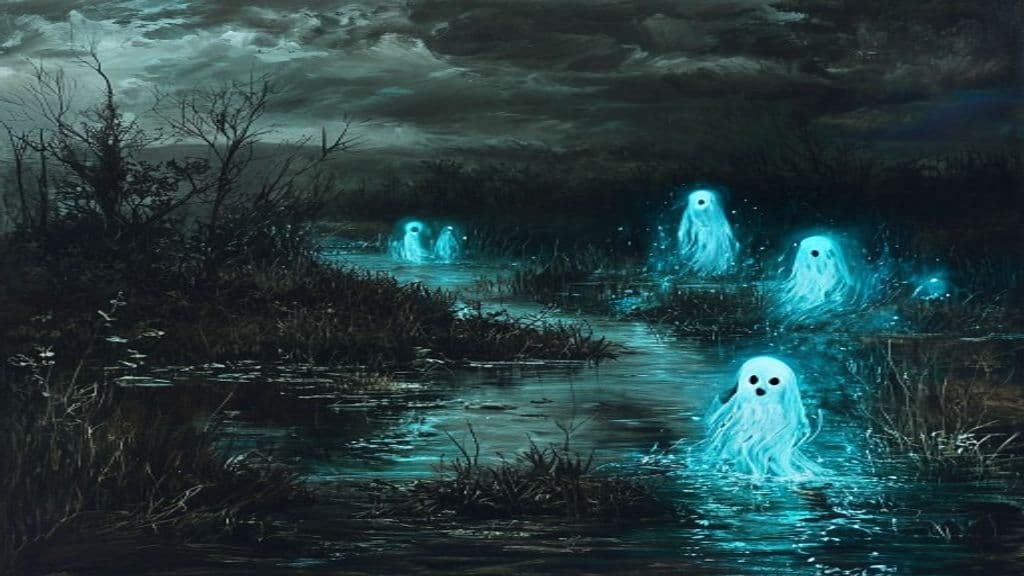
Will-o'-the-Wisp
A wandering light seen over marshy ground at night, leading travellers astray into bogs and fens. Possibly a spirit, possibly the soul of the unbaptised dead, possibly the devil himself.

Rakshasa (Himalayan variants)
A Himalayan reception of the pan-Indian rakshasa motif: hostile or disruptive non‑human beings known from Sanskrit epic and Puranic literature, here noted where Himalayan sources and discussions intersect with the broader epic tradition. The supplied sources do not document distinct, well‑attested Himalayan folklore variants; the entry therefore presents primarily the epic/legendary profile as transmitted into Himalayan contexts in general references.
Vidyārāja (Myō-ō / Wisdom King)
A class of wrathful, protective figures in East Asian Esoteric (Vajrayāna/mikkyō) Buddhism identified by the Sanskrit term Vidyārāja ("knowledge/spell-king") and commonly rendered in Japanese as Myō-ō. They function as fierce guardians, ritual enforcers of esoteric doctrine, and mandalic emanations tied to buddhas and tantric functions.
Viking (Norse mythology)
A male figure in Norse mythology, son of Vífil and Eimyrja, mentioned in Thorsteins saga Víkingssonar and Frithiof's Saga. (Note: - Power tier: Lower to Lesser (given the lack of information on abilities and behaviors beyond familial relationships) - Weaknesses, Wards: Should be listed as "Unknown" since no specific information )
Vimalanātha
Vimalanātha (also Vimalnatha) is the thirteenth Tīrthaṅkara of the present age (Avasarpini) in Jain tradition. He is described in the supplied sources as having attained liberation (Siddha) after destroying all karma; he was born to King Kṛtavarman and Queen Śyāmā at Kampilya/Kaṃpilapura.
Vinayaki
Vinayaki (Vināyakī) is an elephant-headed female divine figure found across South Asian traditions. She appears variably as the feminine shakti or counterpart of Ganesha, as one of the Matrikas or as a yogini in Tantric lists, and in some Buddhist and Jain contexts as an autonomous goddess; surviving texts and images present multiple, sometimes conflicting identities.
Vine (growth form)
A vine is a botanical growth habit characterized by trailing or climbing stems (herbaceous or woody) — a functional plant category (including bines and lianas) that uses external supports to reach light. The term also appears in modern proper names and brands but, in the provided sources, does not denote a single supernatural or folkloric being.
Vināyaka / Ganapati (Ganesha in Buddhism)
A Buddhist tantric deity known variously as Vināyaka, Vighnāntaka, Gaṇapati, tshogs bdag (Tibetan) and Kangiten/Shōten (Japanese). Integrated into Mahāyāna and Esoteric Buddhist cosmologies, he functions as a remover and subjugator of obstacles, protector, and occasional wealth/pleasure‑granting figure and is often treated as an emanation of bodhisattvas such as Avalokiteśvara or of Vairocana.
Viracocha
Viracocha (Quechua Wiraqucha, Huiracocha) is the principal creator and civilizing deity in pre-Inca and Inca mythology, portrayed as the originator of the universe, time, and human society who emerges from watery places to bring light, order, and knowledge.
Virankannos
Virankannos is a figure in Finnish and Karelian runic-song tradition associated with fertility and the wellbeing of crops and is treated in sources as a sky-associated, culture-level divine actor. Attested in Mikael Agricola's 1551 list as a protector of oats and in Kalevala runes (20 and 50), he appears in saga-level scenes such as the attempt to slay the great ox and the baptism/naming of Marjatta's child.
Virgin Mary (Marian devotion and apparitional tradition)
A central historical and devotional figure — Mary of Nazareth — whose veneration across Christian communions and other religions has produced a widespread corpus of devotional practices, shrine cults, and reported apparitional phenomena. The sources treat her primarily as the first‑century Jewish mother of Jesus and as an object of liturgical and popular devotion rather than as a hostile supernatural monster.
Vis and Rāmin
Vis and Rāmin are the protagonists of a classical Persian romantic tale composed by Fakhruddin As'ad Gurgani in the 11th century. The narrative reflects the traditions and customs of ancient Persia. (Note: 1. Power tier should be "Minor Spirit" given that no supernatural abilities or behaviors are described. 2. Origin story is incorrect; source material states Parthian origin and not likely to have Part)
Viseh
Viseh is a Turanian nobleman in the Shahnameh tradition, presented in the cited source as son of Zadashm, grandson of Tur, father of Piran, and a high-ranking military-political leader who acted on behalf of Afrasiab in the Iran–Turan conflicts.
Vishala
A king in Hinduism, featured in the Ramayana epic poem, with administrative and martial abilities. (Note: 1. Power tier should be Lowered to Lesser (local spirit) as there is no indication of deity-level abilities. 2. Abilities: Add "However, the Ramayana does not explicitly state his martial or administr)
Community Record
- [1]Virabhadra — Wikipedia (summary). Wikipedia article 'Virabhadra' (summary of origins, Daksha yajña, Padma Purāṇa identification)wiki
- [2]Skanda Purāṇa (summarized in secondary sources). Skanda Purāṇa narrative summary as cited in the Wikipedia entry describing Virabhadra's army, three-eyed form, thousand arms, and chariot imageryliterary
- [3]Padma Purāṇa identification (as reported in Wikipedia). Padma Purāṇa identifies Virabhadra with Mangala (Mars), reported in the Wikipedia summaryliterary
- [4]Hare Kṛṣṇa (devotional retelling). Devotional retelling describing formation from a blazing strand of hair and incandescent, wrathful emergence (Hare Kṛṣṇa summary)folk
- [5]Antique Hindu Virabhadra Karnataka Bronze Repoussé Plaque (museum description). Museum/gallery description of a South Indian bronze repoussée plaque depicting Virabhadra as a warrior-heroother