
No mythic birth narrative is preserved in the cited material. Archaeological and inscriptional evidence indicate Amesemi emerges in the recorded religious record by the late third century BCE (oldest attestation at Musawwarat es Sufra) and subsequently features in royal and temple iconography at Naqa and Amara. From these contexts she appears to have been incorporated into state cult practice as a protective consort of the chief lion-war deity Apedemak and as a named recipient of offerings and petitions by royal persons.
Iconography shows Amesemi as a female figure wearing a cloth robe over undergarments and often a short necklace of large beads. A distinctive headpiece is repeatedly noted: either a falcon-shaped crown or a crescent moon surmounted by a standing falcon. Modern summaries of the reliefs observe she is depicted as more corpulent than Egyptian goddesses — a style described as typical for Meroë representations. Very rarely she is shown with the body of a woman and the head of a lioness. One source phrase reports she is "depicted holding a second set of hands with her," but that wording is ambiguous in the available descriptions.
The evidence confines Amesemi's role to protective and beneficent cult functions rather than a catalogue of mythic powers. Inscriptions and reliefs show she receives offerings and is petitioned to grant life or vitality (an inscription from the Lion Temple at Naqa reads in translation: "Oh Amesemi, who is in [.]mami[.], may she give them life, oh Amesemi"). She is portrayed beside Apedemak—touching his shoulder or head in reliefs—indicating a consort/guardian role within royal and martial cult imagery. No further supernatural abilities or mythic actions are attested in the supplied material.
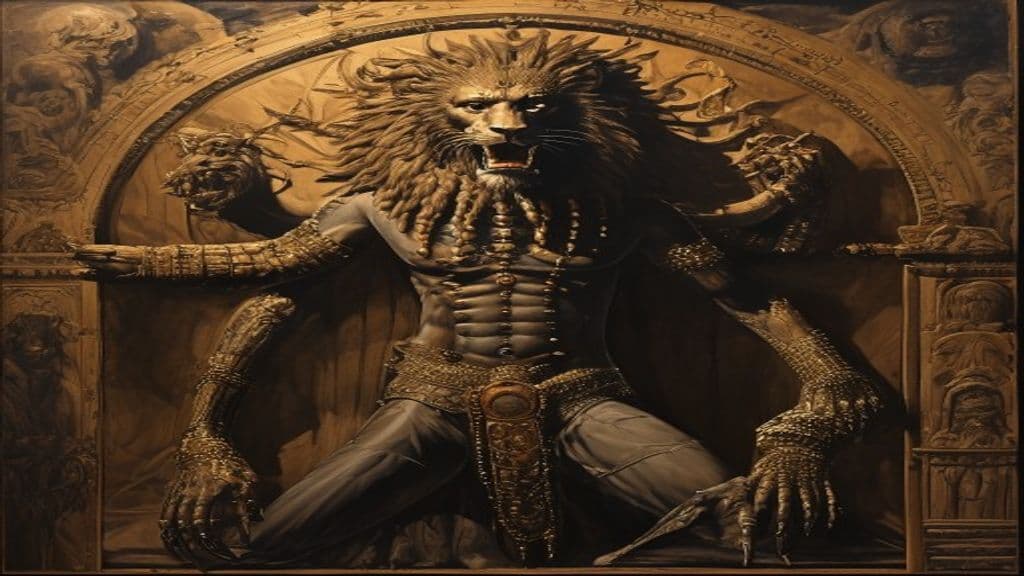
Apedemak
Apedemak is an indigenous Meroitic/Kushite deity primarily associated with martial power, royal legitimation, and aspects of fertility and life. He is attested in temple reliefs and hymnic material at southern Meroitic cult centres such as Musawwarat es‑Sufra, Naqa and Meroe, where he appears in diverse leonine and occasionally syncretic forms.

Amun
Amun is a major ancient Egyptian deity whose name (imn) means 'the hidden one.' Originating as a local Theban tutelary god, he rose to national prominence and was syncretized with the sun‑god Ra (Amun‑Ra), becoming a transcendent, self‑created creator and king of the gods closely tied to royal legitimation and personal petitionary religion.
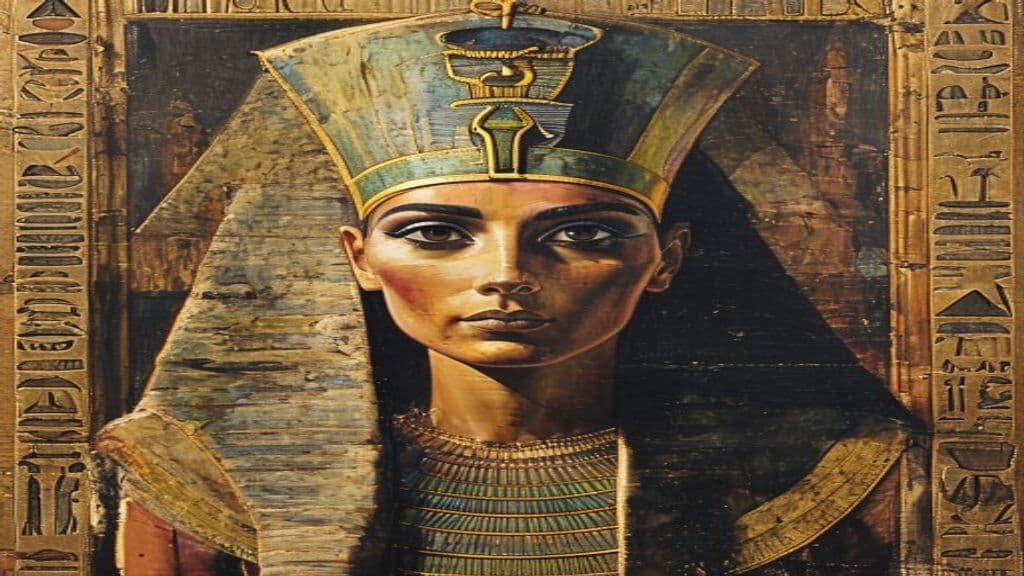
Isis
Isis is a major goddess of ancient Egyptian religion, a member of the Heliopolitan Ennead who functions as sister and consort of Osiris, mother and protector of Horus, a funerary and royal protector, and a locus of potent magic whose cult spread through the Hellenistic and Roman Mediterranean.
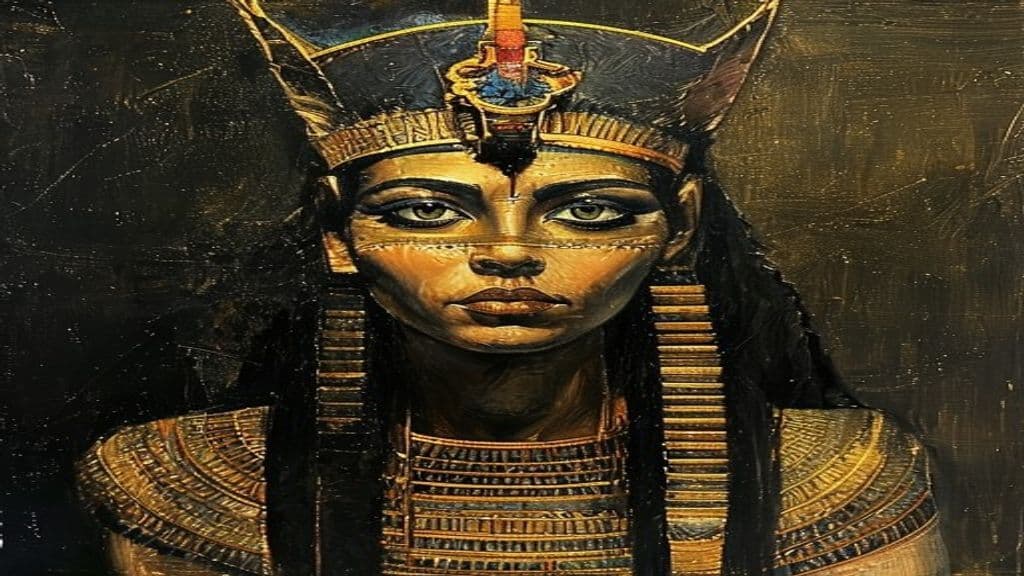
Mut
Mut is an ancient Egyptian mother goddess associated with the primordial waters (Nu), the Theban Triad, and the Eye of Ra corpus. She functions as a cosmic maternal principle, a local patroness of Thebes with temples and priesthood, and a shifting consort/maternal figure within Amun-centered theology.
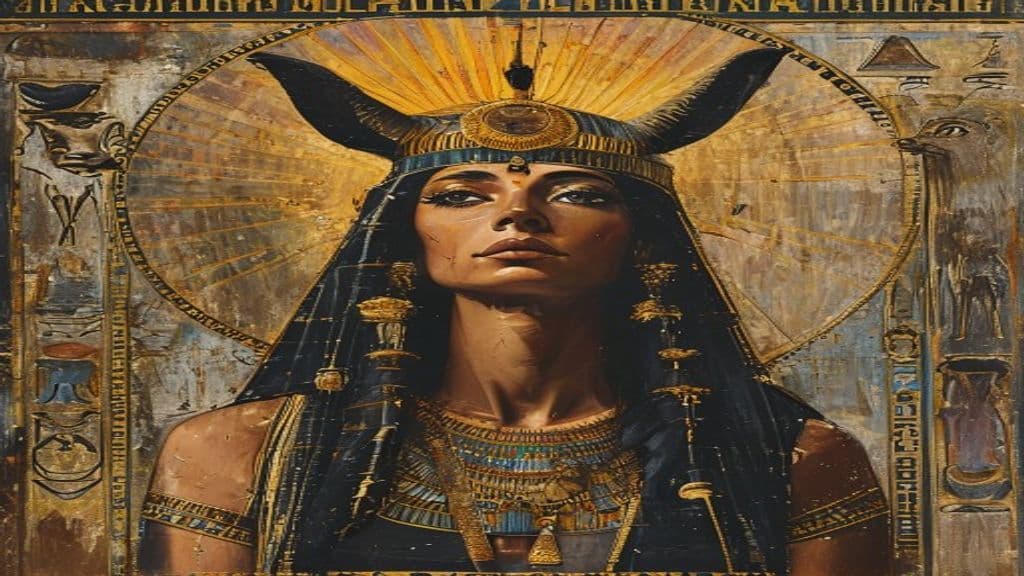
Hathor
Hathor (Ancient Egyptian ḥwt-ḥr, 'House of Horus') is a major polyvalent goddess of ancient Egypt associated with the sky, maternal and royal motherhood, music, joy, fertility, and the Eye of Ra; she appears in multiple local manifestations and assisted the deceased into the afterlife.
Amenhotep, son of Hapu
Amenhotep, son of Hapu was a historically attested 18th‑Dynasty official who was posthumously venerated and integrated into Egyptian temple cult as a deified, local healing intercessor. His cult appears in Thebes and resurges in the Ptolemaic period, represented in votive reliefs, chapels, and statues.
Amenohoakari
Amenohoakari (天火明) is a Japanese kami associated with sunlight, heat, and the ripening of grain; he functions as an agricultural deity and a divine ancestor claimed by multiple clans and hereditary priestly lineages. Textual sources place him within heavenly genealogy (tensonzoku) while other records give alternate parentage, producing divergent traditions about his origins and relationships to other kami.
Ameonna
Ameonna (雨女, "rain woman") is a figure in Japanese folklore treated as a yōkai associated with rain. Sources depict her both as a rain-calling supernatural being (sometimes helpful in drought) and as a folk label for an unlucky person whom rain seems to follow; a key pictorial source is Toriyama Sekien's Konjaku Hyakki Shūi.
Amergin Glúingel
Amergin Glúingel is a human bard and judge of the Milesian leaders in the Irish Mythological Cycle. Presented as a son of Míl Espáine and later Chief Ollam of Ireland, he is attributed with a powerful invocation known as the Song of Amergin that clears a storm to permit the Milesian landing and with acting as an impartial arbiter in the Milesian–Tuatha Dé Danann encounter.
America Chavez
A fictional superhero published by Marvel Comics, America Chavez is a Latina, lesbian character whose signature ability is creating star-shaped portals that allow travel across space and time. Introduced in 2011, she has been depicted as originating from the extra-temporal "Utopian Parallel" in early stories and later retconned as the product of human experimentation; she has headlined solo series and appeared in team books and the MCU film Doctor Strange in the Multiverse of Madness (2022).
American Crusader
A Golden Age American costumed superhero, Professor Archibald "Archie" Masters gains flight, super-strength, bullet-invulnerability, and electromagnetic-pulse abilities after an 'atom smasher' accident and operates as a patriotic champion in serialized comics; later revivals rework him as a legacy figure subject to suspended animation, cloning, imprisonment, and resurrection for plot purposes.
Amesha Spenta
Amesha Spenta (Avestan Aməša Spəṇta) are a canonical heptad of divine, bounteous principles in Zoroastrian thought, described as the first emanations of Ahura Mazda and later functioning as moral ideals and protectors or guardians of portions of creation.
Amestris
Amestris is primarily a proper name attested for Achaemenid royal women in classical sources and reused in modern fiction as a toponym (not a supernatural being). Historically it denotes at least one queen consort of Xerxes I and a daughter of Artaxerxes II; in modern culture it is best known as the nation-state named Amestris in the manga/anime Fullmetal Alchemist and as an evocative proper name in various creative works.
Amethyst, Princess of Gemworld (tradition)
No supplied sources document a supernatural entity called 'Amethyst, Princess of Gemworld.' The available materials instead discuss the mineral amethyst (etymology, physical properties, and historical beliefs), the use of 'Amethyst' as a given name, and an incidental modern music credit containing the word 'Amethyst.' Therefore this entry reports only what is attested in those sources and explicitly notes the absence of any attested folkloric figure by that name.
Amethyste (Amethystos)
Amethyste (Ancient Greek: Amethystos) appears in later European literary tradition as a beautiful maiden or nymph transformed into the amethyst gemstone; the story is a post-classical etiological invention explaining the stone's purple color and linking the gem to an ancient belief that it prevented drunkenness.
Amida Nyorai
Amida Nyorai (Amitābha / Amitāyus) is a principal Mahayana Buddha venerated across East Asia as the embodiment of Infinite Light and Infinite Life who presides over a Western Pure Land and is invoked as the savior who receives the dying into rebirth there.
Amihan
Amihan is a figure in Tagalog/Philippine tradition presented both as a bird-deity in origin narratives and as the name for the northeast monsoon season (a cool trade wind). In mythic accounts Amihan appears in the Malakas and Maganda creation story as the bird who frees or rescues the first humans from a bamboo; in cultural usage the same term denotes the recurring amihan season across the Philippines.
Community Record
- [1]Amesemi — Wikipedia. Wikipedia: Amesemi (accessed via provided research notes)wiki
- [2]Amesemi — Wikidata entry Q470284. Wikidata: Amesemi (label and brief description)wiki