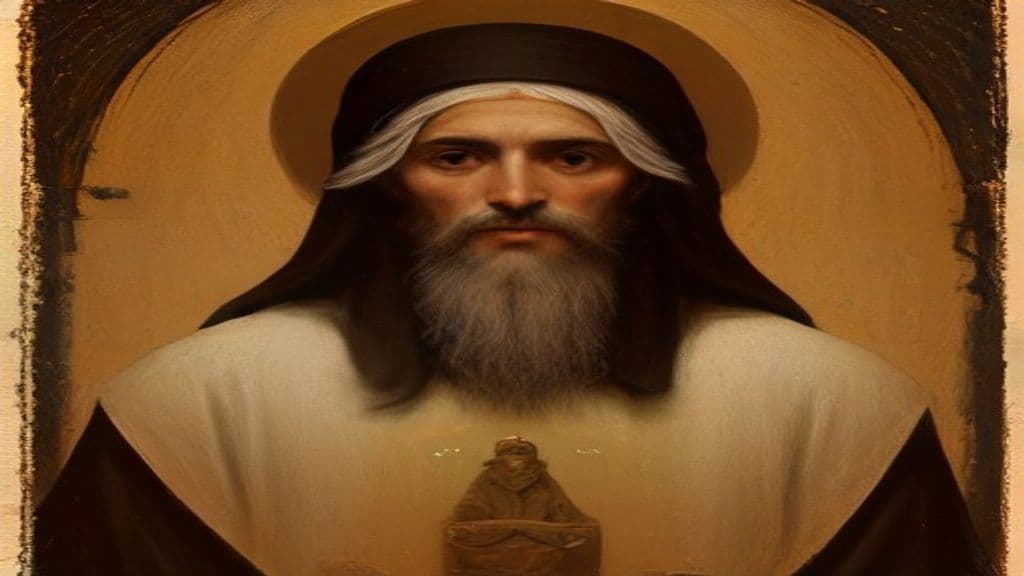
Anthony was a historical Egyptian Christian born circa 12 January 251 in Koma (Qimn El-Arouse). After selling his goods and giving alms he withdrew to the desert c. AD 270, living first in tombs near his native village, then in desert sites such as the Nitrian Desert and the mountain called Pispir. His life was written up by Athanasius c. 360 in the Life of Anthony, a hagiographical biography that circulated in Greek and Latin and established him as a model for later monasticism. (Sources treat these facts as historical and hagiographical rather than as a mythic origin.)
The supplied sources provide few consistent physical details. Anthony is portrayed as an austere ascetic who lived in desert locales, in tombs and later in an abandoned Roman fort or on the mountain Pispir; later artistic traditions portray his trials (e.g., The Temptation of Saint Anthony) and often show him in ragged ascetic garb, but the primary accounts emphasize his holiness and illiteracy rather than precise bodily description. Sources note his habitation in the wilderness and austere regimen rather than attributes such as height or hair. (Athanasius; Coptic Synaxarium; modern summaries.)
The sources describe Anthony's spiritual disciplines and roles rather than ascribing them literal supernatural powers. Reported features include extreme ascetic practices (selling possessions, strict diet of bread, salt, and water; fasting), prolonged solitude in the desert, endurance of demonic temptations and visions (described by Athanasius as assaults of boredom, laziness, sexual phantoms, and beasts), and later pastoral leadership as disciples gathered around him. Athanasius presents prayer, vigilance, and ascetic endurance as the means by which Anthony resisted the devil; his letters and counsel functioned as guidance for others. The sources treat miraculous and visionary elements within a hagiographical framework.
Weaknesses
- conditionhuman mortality and susceptibility to hagiographic interpretation
Wards
- ritualprayer and ascetic vigilance
- conditionpoverty, fasting, solitude (ascetic disciplines)
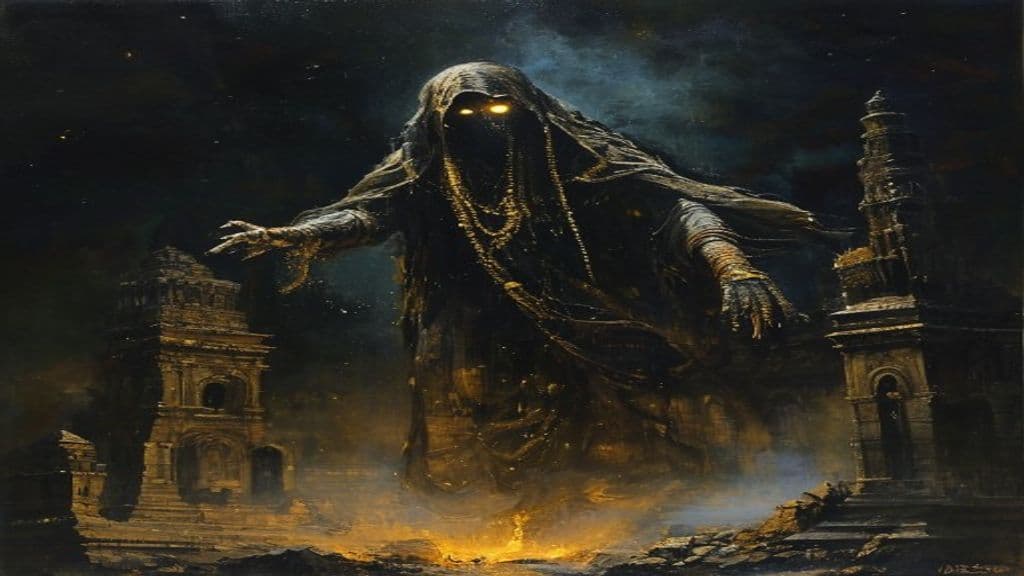
Brahmarakshas
The most learned and terrible of spirits — the ghost of a Brahmin who misused his scriptural knowledge in life and was condemned after death to be both demon and scholar, haunting places of learning.

Djinn
The class of supernatural beings created from smokeless fire in Islamic cosmology — a parallel civilization to humanity, capable of belief or unbelief, with their own prophets, society, and judgment before God.
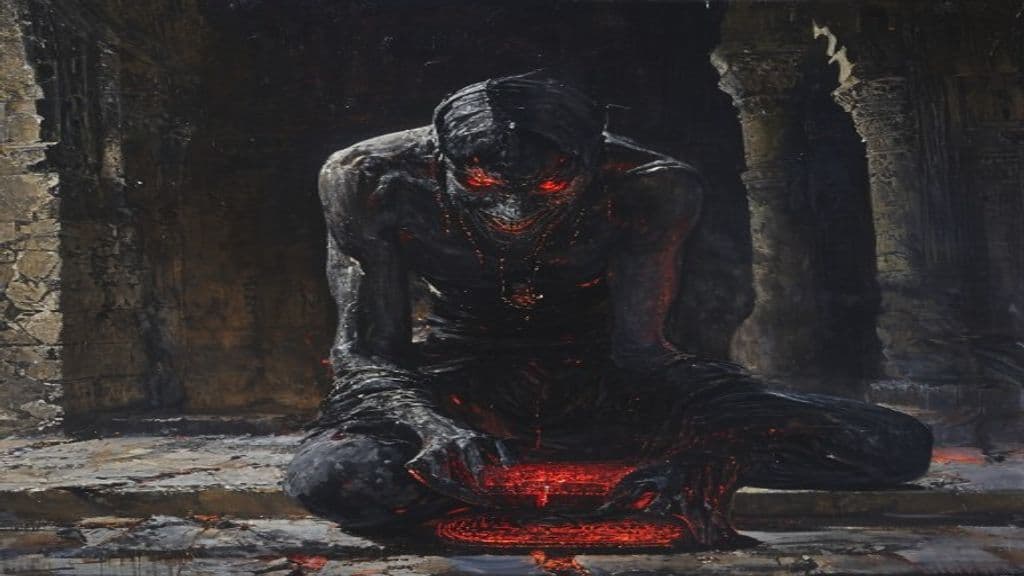
Shaitan
A class of corrupted djinn who follow Iblis and dedicate themselves to leading humans astray — distinct from Iblis himself, the Shayatin are a species of evil djinn who whisper doubts and temptations into the minds of the living.
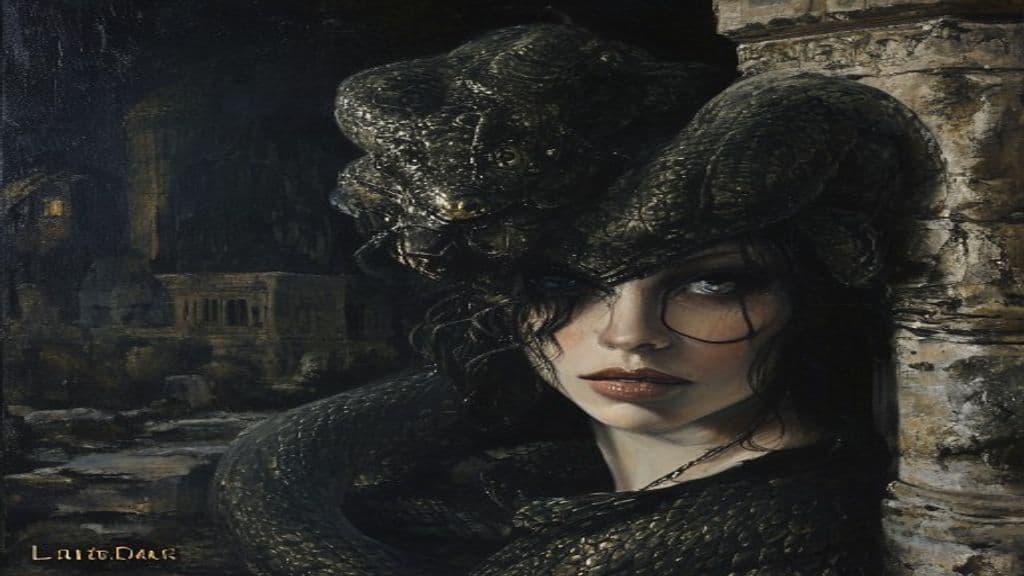
Lamia
A child-devouring demon of Greek mythology — once a queen of Libya and lover of Zeus, driven mad by Hera's destruction of her children and transformed into a monstrous hunter of other women's children.
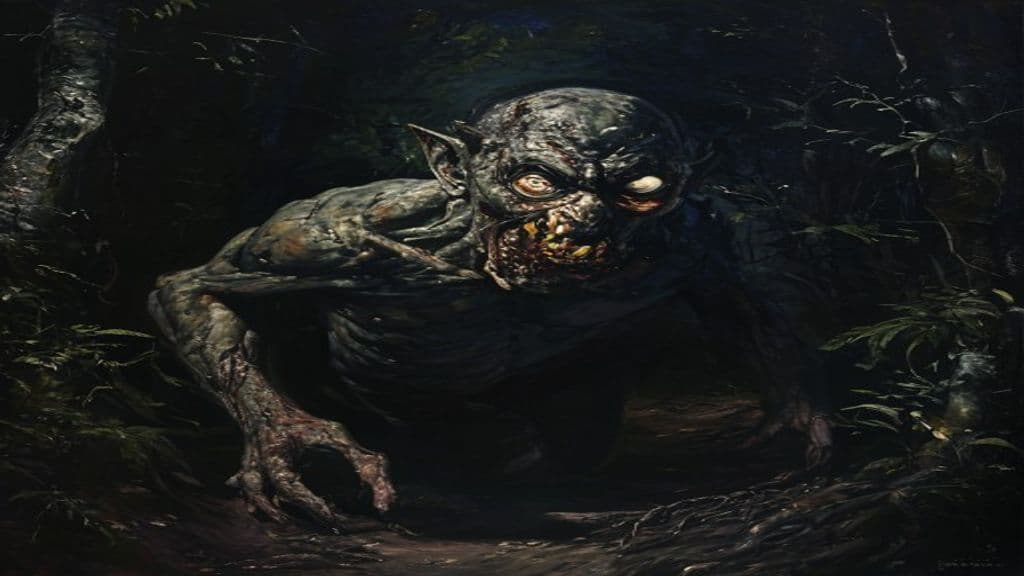
Pishacha
Flesh-eating spirits of Hindu mythology that haunt cremation grounds and are associated with disease, madness, and possession. The lowest class of demon in the Vedic hierarchy.
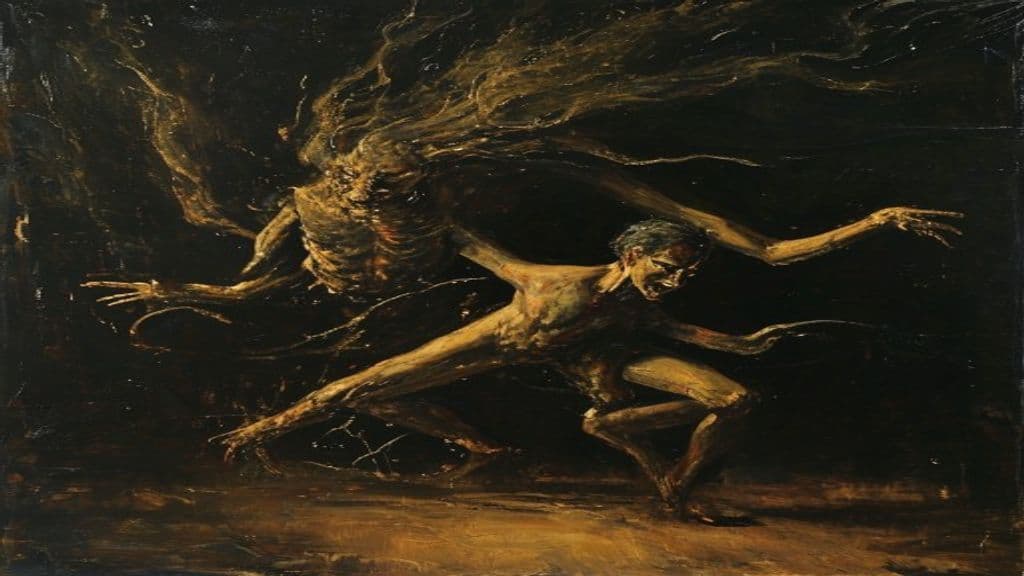
Pishacha-graha
The possessing variety of pishacha described in classical Ayurvedic and tantric texts — a grasping spirit (graha) that seizes the body of a victim, producing symptoms of madness and compulsion.
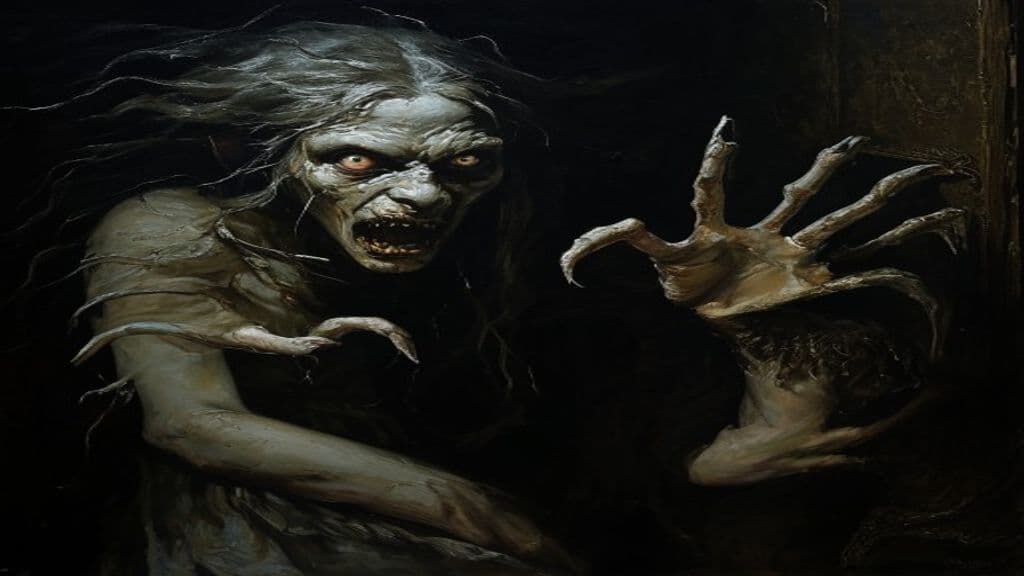
Mormo
A Greek child-eating bogeywoman used to frighten children into obedience, sometimes depicted as a shape-shifting female phantom who bit naughty children.
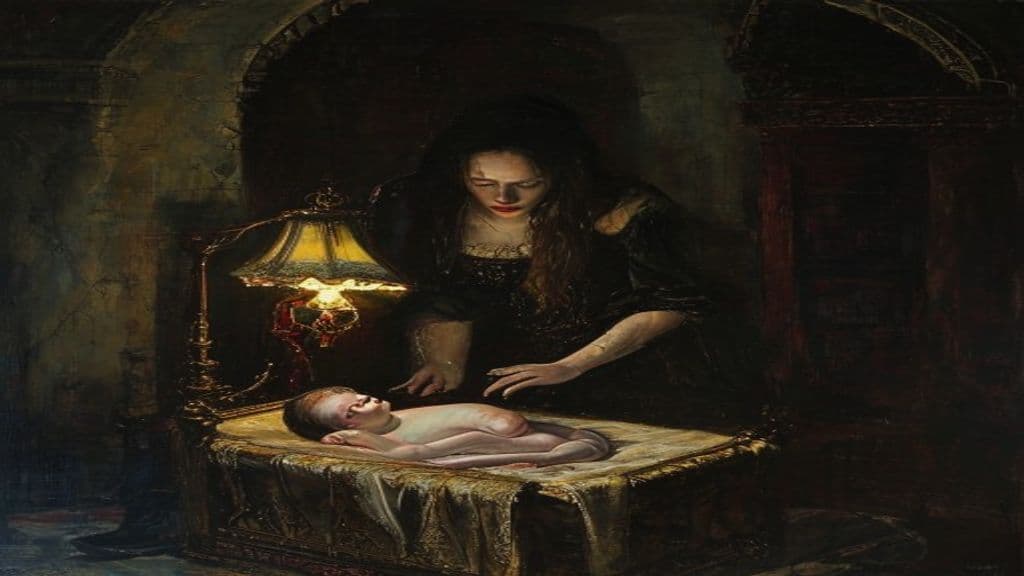
Gello
A child-strangling demoness of Greek and Byzantine tradition, the spirit of a young woman who died before marriage, now preying on pregnant women and newborns.
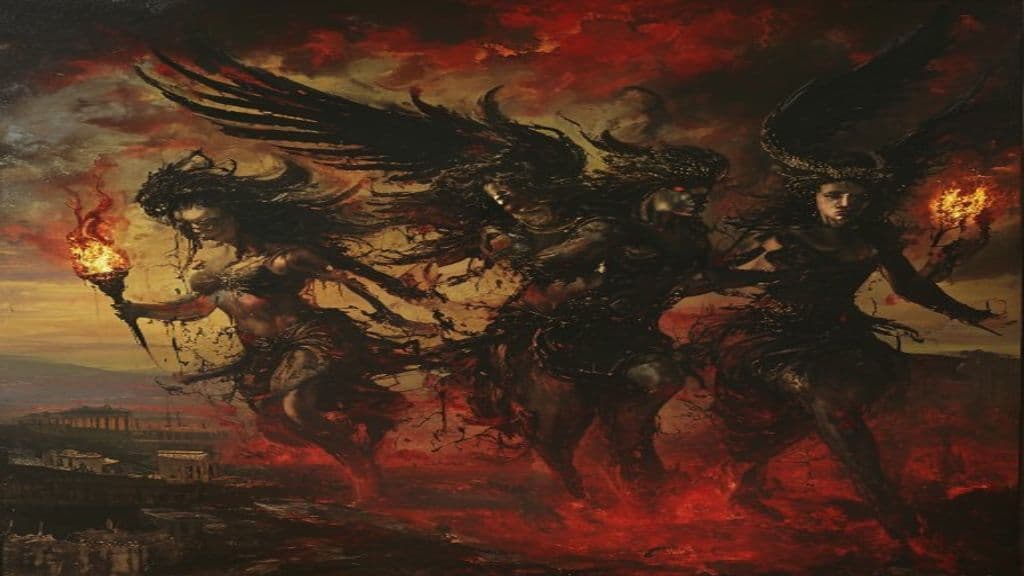
Erinyes
The three avenging Furies of Greek myth — Alecto, Megaera, and Tisiphone — who pursued and tormented those guilty of crimes against blood kin, especially murder of family members.
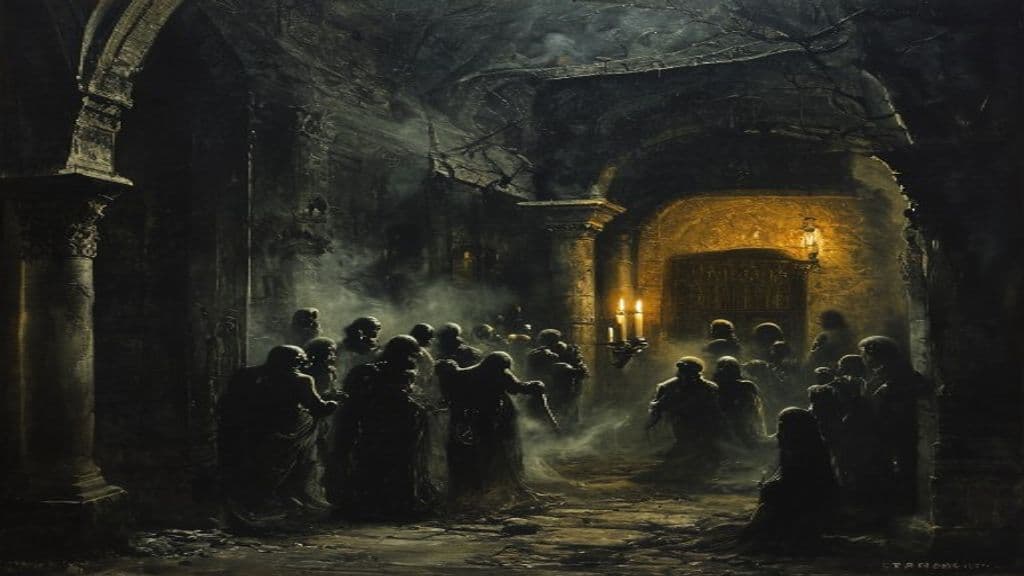
Lemures
The malevolent restless dead of Roman religion — spirits of those who died without proper burial or with unresolved grievances, haunting their former homes until appeased.
Antenor
Antenor is a Trojan elder and counsellor in the epic tradition of the Trojan War. Portrayed in Homeric passages and later literature as a prudent diplomat and host, he advocates negotiation (notably advising the return of Helen) and participates in Trojan public councils and hospitable rites.
Antero Vipunen
A giant in Finnish mythology with valuable spells and knowledge, possibly associated with underworldly powers. (Note: * Power tier should be Ancient (deity-level) due to possessing "very valuable spells and knowledge", which suggests immense magical power but not necessarily cosmic-level. * Appearance should clarify )
Anteros
Anteros is a minor Greek divine personification of requited or returned love, presented in classical sources as the counterpart and companion of Eros and as an avenger of scorned or unreciprocated affection. He appears both in mythic accounts within Aphrodite's retinue and in at least one civic cultic commemoration in Athens.
Antevorta
Antevorta is a minor Roman goddess associated with the future and with protection in childbirth. She appears in classical sources as one of the Carmentae or as a companion/aspect of Carmenta, invoked (with her paired figure Postverta) at altars in Rome by pregnant women to avert dangers in labor.
Anthelea
Anthelea (Ancient Greek: Ἀνθήλεια) is a named figure in Greek myth listed among the Danaïdes. Surviving references record her parentage (daughter of Danaus and Polyxo) and that she married Cisseus, son of Aegyptus and Caliadne; no independent deeds, powers, appearance, or cult are attested in the cited sources.
Antheus
Antheus (Ancient Greek: Ἀνθεύς, from ἀνθέω 'to blossom') is a personal name occurring in multiple independent ancient Greek mythic attestations. It is borne by several mortal figures — soldiers, youths, and genealogical persons — and also appears as an epithet/surname of the god Dionysus (Anthea, Achaea), linking the name to vegetative imagery rather than to a single supernatural being.
Anthousa, Xanthousa, Chrisomalousa
Anthousa, Xanthousa, Chrisomalousa is the heroine of a Greek fairy tale collected by Georgios A. Megas and recorded in modern folkloristic anthologies; the compound name functions as a personal name with descriptive epithets meaning roughly "Anthousa the Fair, the Blond, the Golden-Haired" and the story is classed within the Rapunzel/maiden-in-the-tower cycle in comparative commentary.
Anthracia
Anthracia (Ancient Greek: Ἀνθρακία / Anthrakia) is an Arcadian nymph of Mount Lycaeus in Greek myth, named among a group of local nurse-nymphs who tended the infant Zeus. She is attested in ancient cultural contexts by cultic representation, notably depicted holding a torch on a table at a temple in Megalopolis.
Anthropomorphic Personification
A representational class in which abstractions, forces, objects, animals, or collective entities are depicted as persons with human form, agency, and social roles. Treated variably as rhetorical/metaphorical devices, ritual actors, civic symbols, or — in some modern fictions — as ontologically manifested beings.
Anthropophage
A literary-mythical category of peoples described as cannibals in classical, medieval and later European literature and reference works. Originating in ancient ethnographic reports and transformed through compilations of marvels, the Anthropophage functions as an imaginative type marking exotic or monstrous others rather than a documented historical tribe.
Anthus
Anthus (Greek Ἄνθος, 'flower, bloom') is a name applied to more than one mortal figure in ancient Greek myth whose misfortunes are remembered by their metamorphosis into birds; in one tradition Zeus and Apollo transform Anthus and his kin into birds, and the transformed bird called 'anthus' is said to mimic a horse's neigh while fleeing from horses. Another Anthus is an Anthedon youth who is lost in childhood and later recognized by his brother after serving as a cup-bearer.
Anti-Monitor
A fictional cosmic antagonist from DC Comics: an anti-matter–aligned multiversal being whose actions can destroy positive-matter universes and who serves as the cosmic opposite of the Monitor.
Community Record
- [1]Anthony the Great — Wikipedia. Wikipedia, 'Anthony the Great' (summary of biographical data, ascetic practices, and influence).wiki
- [2]Wikidata: Anthony the Great. Wikidata entry for Anthony the Great (identifiers and basic metadata).other
- [3]Synaxarium Toba 22: St. Anthony the Great (Antonius). Coptic Synaxarium entry (commemoration Tobi 22; note giving year of death as 355 A.D. in that source).literary
- [4]Athanasius, Life of Anthony (summary in secondary sources). Athanasius's Life of Anthony (c. 360) as summarized in modern references: central hagiographical account reporting desert withdrawal, temptations by the devil, ascetic regimen, and influence on monasticism.literary
- [5]Gospel in Art: Feast of Saint Anthony the Great | ICN. Coverage of liturgical commemoration and artistic motifs (e.g., 'The Temptation of Saint Anthony').other