
Askeladden originates in Norwegian oral folktale cycles and was collected and popularized in the 19th century by folklorists Peter Christen Asbjørnsen and Jørgen Moe. Older name-forms such as Askefis / Oskefisen (attested from the 15th century in tradition) identify the character as the household ember-tender—literally a person who blows on coals to stoke the fire. Asbjørnsen and Moe edited and standardized many tale names and forms (including smoothing some rustic name-forms into renderings like Askeladden or Askepot), a process later noted by scholars as altering some of the original social specificity of names like Askefis.
Descriptions in the tradition emphasize social and domestic markers rather than fixed supernatural dress: Askeladden is usually the youngest, smallest, and weakest of three brothers, often ash-smudged from sitting by the hearth and assigned the low-status task of tending embers. He may be portrayed as idle, contemplative, or performing mean household chores—physically diminished or mocked by his kin—but not endowed with a distinctive mystical form or costume.
Askeladden's 'abilities' are narrative traits: practical cleverness, tactical ingenuity, patience, boldness, and receptiveness to unconventional solutions. In tale motifs he outwits trolls, obtains enchanted objects, and completes impossible tasks through lateral thinking—examples include rescuing captives or retrieving magical items, entering enchanted realms (e.g., journeys comparable to 'East of the Sun and West of the Moon'), and turning apparently worthless objects into means of success. He commonly succeeds where his elder brothers' conventional or forceful approaches fail, and is frequently rewarded with marriage to a princess and a share of the kingdom.
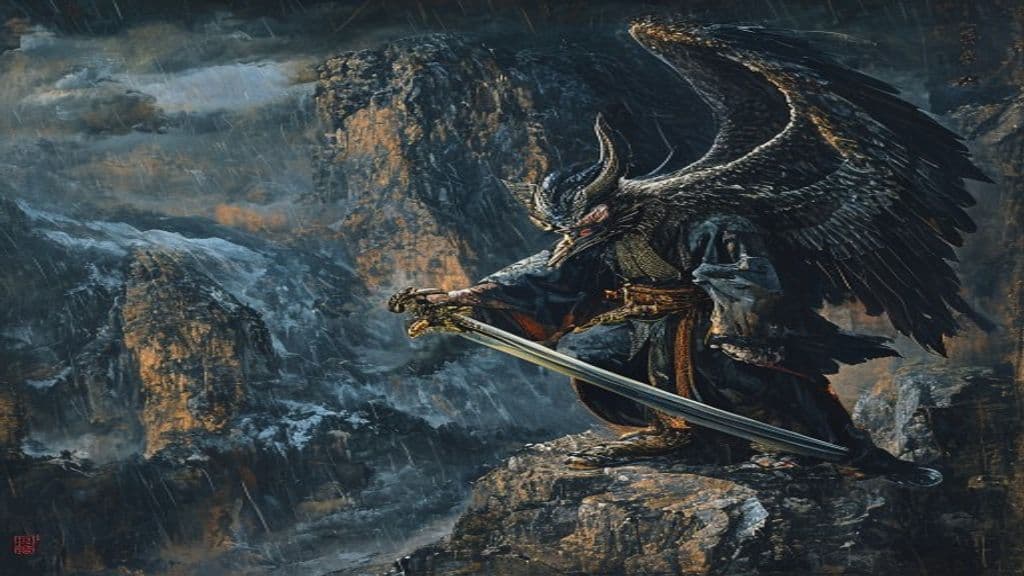
Tengu
Proud, warrior-like mountain spirits of Japan, associated with martial arts, pride, and the wild mountains. Neither fully good nor evil — they test and train warriors and monks, but punish the arrogant.
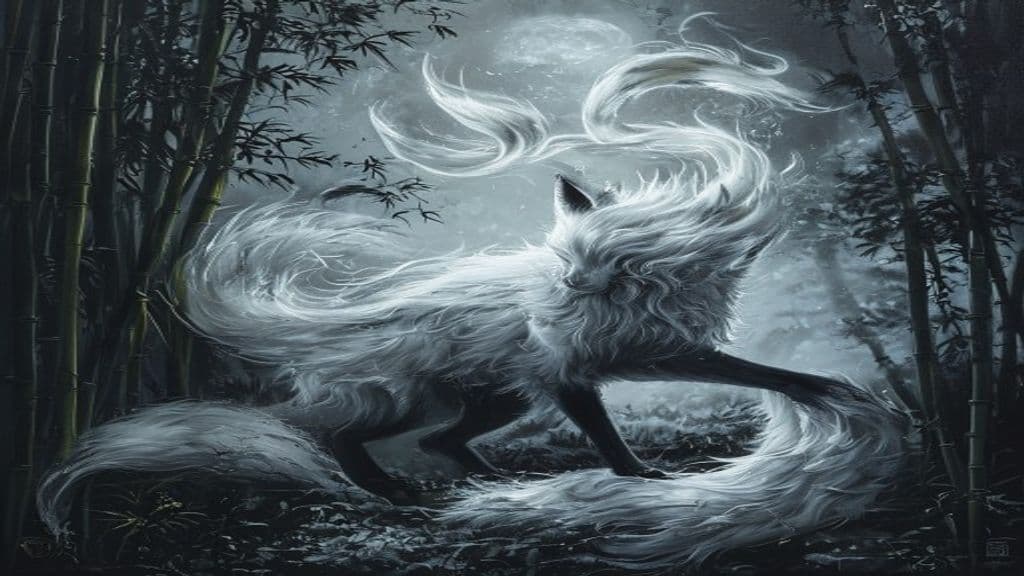
Kitsune
Fox spirits of Japanese mythology — intelligent, long-lived beings who gain additional tails (up to nine) as they age and grow in power. They serve as messengers of the god Inari and as powerful tricksters.
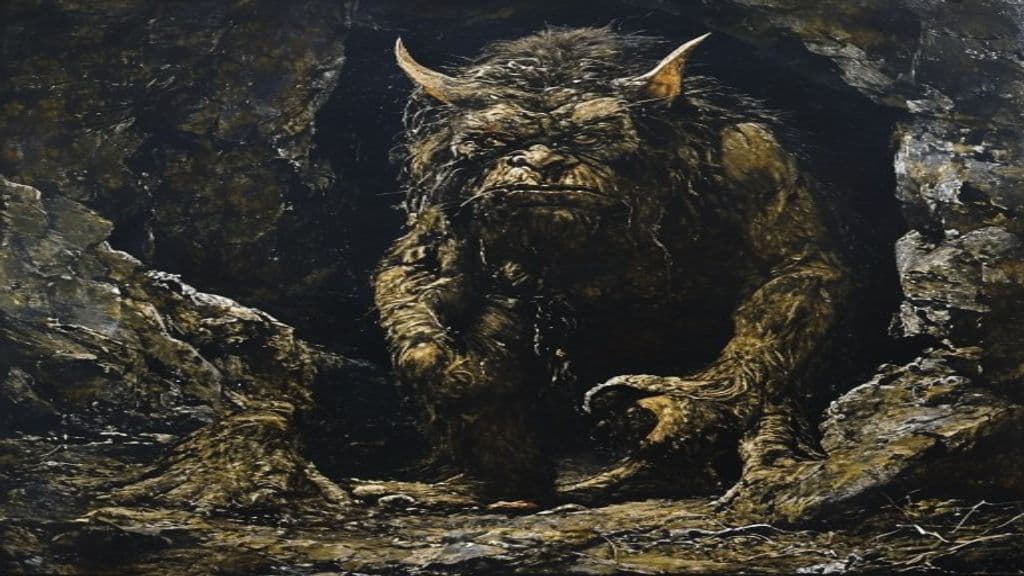
Troll (Germanic Tradition)
In Germanic folklore, a troll is a being that dwells in isolated areas of rocks, mountains, or caves, living together in small family units and rarely interacting with humans. (Note: - Power tier should be changed from Primordial to Ancient (trolls' origins from primordial forces don't necessarily imply cosmic-level power). - Ability description is not entirely accurate; it's stat)

Rakshasa (Himalayan variants)
A Himalayan reception of the pan-Indian rakshasa motif: hostile or disruptive non‑human beings known from Sanskrit epic and Puranic literature, here noted where Himalayan sources and discussions intersect with the broader epic tradition. The supplied sources do not document distinct, well‑attested Himalayan folklore variants; the entry therefore presents primarily the epic/legendary profile as transmitted into Himalayan contexts in general references.
Asiman
A nocturnal, shape‑changing predatory luminous spirit known from West African accounts; presented in sources as the Dahomey counterpart to the Ashanti obayifo, capable of inhabiting humans by day and manifesting as phosphorescent lights or a flying ball of light by night.
Asira
Asira is described in the available source material as a local god worshipped in pre-Islamic northern Arabia, specifically revered at the oasis-town of Taima (Tayma). The deity is noted as having been strongly influenced by Egyptian culture and is only minimally attested in the historical record (mentioned only by name by the Babylonian king Nabonidus).
Asius
Asius (Ancient Greek: Asios) is a personal name borne by several mortal leaders allied with Troy in Greek epic and mythographic tradition. The figures called Asius appear in leader-lists, genealogies, and battle narratives of the Trojan War cycle rather than as a distinct supernatural entity.
Asiya bint Muzāḥim (Asiya)
Asiya is the Qur'anic figure presented as the wife of the Pharaoh in the era of Moses who secretly embraced monotheism, adopted and preserved the infant Moses, and is venerated in Islamic tradition as an exemplary righteous woman promised a house in Paradise for her faith and steadfastness.
Ask and Embla
In Norse myth Ask (Askr) and Embla (Embla) are the first human man and woman, fashioned from wood/trees by the gods at the beginning of the cosmos and endowed with the gifts that make them human; they serve as the progenitors of humankind in the Norse cosmological narrative.
Askafroa
A female tutelary spirit identified as the localized soul or guardian of an individual ash tree in southern Swedish folk belief (notably Scania). Traditionally propitiated annually on Ash Wednesday to prevent illness or damage that was believed to follow injury to the tree.
Aslan
Aslan is the singular, talking lion figure at the center of C. S. Lewis's The Chronicles of Narnia, functioning as creator, king, judge, savior, and moral authority within that fictional cosmology. The name also appears in unrelated contexts (personal names, a lion-like alien in Traveller RPG) but those are distinct referents.
Aslaug
Aslaug (Old Norse: Áslaug), also called Aslög or by the byname Kráka ("Crow"), is a legendary woman of Old Norse saga tradition, presented in medieval narratives (notably the Tale/Saga of Ragnar Lodbrok and the Völsunga material) as a noble-born figure raised in concealment and later married to the hero Ragnar Lodbrok.
Asmodai
Asmodai (variants: Asmodeus, Asmodaeus, Ashmedai) is a named, kingly malign spirit attested in late-antique and medieval Judaeo-Christian narrative traditions — most prominently the deuterocanonical Book of Tobit and legends about Solomon — where he functions as a leading hostile spirit who troubles humans.
Asmodeus
Asmodeus (Heb. Ashmedai/Ashmeday; Gr. Asmodaios; Arabic Sakhr in some accounts) is a named malignant spirit appearing in Near Eastern Jewish, Christian deuterocanonical, and later Islamic storytelling. Traditions portray him as a princely or kingly figure among malevolent spirits who intervenes in human affairs—notably hostile to marriages and in contest with King Solomon—and who can be driven off or bound by ritual fumigation and angelic agency.
Asopis
Asopis is the name borne by two distinct women in ancient Greek genealogical traditions: (1) a naiad listed among the daughters of the river-god Asopus and Metope, and (2) a Thespian princess, one of the fifty daughters of King Thespius, who bore Heracles a son named Mentor. The name is explicitly glossed as 'daughter of Asopus' in the cited sources, marking it primarily as a patronymic/eponymic identifier within Greek mythic genealogies.
Asopus
Asopus is a Greek river-eponym: both the name of several rivers and of mythic personages identified with those rivers. Traditions alternately present Asopus as a divine river-god (often as a child of Oceanus and Tethys, or in variant genealogies a son of Poseidon or Zeus), and as a local founding king; he functions as progenitor of many eponymous daughters and as an agent in myths explaining springs, city origins, and river characteristics.
Community Record
- [1]Askeladden. Wikipedia: 'Askeladden' articlewiki
- [2]Wikidata: Askeladden. Wikidata item Q4586018wiki
- [3]Askeladden som stjal solvendene til trollet. USC Digital Folklore Archives: example Askeladden talefolk
- [4]Archive collection and related references (name usage examples). Archive.org holdings referencing 'ASKELADDEN' in cultural materialother