
The belled buzzard legend grew from literal, documented practices of fastening cow or sleigh bells to turkey vultures in the mid-19th century (reports begin in the 1850s in Tennessee, North Carolina, and Virginia). Newspaper reportage and regional storytelling transformed these incidents into accounts of a recurring, individualized bird whose bell-sound was read as omenatic. The figure gained stronger association with disaster after its reported appearance in Brownsville, Tennessee during the yellow fever epidemic of 1878; through the 1880s and into the early 20th century sightings and reports spread across other states and folkloric claims (including contested stories of great longevity and presence at historical battles) circulated in print and oral traditions. Popular responses included numerous claims of capturing, belling, or killing the bird—narratives that both arise from and perpetuate the legend.
Described visually as an otherwise ordinary turkey vulture or buzzard but with a bell affixed to it. Sources record bells variously as cow bells or sleigh bells (sometimes termed bronze bells) fastened by leather collars or straps; no standardized supernatural corporeal alterations beyond the presence of the bell are recorded in the provided material.
In the folkloric record the belled buzzard's primary 'ability' is omen-making: the arrival or especially the ringing of its bell is popularly interpreted as a harbinger of calamity, epidemic, or death (newspapers sometimes styled it an "Angel of Death"). Accounts circulated widely in print, promoting the belief that sightings across years and states belonged to one continuous bird rather than many separately belled individuals. Some folkloric reports attribute extraordinary longevity and long-distance travel to the named bird (e.g., claims of being belled during the War of 1812 and present at many engagements), but the sources do not document supernatural powers beyond its portentous status and the cultural effects of that reputation.
Weaknesses
- othernone recorded in sources
Wards
- othernone recorded in sources; documented human responses were pragmatic (attempts to capture, bell, or kill buzzards) rather than codified magical wards
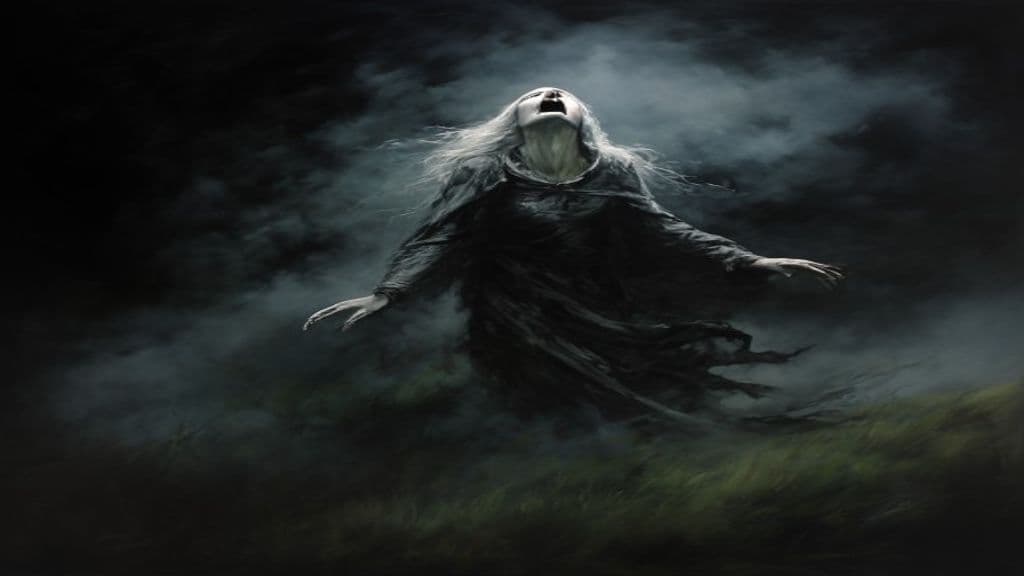
Banshee
A female spirit of Irish and Scottish folklore whose wail heralds an impending death in a family of Gaelic descent. Not a cause of death — a witness to it.
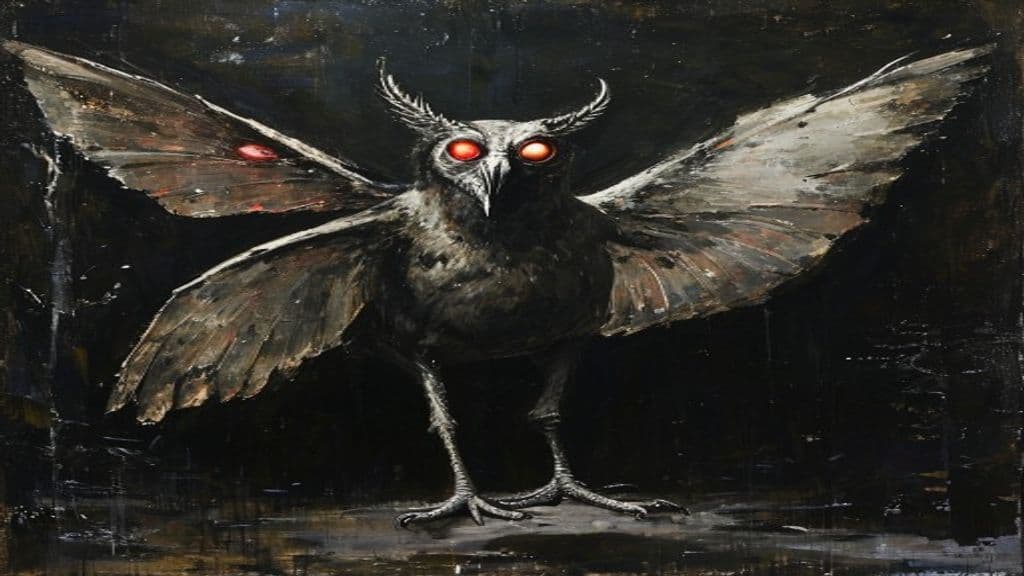
Mothman
A modern American folkloric figure originating from a cluster of 1966–67 sightings around Point Pleasant, West Virginia. Described in press reports and later retellings as a large humanoid or winged creature with notable eyes, the Mothman legend has been variously interpreted as misidentified wildlife, hoaxing/sensationalism, or a paranormal omen linked in some retellings to the Silver Bridge collapse.
Beli Mawr
Beli Mawr is a legendary ancestral king and eponymous progenitor in medieval Welsh genealogies and literature, presented as the father of several named mythic figures and as an origin-figure for royal houses. Modern scholarship sometimes hypothesizes a connection with the continental Celtic deity Belenus/Belenos, but medieval sources principally treat Beli as an ancestral/kingly figure rather than explicitly as a deity.
Beli's bane
A kenning-style epithet from the Old Norse poetic corpus, rendered from Old Norse bani Belia (with an adjectival bjart = 'bright' in some transmissions). It functions as 'the slayer (bane) of Beli' within the prophetic catalogue of Ragnarök in Völuspá rather than as a fully independent named being with its own cult or origin story.
Belial
In Hebrew Bible usage Belial is originally a pejorative term for worthlessness; in Second Temple (Dead Sea Scrolls) literature it is personified as the malign leader of the 'Sons of Darkness', an angelic/oppositional figure who commands hostile spirits and features in Qumran dualist eschatology.
Belinus
Belinus is a legendary king of the Britons as recounted in Geoffrey of Monmouth’s Historia regum Britanniae and later summaries: a warrior-king and lawgiver who fights his brother Brennius, unites Britain, campaigns in Gaul and Italy, founds or restores cities (notably Kaerusc/Caerleon), and is cremated atop a great tower at his death. His name is probably derived from the ancient god Belenus according to some modern summaries, but the sources treat him as a human legendary ruler rather than a deity.
Belisama
Belisama is a Gaulish goddess attested in Roman-period inscriptions and place-names. Epigraphic evidence records formal dedications (including a nemeton and a votive sacrum) and at least one inscription equates her with the Roman Minerva; scholars debate whether her name denotes brightness, strength, or a plant-name, and toponymic evidence also suggests riverine associations.
Bell Witch
A largely invisible, communicative haunting centered on the Bell family in early 19th‑century Robertson County, Tennessee. In nineteenth‑century accounts the presence spoke, mimicked voices, produced poltergeist‑style disturbances, caused bodily harm (pinching, hair‑pulling, paralysis), and was blamed in legend for the death of John Bell Sr.
Bellerophon
Bellerophon is a heroic figure of ancient Greek tradition, famed as a slayer of monsters and the tamer of Pegasus. Various accounts present him as of mixed divine and mortal lineage and as an exemplar of heroic achievement enabled by divine aid and constrained by social-ritual norms.
Bellōna
Bellōna is an ancient Roman goddess personifying war, especially the destructive, bloody, and tumultuous aspects of armed conflict. She had an active civic cult in Rome (including a temple associated with a war column, the columna bellica) and appears frequently in Roman literature and art as an armed, helmeted female figure who accompanies or intensifies battle.
Belobog
Belobog is a name appearing in modern summaries of Slavic religion as a deity associated with light and the sun, typically presented as the opposing pole to Chernobog in a binary contrast of light/dark. Attestations in the provided sources are fragmentary and largely secondary or modern; primary medieval evidence for a named Belobog is not supplied in the excerpts.
Belphegor
Belphegor is a named infernal figure in Christian and later European literary and occult traditions, commonly identified in those traditions with the ancient Near Eastern figure Baal‑Peor. In demonological lists he is associated with particular vices (notably sloth, though some sources assign gluttony), and literary treatments depict him as a tempter who offers wealth, inventions, or incarnate visitation to lead humans into sin.
Belsnickel
Belsnickel is a traditional fur-clad Yuletide visitor from the Palatinate region of southwestern Germany who inspects children's behaviour, disperses sweets to the well-behaved, and threatens or administers punishment (often symbolically) to the naughty. The figure survives in Pennsylvania Dutch and other diaspora communities and appears both as a solitary domestic visitor and as part of boisterous communal processions called 'Belsnickling' or 'Klausentreiben'.
Beltrame
Beltrame is a traditional commedia dell'arte stock character associated with the city of Milan (and nearby Gaggiano), dating to the 16th–17th century or earlier. He functions as a crafty, pretentious villager/husband whose costume (notably the large tunic or gippa, purse, and dagger) and comic antics represent Milanese civic identity onstage.
Community Record
- [1]Belled buzzard (Wikipedia). Wikipedia entry 'Belled buzzard'wiki
- [2]Belled buzzard (Wikidata). Wikidata item Q104856886other
- [3]The Escape of Mr. Trimm; His Plight and Other Plights (archive listing). Archive listing noting Irvin S. Cobb's story 'The belled buzzard' in collected volumesliterary
- [4]Golden Tales of the Old South (archive listing). Archive listing indicating presence of Southern story collections including the belled buzzardliterary
- [5]The Escape of Mr. Trimm : His Plight and Other Plights (archive). Archive copy of collected tales including 'The belled buzzard' by Irvin S. Cobbliterary