
Sources present Elegua as a principal Orisha within Yoruba cosmology and its diasporic continuations rather than as a primordial cosmic being. The Yoruba name Ẹlẹ́gbára is glossed as "master of force" or "one who has strength or power," and Elegua functions as the appointed intermediary between humans and the Supreme Being (Olodumare/Olofi) and between humans and other Orishas. In town and household cults his placement at crossroads, pillars, and doorways establishes him as the authorized gatekeeper whose permission must be sought first in ritual; diasporic traditions adapt and sometimes syncretize his image with Catholic saints (e.g., Saint Michael, Saint Anthony, the Holy Child of Atocha) or equate/relate him to regional crossroads figures (Legba/Papa Legba). Sources also note variance by region: in some African accounts Elegua is treated as another name for Eshu, while in Cuban Santería he may be distinguished from his brother Echu/Eshu by temperament and ritual characterization.
Material cult markers and iconography vary by context. In Yoruba towns Elegua is represented by small mounds or stones of red laterite or terracotta—sometimes set as larger red stone pillars at crossroads, marketplaces, and royal palaces—with cowrie-shell eyes. In household and Santería practice a figure of Eleguá may be placed behind the entrance door; such figures are often made of cement, adorned with cowrie shells, and sometimes sit within clay dishes. Associated colors reported across sources are red, black, and white. In diaspora iconography he is frequently depicted carrying keys (a patakí says Olodumare gave him the keys to past, present, and future). Conceptually he is described as embodying youth and age: mischievous and playful yet wise and authoritative.
Elegua functions primarily as mediator and gatekeeper: he permits or blocks communication between humans and other Orishas and between humans and the Supreme Being, and so must be acknowledged before other rituals and prayers proceed. He is said to 'own' roads, doorways, and crossroads and thus has agency over destiny, opportunity, and pivotal life choices—opening or closing paths in life. Elegua is a trickster figure who also enforces social and religious order (described as a "divine policeman"), able to unite opposites or effect reversals. He offers protection from magically-derived harm because of his liminal, inter-world role. Diasporic sources note behavioral contrasts with related figures (e.g., in Cuban Santería Eleguá is characterized as moving silently, while his brother Echu manifests more forcefully). He is also noted for an affection toward children in some sources.
Weaknesses
- ritualFailure to acknowledge or properly propitiate Elegua
Wards
- ritualHousehold placement of an Eleguá figure (cement figure with cowrie shells, often seated in a clay dish) to mark and secure the doorway
- ritualAnnual offerings and animal sacrifice at town pillars (Igbefa) at New Year to secure protection, longevity, and prosperity
- ritualLibation and opening homage at the start of ceremonies (offering water and a brief prayer to secure his approval before continuing)
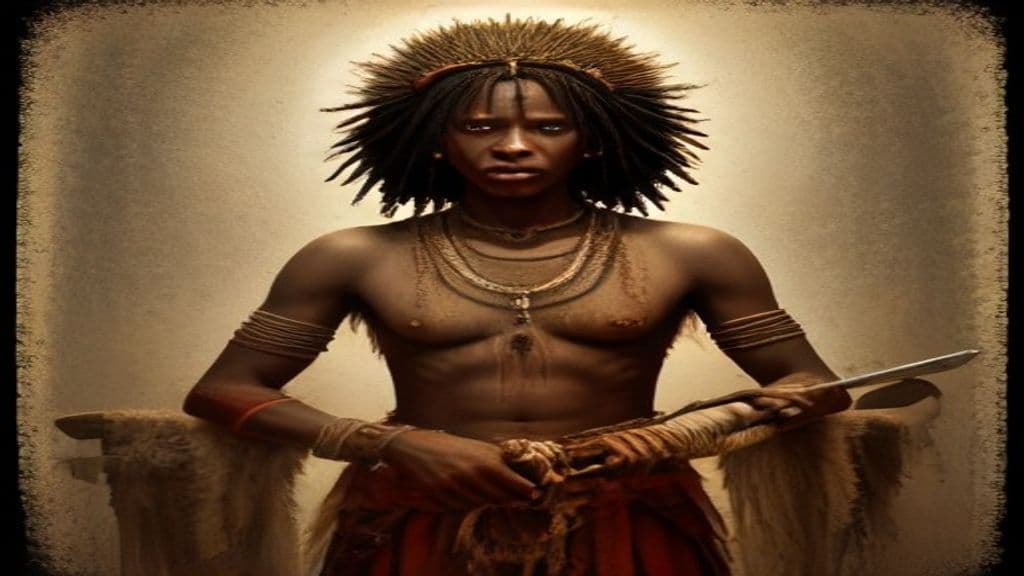
Ògún
Ògún (also Ogum, Gu, Egu) is a major West African and diaspora deity (orisha/vodun) associated with iron, metalworking, hunting, war and the crafts that use iron. In Yoruba cosmology he is described in some traditions as an Irunmọlẹ (primordial orisha) who cleared a path for other orisha and functions as patron and protector for blacksmiths, hunters, warriors, drivers and related occupations.
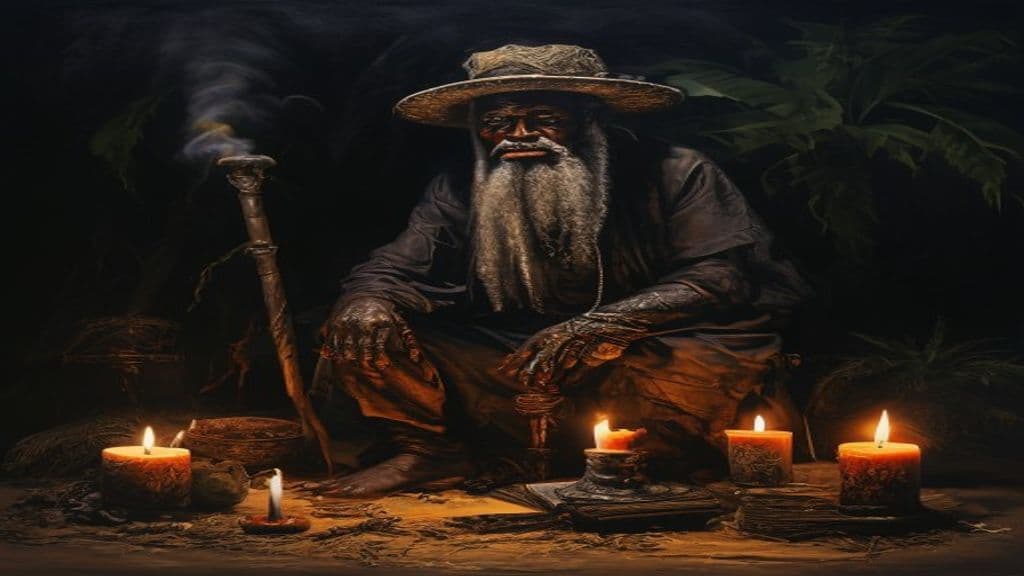
Papa Legba
The loa (spirit) of the crossroads in Haitian Vodou — gatekeeper between the human world and the world of the spirits. No other loa can be contacted until Papa Legba is first greeted and asked to open the gate.
Cowrie-Shell Divination
A set of practices using cowrie shells for divination and guidance in West African and Afro-American traditions. (Note: - Power tier: Minor Spirit is unlikely, given the widespread use of cowrie shells across various cultures for significant spiritual practices; consider Greater or Ancient. - Appearance: Add that cowri)
Esu (Eshu, Elegbara)
Esu (also attested as Eshu, Elegbara, Elegua/Elegguá, Exu) is a named Orisha — a deity — in the Yoruba traditional religious system and its diasporic continuations. The provided source identifies Esu principally as an Orisha associated with roads and notes the figure's presence across Ifa/Orisha practice and several Afro-diasporic religions.
Pomba Gira
Pomba Gira is an Afro-Brazilian female spirit invoked in Umbanda and Quimbanda who personifies feminine sexuality, desire, and liminality; she functions as a consort to Exu, is petitioned for matters of the heart, and is treated with respect because of her reputed wrath and power in ritual possession.
Eleazar
Eleazar (Hebrew: אֶלְעָזָר, Eleazar/Elʿazar) is a biblical and historical personal name borne by several individuals in Hebrew tradition; chief among them is Eleazar son of Aaron, who succeeds his father as Israel's high priest and performs custodial and ritual functions in the Exodus, wilderness, and settlement narratives. He is treated as a human priestly office‑holder and is commemorated in some Christian liturgical calendars.
Electra
Electra (Ancient Greek: Ἠλέκτρα, Ēléktrā) is a Mycenaean princess in Greek myth and drama, daughter of Agamemnon and Clytemnestra, whose primary role across Aeschylus, Sophocles, and Euripides is as an avenger of her father's murder and a focal figure for questions of filial duty, revenge, and ritual consequence.
Electrocutioner
Electrocutioner is a mantle used by three human characters in DC Comics who wear circuitry-lined costumes that project electricity. Presented as minor adversaries of Batman, the identity functions as a technological persona rather than a supernatural entity.
Electryon
Electryon (Ancient Greek Ἠλεκτρύων) is a mythic king of the Perseid line in Greek tradition, ruler of Mycenae and Tiryns whose conflict over stolen cattle, the deaths of his sons, and his own death set the succession events that lead to Amphitryon, Alcmena, and the birth of Heracles. He is presented in classical sources as a mortal dynast rather than a supernatural being; versions differ on whether his death was accidental or the result of homicide.
Elegast
Elegast is the noble robber figure from the Middle Dutch epic Karel ende Elegast, portrayed as a forest-dwelling outsider whose name and attributes align him with Germanic 'elf' (and in some northern parallels 'dwarf') traditions. In the poem he possesses magical faculties (sleep‑casting, lock‑opening, a herb enabling speech with animals), lives as an outlaw yet shows loyalty to Charlemagne and moral concern for the poor.
Eleius
Eleius (Ancient Greek Ἠλεῖος, Ēleîos) is a legendary eponymous king in Greek myth who functions as the ancestral founder of the Eleans and the region of Elis. Attested in mythographic traditions summarized in Pausanias and later compilations, Eleius appears in genealogical sequences linking local dynastic identity to divine and heroic lineages.
Elemental (tradition)
A Renaissance occult and alchemical category, especially associated with Paracelsus, for intermediate, element‑bound beings tied to the four classical elements (gnomes/earth, undines/water, sylphs/air, salamanders/fire). Paracelsus described them as beings 'between creatures and spirits' with physical, commonly humanoid bodies that live in and are sustained by their native 'chaos.'
Elendil
Elendil is a human Númenórean leader in J. R. R. Tolkien’s legendarium: a refugee of Númenor who founded the northern realm of Arnor, led the Faithful, and fought in the Last Alliance against Sauron. He is remembered as a dynastic founder whose proclamation and heirlooms shaped later kingship in Middle-earth.
Elephantis
Elephantis (Ancient Greek: Ἐλεφαντίς) is a name attested in two distinct registers of the ancient Greek world: (1) a late 1st century BCE Greek poet/physician credited in Roman and Greek authors with erotic manuals, cosmetics and abortive recipes, midwifery, and medical remedies; and (2) a mythographic/mortal figure listed among the wives or consorts of Danaus and named as mother of some Danaïdes in variant genealogical traditions.
Community Record
- [1]Elegua (Wikipedia). Wikipedia entry 'Elegua' (excerpted material on names, meaning, ritual precedence, pillars, household figures, Igbefa, syncretisms, duality and relation to Eshu/Echu).wiki
- [2]Elegua — Wemba Music page. Wemba-music fragment stating 'He is the guardian of the Crossroads and the messenger to God' and noting cultural/regional descriptions (affection for children).folk
- [3]Florida Memory • Rezo de Santo record (archival reference). Archival recording reference linking ritual song traditions and diaspora liturgical culture (used as contextual reference in supplied notes).other
- [4]SymbolSage — Elegua: The Orisha of Crossroads. Reference compiling iconographic and ritual associations (colors, keys, crossroads role) consistent with other supplied sources.other
- [5]Provided archive fragments (music/event references). Musical and cultural references to Elegua in diaspora cultural production (cited in research notes as contextual material).other