No narrative myth or literary origin story for Erecura survives in ancient literature; she is known only from Latin inscriptions and archaeological depictions of the Roman period. Scholars reconstruct an original form Ērecura (György Németh) from the variant spellings attested epigraphically. The name's etymology is disputed: the prevailing view in the literature treats it as Celtic in origin, but alternative proposals (Germanic, Illyrian, or mixed origins) have been offered. One scholarly etymological suggestion (Xavier Delamarre) reads the name as Celtic *Eri-cura meaning 'west wind', but no single etymology is securely established in the sources.
In the surviving iconographic instances Erecura is typically shown seated, wearing a long robe, and holding a basket or tray of fruit in her lap—iconography that parallels Matres/Matronae and evokes earth and fertility. Specific examples include two seated figures from Bad Cannstatt, an altar from Sulzbach where she sits beside Dis Pater (the male figure in that scene is shown holding an unrolled scroll), and the painted sequence in the Tomb of Vibia on the Appian Way where she appears enthroned beside Dis Pater with their names inscribed above the figures.
The epigraphic record presents Erecura as a chthonic mistress or Domina and as the consort of the underworld god Dis Pater/Pluto. She is invoked in votive and dedicatory contexts and appears in Latin curse tablets (defixiones, 2nd–4th centuries AD) from Danubian and Alpine provinces that call on her, often with Dis Pater/Pluto (and sometimes Mercury, the Manes, or Cerberus), to seize named persons and hand them to the powers below. She is assimilated in some inscriptions and contexts to Proserpina (as queen of the underworld) and in two inscriptions to Terra Mater, indicating overlapping funerary/judicial and fertility/earthly associations. The documentary evidence does not preserve narrative acts of agency beyond these ritual invocations and iconographic roles.
Weaknesses
- otherNo ancient weaknesses recorded
Wards
- otherNo ancient protective wards or prophylactic rituals against Erecura are preserved in the documented sources

Manes
In ancient Roman religion the Manes (Latin: mānēs) are a collective class of chthonic divine dead — the subterranean spirits of deceased persons — who are propitiated in household, funerary, and civic rites (e.g., Parentalia, Feralia, and foundation rites involving the lapis manalis). They appear in inscriptions (D.M., Dis Manibus) and literary commentary as an institutionalized category of the dead rather than as a single named being.
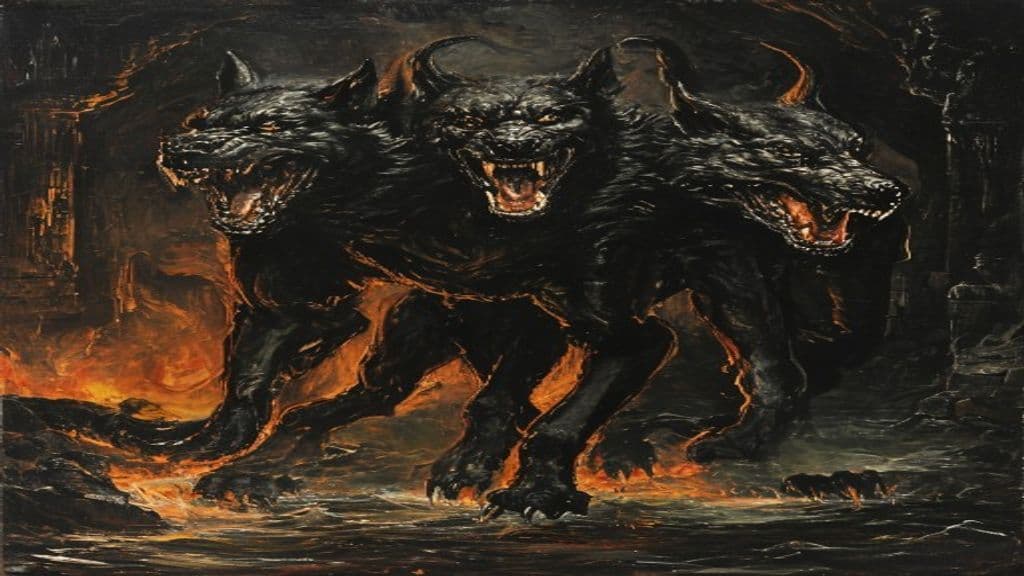
Cerberus
The three-headed hound of Hades, guardian of the underworld's gates — welcoming the dead in but allowing no shade to leave and no living mortal to enter uninvited.
Cissonius
Cissonius is a native surname or epithet attached to the Roman god Mercurius (Mercury) in the Gallo‑Roman epigraphic record of the imperial period. Attested in Latin votive inscriptions chiefly from Germania Superior (the Rhineland and Swiss plateau) with outliers in Gallia Belgica, Germania Inferior, and Raetia, the name appears both as Mercurius Cissonius and alone as deus Cissonius, indicating a localized cult identity within the syncretic Roman‑Gaulish religious landscape.
Erato
Erato (Ancient Greek: Ἐρατώ) is one of the nine Muses of ancient Greek religion, traditionally associated with erotic lyric poetry and imitation. As a daughter of Zeus and Mnemosyne she functions as a divine inspirer invoked by poets seeking the voice and affect appropriate to love-themed verse.
Erda
Erda is a polyvalent modern name attested in the provided sources with multiple unrelated referents: a toponym (Erda, Utah), a mythic/operatic figure in Richard Wagner’s Der Ring des Nibelungen (linked on a disambiguation page to Urðr and Jörð), a Marvel Comics adaptation of a Wagnerian figure, and several institutional or fandom uses (acronyms, fanwiki entries). The supplied materials do not document a single, continuous folkloric supernatural entity called Erda.
Erdhenne
The Erdhenne (German: 'Earth Hen') is a German house spirit from Alpine, Upper Palatinate, and Bavarian folk tradition that usually remains unseen but communicates by loud clucking to warn households of danger. When it becomes visible it is regarded as an omen of death—tradition records death within a year, often of the person it shows itself to.
Erebus
Erebus (Ancient Greek: Ἔρεβος) is the primordial personification of darkness and gloom in Greek myth and a name used for the subterranean darkness or region of the underworld. He functions both as an originating cosmic principle in several theogonies and as a topographical/ontological term for the darkness through which the dead pass.
Erec
Erec is a human knight of the Round Table in the Arthurian literary tradition, best known as the protagonist of Chrétien de Troyes' romance Erec and Enide. He appears across medieval redactions (Old French, German, Norse, Middle English, and prose cycles) as a heroic figure whose narratives examine knighthood, love, reputation, and encounters with enchantment.
Erechtheus
Erechtheus is a mythic-heroic foundational figure of ancient Athens whose identity blends an autochthonous, earth-born ancestor-king with a localized cultic name often syncretized with Poseidon; he functions as eponymous progenitor of the Erechtheidai and as the focus of ritual memory on the Acropolis (the Erechtheion).
Erekosë
Erekosë is a recurring fictional identity — one incarnation of Michael Moorcock's Eternal Champion — presented in the novel The Eternal Champion as the name given to the incarnation John Daker. The figure represents the archetypal Champion who is repeatedly reborn across Moorcock's Multiverse and is drawn into large metaphysical conflicts between cosmic forces (Law, Chaos, later Balance).
Ereshkigal
Ereshkigal is the Mesopotamian goddess-queen of the netherworld (Kur/Irkalla), portrayed in literary myths as sovereign of the Land of the Dead who judges and controls access to the underworld. She appears prominently in narrative texts (notably the Descent of Inanna and the Nergal marriage myth) though archaeological cult evidence for widespread popular worship is limited.
Ergene İyesi
Ergene İyesi is a Turkic underground protector/guardian spirit of mine pits and subterranean workings, keeper of gems, crystals, and precious metals. It guides and protects respectful miners, warns of danger with cat-like sounds or whistling, and punishes those who insult or offend it.
Erginus
Erginus (Ancient Greek: Ἐργῖνος) is a personal name borne by several distinct mortal figures in Greek myth and later legendary-historical tradition — including a king of the Minyans of Orchomenus, an Argonaut, a Theban defender in the Seven against Thebes cycle, a later descendant of Diomedes associated with stealing the Palladium, and a historical/anecdotal person mentioned in Plutarch's Life of Aratus.
Eriboea
Eriboea is a personal name borne by multiple distinct women in Greek myth (at least three attested in modern compilations). Figures called Eriboea appear as an Amazon, as a foster-mother to the Aloadae in some traditions, and as other minor mythic women connected to heroic cycles rather than as a single supernatural class.
Community Record
- [1]Erecura — Wikipedia. Wikipedia contributors, 'Erecura', Wikipedia, The Free Encyclopedia, https://en.wikipedia.org/wiki/Erecura (accessed via provided research notes).wiki
- [2]Erecura — Wikidata. Wikidata entry Q381126 'Erecura' (summary information on identifier and labels).wiki