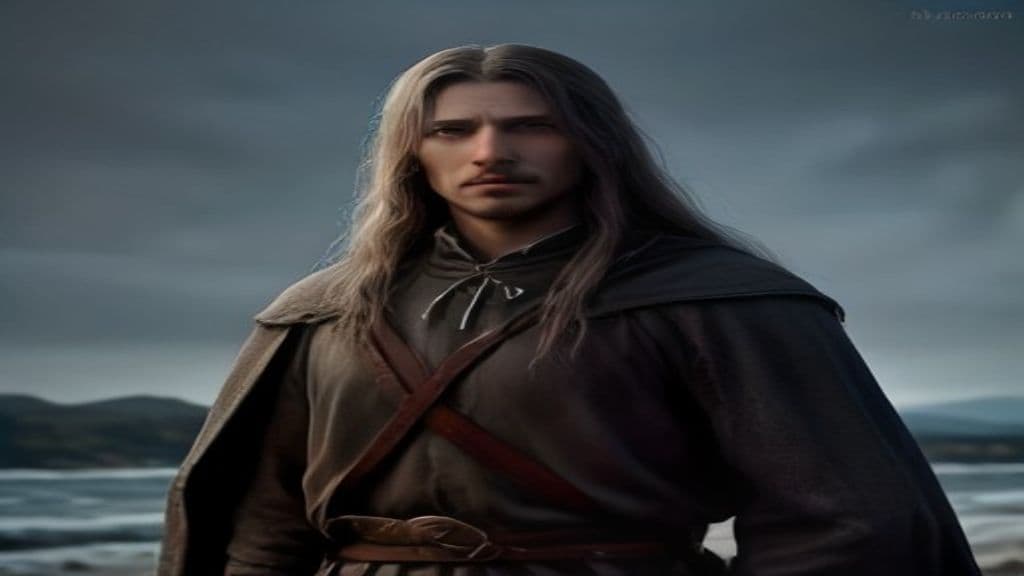
Faramir is presented within Tolkien's internal history as the younger son of Denethor II, Steward of Gondor, and brother of Boromir. He is raised in Gondor, serves as a military leader defending Osgiliath and Ithilien during the War of the Ring, and after being gravely wounded and recovered, succeeds his father in the Stewardship under King Aragorn, later marrying Éowyn.
Sources describe Faramir as resembling his brother Boromir: a tall man with a fair and noble face, dark-haired and grey-eyed, bearing the visible signs of Númenórean ancestry noted as 'the blood of Westernesse [runs] nearly true.' Film and radio adaptations have cast actors to portray his appearance, but textual summaries emphasize his noble, stern countenance.
Faramir's notable abilities are human: military leadership and command in Gondor's forces, knowledge and curiosity about Gondor's history, moral fortitude exemplified by his refusal to seize the One Ring, endurance through grave wounding, and capacity for measured judgement and mercy. He is not described as possessing supernatural powers; his recovery from mortal wounds is effected by Aragorn using athelas.
Weaknesses
- conditiongravely wounded
- conditionvulnerable to familial despair and political manipulation (Denethor's favouritism and despair)
Wards
None recorded.
Boromir
Boromir is a mortal nobleman and warrior of Gondor in J. R. R. Tolkien's legendarium. He serves as heir-apparent to the Steward of Gondor, joins the Fellowship of the Ring, succumbs briefly to temptation over the One Ring, repents, and dies heroically defending his companions.
Denethor II
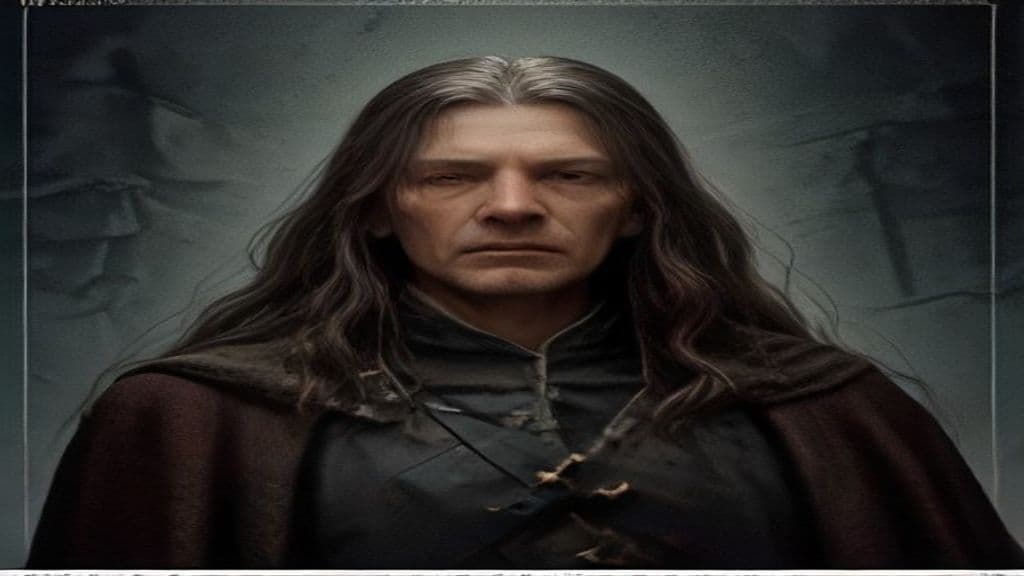
Denethor II is the twenty-sixth Ruling Steward of Gondor in J. R. R. Tolkien's legendarium: a human political leader of great will and foresight whose secret use of a palantír and ensuing despair lead to his tragic self-destruction during the War of the Ring.
Fallen angel
A heavenly being expelled from the divine court for transgression; a cosmological status found in Second Temple Jewish, Christian and contested Islamic materials. In Enochic literature the Watchers descend to earth, corrupt humans and transmit forbidden knowledge; later Christian theology uses the motif to explain the origin of moral evil.
Familiar Spirit
In European medieval and early modern folklore, a familiar spirit is an other-than-human attendant that assists, protects, or guides practitioners of magic and divination. The term is also used in Biblical translations to denote necromancers (Heb. אוֹב, ob) and appears in comparative discussions of Islamic/Arab animistic companion spirits (qarīn/qarīna). Across sources the phenomenon is best understood as a cultural category of personal spirit allies or intermediary agents rather than a single uniform being.
Family Trees of the Norse Gods
The complex relationships between Norse gods, as portrayed in the Eddas and other sources, reveal a network of family ties and kin connections that shape their interactions and powers. (Note: 1. Power tier should be Primordial (too general) -> change to Ancient=deity-level. 2. The statement that no sensory cues are explicitly described in the source material is misleading, as it implies no)
Fand
Fand is an otherworldly female figure from early Irish tradition associated with the sea and an Otherworld island. In the Ulster Cycle tale Serglige Con Culainn she appears as an enchanted sea-bird and later as an Otherworld woman who both afflicts and heals the hero Cúchulainn; she is portrayed as wife of the sea-lord Manannán in that narrative and as part of a network of sea/Otherworld women in Irish myth.
Far darrig (fear dearg)
A solitary Irish faerie-class trickster traditionally called fear dearg ('Red Man'), the far darrig is noted for practical—and sometimes gruesome—jokes, a reputed connection to changelings and nightmares, and a characteristic red coat and cap. Accounts portray it as an ambivalent domestic/liminal being that can bring good luck if placated but imaginative punishments if offended.
Faramarz
Heroic figure in Persian epic tradition, son of Rustam and protagonist of the Faramarz-nama. (Note: - Power tier: Lower, based on source material (heroic figure, son of Rustam), should be at least Greater=powerful regional spirit - Origin story: Only mentions relationship to Rustam, no Primordial or)
Farangis
Farangis is a human literary character in the Persian epic the Shahnameh: the eldest daughter of Afrasiab of Turan, the second and favourite wife of the Iranian prince Siyâvash, and the mother of the hero and later king Kai Khosrow. Her role in the epic is genealogical and political, marked by loyalty, mourning, and participation in dynastic succession.
Faravahar
The Faravahar is an ancient winged-disc/winged-figure emblem prominent in Zoroastrian and Iranian visual culture. Scholarly and traditional readings variably interpret it as an icon of the fravashi (personal spirit), khvarenah (royal/divine glory), or a general symbol of divine favor and moral guidance, and it has been reappropriated in modern pan‑Iranian identity.
Farbod
In Persian tradition, Farbod is a concept associated with protection, honor, and prestige. (Note: - Power tier should be "Primordial" or unclear, as no specific abilities or behaviors are mentioned. - Origin story is accurate, but could be expanded upon with more context about pre-Islamic Persia a)
Farfarello
Farfarello is one of the Malebranche in Dante Alighieri's Inferno, depicted as a vulgar and quarrelsome demon charged with policing Bolgia Five of the Eighth Circle (Malebolge). The name also appears in modern Italian popular verse (a Trilussa lullaby) as a bogey-figure invoked to frighten or discipline children.
Farhad (Persian literature)
In Persian literature and mythology, Farhad is a character associated with the love story of Khosrow and Shirin. (Note: 1. Power tier should be revised to "Minor Spirit" since Farhad's abilities are more related to his devotion and determination, rather than cosmic or deity-level powers. 2. Remove description of "Appea)
Fariburz (Shahnameh)
Fariburz is a legendary Iranian prince and warrior in Ferdowsi’s Shahnameh, a son of King Kay Kavus and brother of Siyâvash who appears as a recurrent Kayanian court hero in episodes such as the Mazandaran (Bahman’s fortress) campaign and the First 'Joust of the Rooks'. He is a human martial figure within the epic, not a supernatural being.
Community Record
- [1]Faramir - Wikipedia. "Faramir is a fictional character in J. R. R. Tolkien's The Lord of the Rings..." (Wikipedia entry for Faramir).wiki
- [2]Faramir - Wikidata. Wikidata entry for Faramir.other
- [3]Faramir Colles - Wikipedia. Toponymic reference derived from the character's name (Faramir Colles).wiki
- [4]Faramir II (ValarGuild encyclopedia entry). Encyclopedic treatment noting titles such as 'Prince of Ithilien' and 'Steward of Gondor'.literary
- [5]How did Faramir know that Aragorn was the King in the Houses of Healing? (Sci-Fi StackExchange). Discussion and citation of Aragorn's healing of Faramir with athelas in the Houses of Healing.other
- [6]Various fan and archive materials mentioning portrayals and stories. Fanlore and archive references documenting portrayals and fan interpretations used in source compilation.other