
Gamigin does not have a narrative origin tale in the supplied sources; he is known through compilation and cataloguing in grimoires. His presence and attributes are preserved across Goetic lists (The Lesser Key of Solomon, Johann Weyer's Pseudomonarchia Daemonum) and later compendia and commentaries, with orthographic variants arising in manuscript and edition transmission rather than a single mythic birth-story.
Grimoire summaries describe a two-stage appearance: initially taking the form of a small horse and then transforming into a hoarse-voiced man. These descriptions are given in the Ars Goetia/Lesser Key summaries and in Weyer's Pseudomonarchia accounts and are reiterated in later occult compendia that draw on those sources.
Sources attribute to Gamigin the teaching of liberal arts (Lesser Key summary) and the giving of accounts of souls that died in sin. Weyer/Pseudomonarchia and later compendia expand that he can force the souls of those who drowned into 'airy bodies' to answer questions and likewise compel souls 'which dwell in purgatorie' (referred to as Cartagra in the summaries) to appear and respond. As a named Goetic marquis he is listed with command responsibilities over legions of lesser spirits in the grimoires' hierarchical schema.
Weaknesses
- otherOpposition by the Shemhamphorasch angel Ieuiah (attested in Thomas Rudd's tradition)
Wards
- ritualAngelic opposition in Rudd's schema — invocation/authority of the Shemhamphorasch angel Ieuiah (as recorded in Rudd's commentary; specific liturgy not provided in supplied sources)
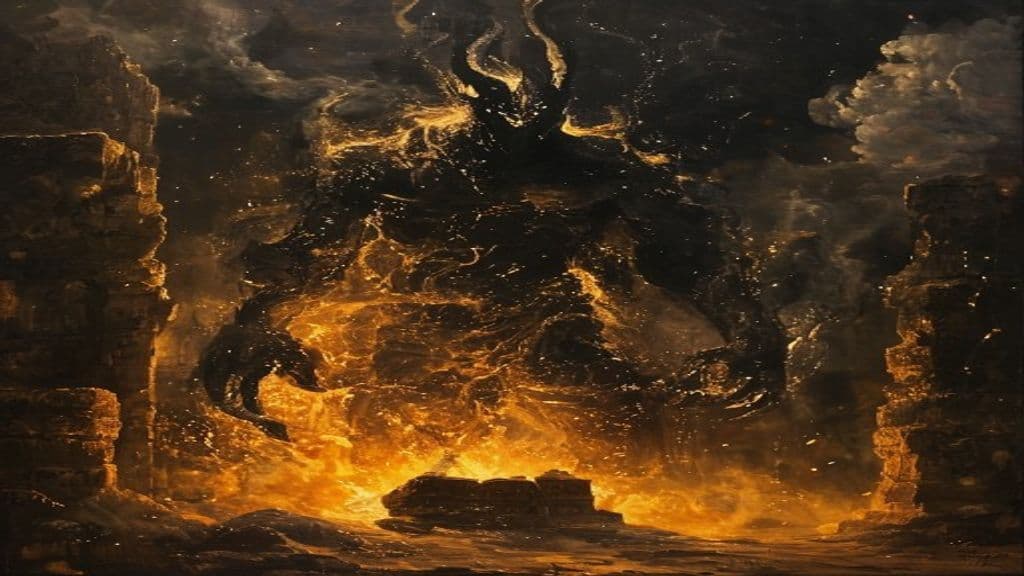
Ifrit
One of the most powerful classes of jinn in Islamic and pre-Islamic Arab tradition — a fire-born being of immense strength and cunning, capable of great works of engineering and terrible violence.
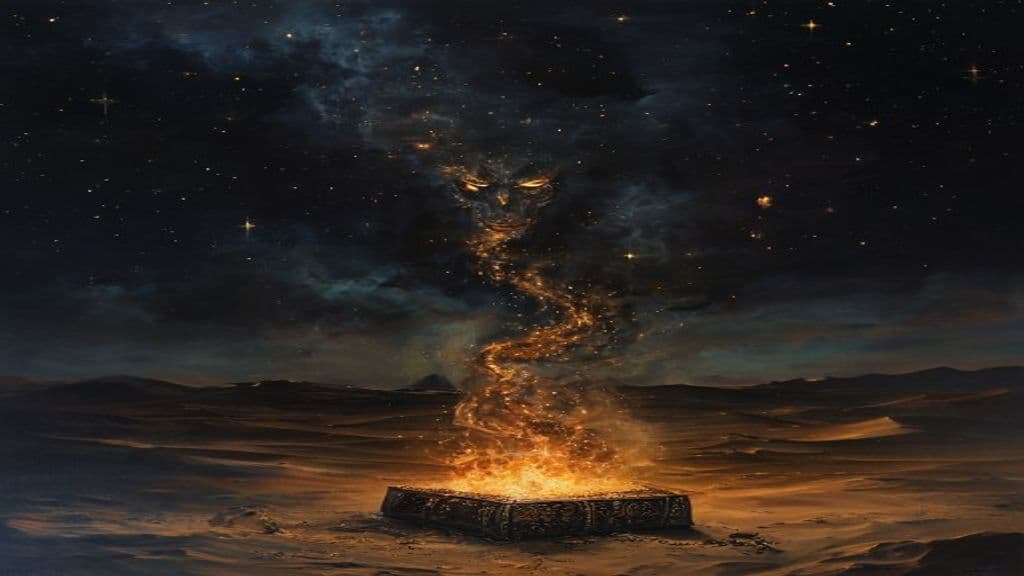
Djinn
The class of supernatural beings created from smokeless fire in Islamic cosmology — a parallel civilization to humanity, capable of belief or unbelief, with their own prophets, society, and judgment before God.

Jann
The weakest class of djinn in Islamic tradition, associated with desert winds and taking the form of snakes or whirlwinds, dwelling in empty wilderness and posing little threat to those who know the proper invocations.
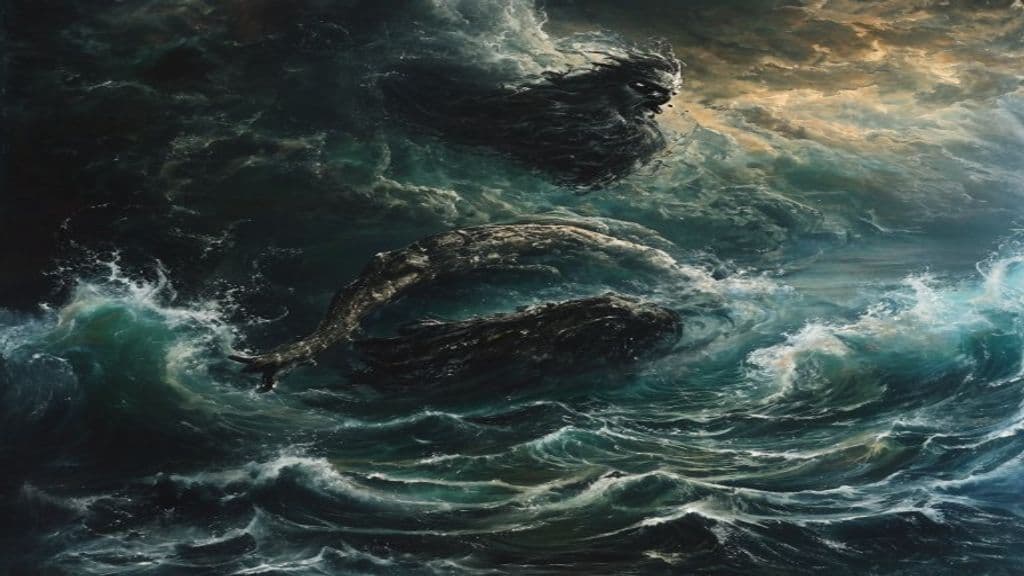
Marid
The most powerful class of jinn in Islamic tradition — beings of the sea, associated with the deep ocean, storms, and the granting of wishes at terrible cost. The classic genie of the Arabian Nights.
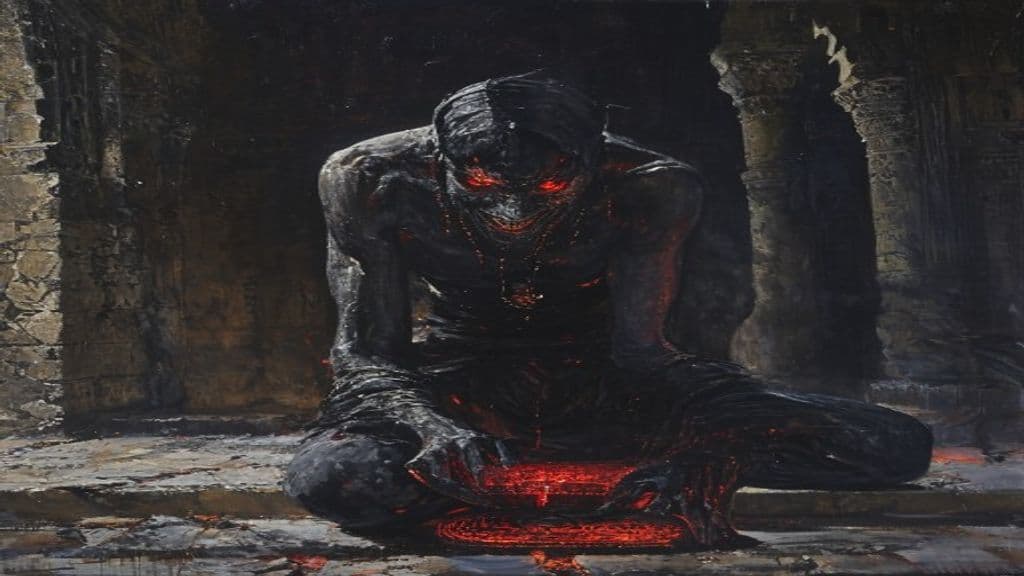
Shaitan
A class of corrupted djinn who follow Iblis and dedicate themselves to leading humans astray — distinct from Iblis himself, the Shayatin are a species of evil djinn who whisper doubts and temptations into the minds of the living.
Alloces
Alloces (also spelled Allocer, Alocer, Allogor, Algor) is a named ducal spirit in post-medieval Western grimoire tradition, listed among the spirits of the Goetia (the Lesser Key of Solomon) and attested in variant form in the Liber Officiorum Spirituum. He is presented as an evocable intelligence who teaches sciences, commands legions of spirits, and appears with differing visual descriptions across sources.
Amaymon
Amaymon is a high-ranking infernal spirit—called a prince or king—named in Renaissance and later European grimoires as a cardinal or territorial ruler who exercises authority over other demons. Sources disagree whether he is king of the east (Pseudomonarchia Daemonum, Lesser Key of Solomon) or king of the south (Liber Officiorum Spirituum, Clavis Inferni, Book of Abramelin); he is credited with a deadly/poisonous breath, the capacity to deceive lax exorcists, and figures in ritual schemes that restrain or regulate spirits.
Amdusias
Amdusias is a named spirit listed in the goetic corpus (the Ars Goetia / Lesser Key of Solomon) described as the sixty-seventh spirit who commands twenty-nine legions; sources note his true form as a unicorn and that his arrival is accompanied by trumpets and musical sounds, and that he may assume human shape when evoked.
Flauros
Flauros (also attested as Haures / Hauras in variant spellings) is a named high-ranking spirit in Western grimoires, notably the Ars Goetia (Lesser Key of Solomon). Described as a 'Great Duke' who initially appears as a leopard and later assumes a human form with flaming eyes, he is invoked for truthful revelation about past, present, and future and for destructive aid against enemies, but must be constrained by ritual to prevent deception.
Focalor
Focalor is a named spirit from the Ars Goetia corpus, described in modern goetic compilations as a ducal-ranked spirit with authority over winds and seas who can drown men and sink ships; like other Goetic spirits he is represented as commandable by a conjurer.
Shax
Shax (also spelled Chax, Shan, Shass, Shaz, Scox) is a named spirit in ceremonial-grimoire listings, recorded with the rank of Marquis (and as Duke by some authors), said to command thirty legions and credited with removing sight, hearing, and understanding from targets and with stealing money.
Vassago
Vassago is a named spirit from European grimoire tradition (notably the Lesser Key of Solomon and the Book of the Office of Spirits / Sloane MS 3824). Presented as a princely Goetic spirit who can be summoned to reveal past and future events, locate lost things, and reveal treasures, he also appears in one manuscript as angelic in appearance.
Galtxagorri (Galtzagorris)
Galtxagorri (also spelled Galtzagorris in the cited tourism material) are described in the supplied source as tiny elfin beings from Basque mythology who are presented in a local Zarautz tourism experience where they are hidden around the town's historic monuments for families to find.
Gamayun
Gamayun (Russian: Гамаю́н) is a prophetic, wisdom-bearing bird of Russian folklore, normally depicted as a large bird with a woman's head that "spreads divine messages and prophecies" and "knows everything of all creation, gods, heroes, and man." She is placed in the mythic geography on an island in the east near paradise and is presented as a symbol of wisdom rather than a hostile creature.
Gambo (cryptid)
Gambo is the name applied in modern cryptozoological and popular accounts to a carcass discovered on Bungalow Beach, The Gambia, in 1983; treated in sources as a globster or candidate sea‑serpent and discussed within the 'prehistoric survivor' paradigm of cryptozoology.
Gamma Corps
Fictional Marvel Comics gamma-irradiated supersoldiers assembled as military units. Two distinct iterations appear in Hulk-related storylines: the original Gamma Corps (World War Hulk tie-in) and a later Gamma Corps: Black roster tied to Dark Reign-era plots.
Gamora
Gamora is a fictional character created by Jim Starlin for Marvel Comics (first appearing in Strange Tales #180, June 1975). In Marvel continuity she is presented as the adopted daughter of Thanos, an elite warrior and assassin described as one of the last members of her species and who appears across numerous cosmic storylines and film adaptations.
Community Record
- [1]Gamigin — Wikipedia. Wikipedia entry 'Gamigin' (summary of demonological grimoires and later references).wiki
- [2]Gamigin — Wikidata. Wikidata item for Gamigin (identifier and linked data for the entity).wiki
- [3]Archive: Marquis Samigina (Gamigin ) - 72 Demons of the Lesser Key of Solomon - Ars Goetia. Archive item relating to Ars Goetia material and representations of the Goetic spirits.other
- [4]Gamigin Ransomware - Removal Guide (example of modern name usage). Modern derivative use of the name 'Gamigin' in malware naming; cited as evidence of the name's persistence in popular/technical culture.other
- [5]Gamigin | Dragon Quest Wiki. Fandom page documenting a modern fictional reuse of the name in a game series; included as derivative cultural reference in the supplied materials.literary
- [6]Gamigin | Megami Tensei Wiki. Fandom entry noting appearances of the name in the Megami Tensei game series; derivative cultural reference.literary
- [7]Gamigin | Bloodstained Wiki. Fandom entry for a modern game reuse of the name; cited among derivative attestations in the provided notes.literary