
In the monotheistic scriptural and rabbinic frameworks guardian angels arise as divine ministers (Hebrew: malakh; Greek: angelos) created to execute God's will and to serve as intermediaries between God and the world of action. Rabbinic and biblical texts present angels as God's ‘ministers’ who may be assigned special commissions concerning humans, groups, or nations (for example, scriptural episodes where angels escort or deliver persons, and Daniel's references to angelic princes assigned to kingdoms). In Zoroastrian cosmology analogous beings called Arda Fravaš (rendered in sources as “Holy Guardian Angels”) patrol heavenly ramparts and may descend to accompany an individual through life. In later Western esoteric currents the guardian angel motif is reinterpreted inwardly: The Book of the Sacred Magic of Abramelin casts the guardian angel as a personal Holy Guardian Angel, a technical goal for initiatory contact that subsequent occultists (Golden Dawn, Aleister Crowley) equate with an individuated divine principle (parallels drawn to the Augoeides, Atman, and the Daimon).
Primary sources emphasize role and ontology more than fixed visual form. Rabbinic reflection stresses that angels belong to a different dimension and therefore cannot reveal a single true form to human senses; when they manifest to humans they may do so within ordinary natural phenomena or in ways compatible with human perception. Scriptural narratives introduce named angelic figures (e.g., messengers who guide or fight) but the provided material does not supply a standardized physical description for guardian angels across traditions.
Guardian angels are described as protectors and guides assigned to individuals, groups, or nations; they act as intermediaries carrying God's messages downward and conveying petitions or events upward. Scriptural examples portray angels executing divine commands (escorting and delivering persons, leading or fighting on behalf of nations), and rabbinic sources assign them ongoing ministerial functions linking higher worlds to the world of action. In folk practice their names are invoked to protect vulnerable life stages (notably pregnancy and infancy) from hostile beings such as Lilith. In Western esotericism the guardian angel is ascribed the capacity to be contacted or realized through prolonged ritual work, functioning there as an initiatory spiritual principle rather than only an external protector.
Weaknesses
- conditionontological separateness (rabbinic claim that angels belong to another dimension and cannot fully reveal true form to humans)
Wards
- ritualtext amulets bearing angelic names (Senoi, Sansenoi, Semangelo) — Jewish birth-protection practice
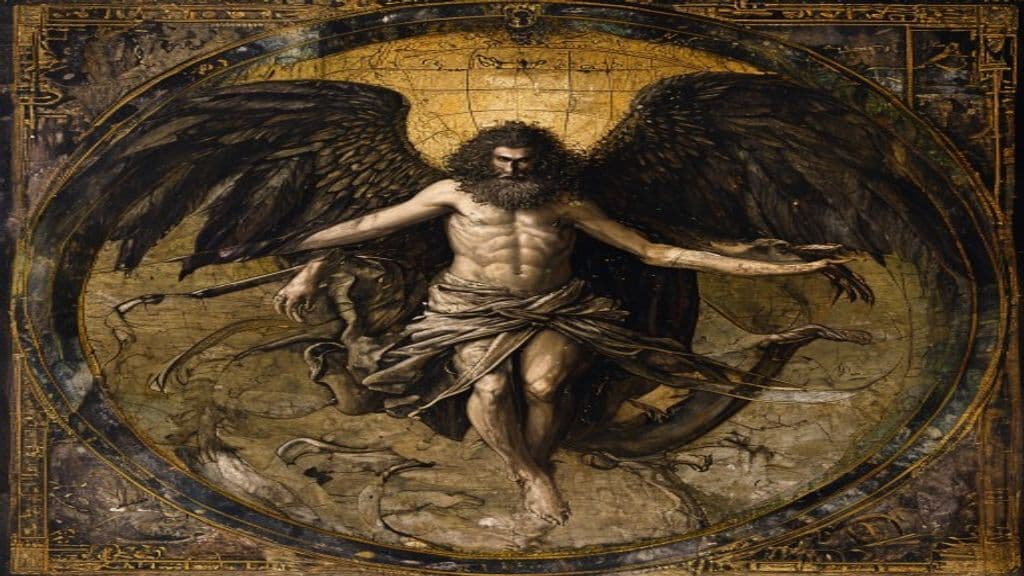
Samael
An angelic figure in Jewish textual traditions whose roles include accuser/adapter (Satanic function), tempter, destroyer/angel of death, and, in later mystical texts, leader of demonic or qlippothic forces. Samael is presented variously across Second Temple literature, midrashim, and Kabbalah; his destructive functions are often framed as serving divine purposes rather than as an independent absolute evil.

Michael
Michael is presented in the supplied sources as a masculine given name and disambiguation headword applied to people, historical rulers, cultural works, places, and other uses; the provided material treats it as an onomastic item rather than as a single supernatural being.

Gabriel
A principal heavenly messenger in Jewish, Christian, and Islamic literatures, Gabriel is portrayed as an archangel who reveals and explains divine messages, announces births and divine intent, and executes certain divine judgments in apocalyptic texts.

Lilith
Lilith is a feminine night‑spirit in Jewish mythic, magical, and folkloric traditions associated with harmful nocturnal activity, especially threats to sleeping people and infants. The figure appears both as a class of night‑spirits (lilit/lilītu) in Near Eastern demonologies and as an individualized dangerous woman in later medieval Jewish narratives and amulets.
Ab-Zohr
Ab-Zohr is the culminating rite of the Zoroastrian Yasna service: a formal offering to the waters (Aban/Apas) that creates the consecrated liquid parahaoma and functions to purify, strengthen, and atone for damage done to waters. It is a ritual action rather than an independent supernatural being.
Aban (Āb/Ābān)
Aban (Avestan apas; Middle Persian āb/ābān) is the collective, sacred principle of the waters in Zoroastrian cosmology — both the element water and its personified hypostases (the Apas/Ahuranis). Aban functions as a primordial, life-giving creation, a calendrical and liturgical focus (day-name, month-name, Abanagan feast), and a ritual object of veneration (ape zaothra, Aban Yasht) rather than a malign force to be expelled.
Aban Yasht
The Aban Yasht is a hymn from the Persian tradition that praises Anahita, a goddess associated with water, fertility, and wisdom. It consists of 132 stanzas and is part of the 21 Yashts collection. (Note: - Power tier should be "Primordial" or possibly "Cosmic", given that it's a hymn of great spiritual significance and associated with a goddess. - The article incorrectly states that Anahita is associa)
Abel
Abel is the second son of Adam and Eve in the Genesis narrative, a shepherd whose accepted offering and subsequent murder by his brother Cain form the biblical account of the first death. Later interpretive traditions expand his role, treating him as an archetypal righteous victim, a postmortem avenging or adjudicating figure, and in some systems (notably Mandaean) identifying him with an angelic lightbeing.
Abraham
Abraham (originally Abram) is the foundational patriarchal ancestor in the Hebrew Bible whose life establishes a covenantal relationship between his family/people and God. He functions as an exemplar of faith, the progenitor of promised descendants, and a narrative anchor for claims of land, blessing, and communal identity in later religious traditions.
Adam and Eve
Adam and Eve are the primordial human pair in the Abrahamic creation narratives who function as the first man and woman, placed in the Garden of Eden to steward creation. Their eating of the forbidden fruit produces a changed human condition—knowledge of good and evil, shame, pain, labor, mortality—and their story underpins later doctrines such as the Christian doctrine of original sin while being read differently across Jewish and Islamic traditions.
Adonai
Adonai (אֲדֹנָי) is one of the sacred Hebrew names used in Judaism to refer reverently to the singular God. It functions as a liturgical and devotional substitute or form for the divine Name and is treated with linguistic and ritual care in Jewish practice; it also appears in Christian liturgy (e.g., the Advent antiphon “O Adonai”).
Adonay
Adonay (אֲדֹנָי, often transcribed Adonai or Adonay) is a sacred Hebrew appellation meaning roughly "Lord" or "Master," used in Jewish liturgical and scriptural language as a reverent name for the divine. In the provided sources it functions as a theological title within Judaism rather than a personified folkloric being; discussions around it center on reverent usage and the communal care taken with divine names.
Aeshma
Aeshma is the Zoroastrian hypostasis of wrath — a fiendish being who personifies rage and functions as an ontological opponent to Ahuric principles and ritual discipline. In scripture and later tradition he distracts worship, foments violence and drunkenness, can be driven off by prayer or by divine agents such as Sraosha and Mithra, and will be overthrown or flee at the final renovation.
Ahriman (Angra Mainyu)
Angra Mainyu (Middle Persian Ahriman) is the hypostasis or personification of destructive, deceitful, and disordering mentality in Zoroastrian tradition. In the earliest (Gathic) layer it is presented as a choiceful destructive mainyu opposed to the constructive Spenta Mainyu; in later Pahlavi exegesis it becomes a personified cosmic antagonist who nevertheless is described as ontologically deficient and non-divine.
Ahura
Ahura is an Avestan term that designates a class of divinities in the Indo‑Iranian and Zoroastrian tradition, marking the sacred ‘lords’ who are to be reverenced and opposed to the rejected class of daevas. In Zoroastrian scripture the label functions as both a technical category and an honorific applied to high divine figures such as Ahura Mazda, Mithra, and Apam Napat.
Ahura Mazda
Ahura Mazda is the principal deity of Zoroastrian tradition, invoked as the supreme source of goodness and wisdom who instructs Zoroaster and commands helper spirits (yazatas). Historically attested in Achaemenid royal inscriptions, Ahura Mazda occupies a central role in Zoroastrian liturgy (notably the Yasna) and in various Iranian religious formulations.
Community Record
- [1]Guardian angel - Wikipedia. Wikipedia, 'Guardian angel' entry (selected excerpts provided in research notes).wiki
- [2]Wikidata: Guardian Angel (Q204841). Wikidata entity for 'Guardian Angel' (referenced in research notes).other
- [3]Guardian Angel Meditation (archive audio). Archive.org audio item titled 'Guardian Angel Meditation' (cited as an illustrative modern use in research notes).other
- [4]Archive item: Bunny Hofberg, Frankie's Feline Fund: Senior Cats' Guardian Angel. Archive.org item referenced among research notes showing modern cultural uses of 'guardian angel' language.other
- [5]Archive item: 235 - Suburban Transpondency. Archive.org item referenced among research notes showing contemporary references to the guardian angel concept.other