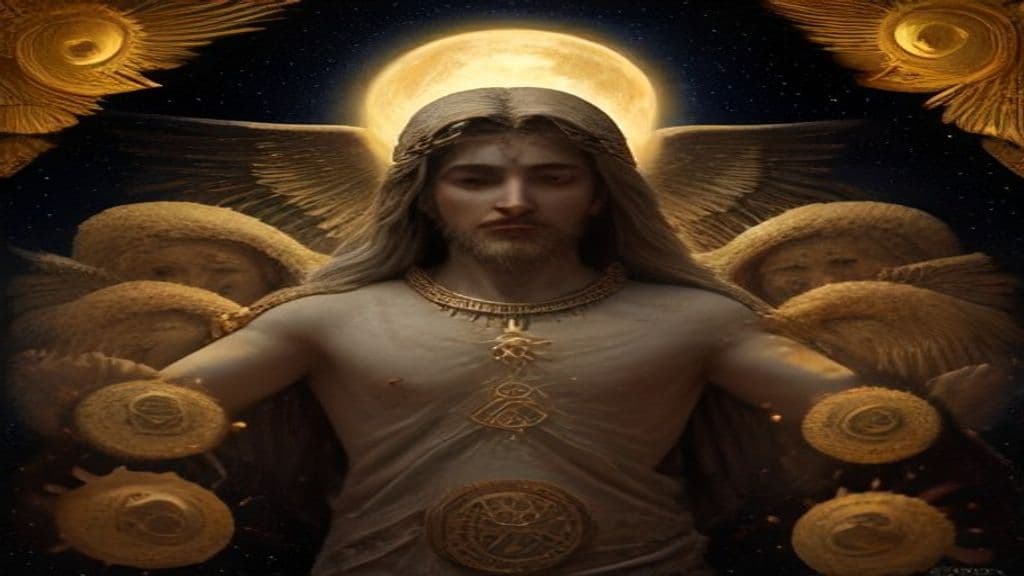
In Hebrew scripture the phrase appears as צבא השמים (tsva hashamayim, "host/army of the heavens") and in divine titles such as YHWH Tzevaot ("YHWH of Hosts"), situating the hosts as God’s retinue (source: Wikipedia). Ugaritic texts employ parallel expressions (e.g., a "council of the heavens" equated with an "assembly of the stars" and the "sons of El"), indicating an older Near Eastern template of a divine council/host. In Arabic the terms jund/junud (plural) and Jundallah denote an "army/host of God," and Quranic narratives describe such hosts being sent to assist believers in battle (e.g., narratives associated with Badr), while also acknowledging opposing "hosts" (junud iblīs) under evil influence (sources: research notes and provided URLs). Together these sources portray the heavenly host as a culturally specific way of imagining ordered celestial bodies and/or angelic forces attached to divine authority rather than a single uniform entity.
Descriptions vary by text: as celestial bodies when the phrase denotes the sun, moon, and stars (Deuteronomic injunctions against worshipping the "host of heaven"); as a visible multitude of angels praising or accompanying a messenger (Luke 2:9–14 reports "a multitude of the heavenly host" praising God); or as military-personnel figures in narrative encounters (Joshua 5:13–15 depicts a single armed "commander of the army of the Lord"). Sources do not give consistent iconographic detail beyond collective, martial, or celestial imagery.
Sources attribute organizational and service roles: forming an ordered retinue for praise and worship, carrying out divine commands, and serving as a hierarchical, commanded force (captains and encampment metaphors appear in Biblical texts). Some passages and traditions portray the hosts as capable of intervening in human battles on God's behalf (Quranic accounts of angels aiding believers at Badr) and participating in cosmic conflict narratives (rev. and prophetic imagery are cited in scholarship). When the term denotes celestial bodies, the practical consequence in scripture is that they may become objects of devotion to be avoided rather than agents acting independently of divine command.
Weaknesses
- conditionprohibition against worshipping the host of heaven (scriptural injunction)
Wards
- conditionavoidance/prohibition of worshipping the host of heaven (Deuteronomic injunction)

Djinn
The class of supernatural beings created from smokeless fire in Islamic cosmology — a parallel civilization to humanity, capable of belief or unbelief, with their own prophets, society, and judgment before God.

Jann
The weakest class of djinn in Islamic tradition, associated with desert winds and taking the form of snakes or whirlwinds, dwelling in empty wilderness and posing little threat to those who know the proper invocations.

Shaitan
A class of corrupted djinn who follow Iblis and dedicate themselves to leading humans astray — distinct from Iblis himself, the Shayatin are a species of evil djinn who whisper doubts and temptations into the minds of the living.
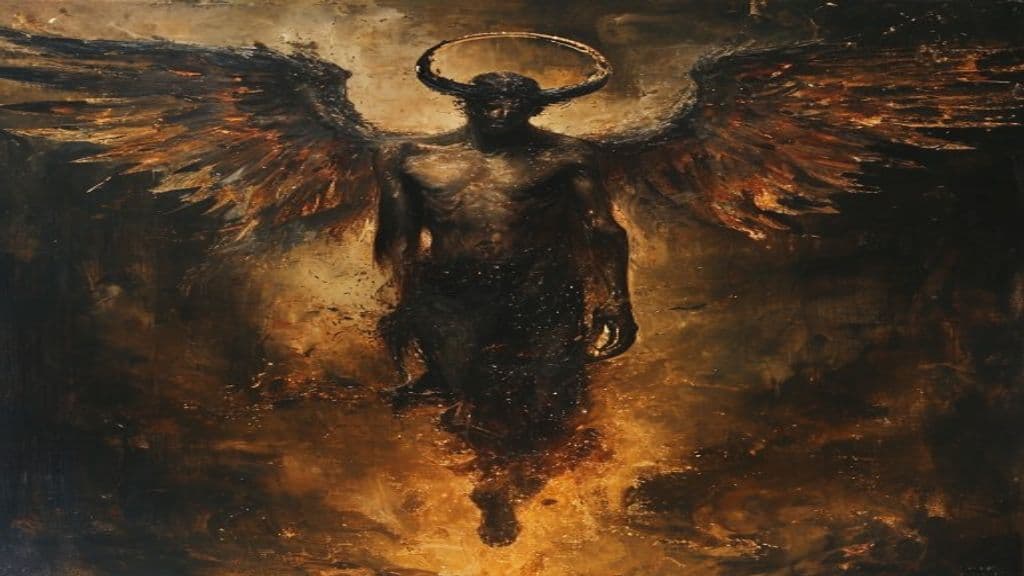
Iblis
The primordial deceiver in Islamic theology; a jinn who refused God's command to bow before Adam and was expelled from heaven. The source of all temptation and whispered suggestion.
Abel
Abel is the second son of Adam and Eve in the Genesis narrative, a shepherd whose accepted offering and subsequent murder by his brother Cain form the biblical account of the first death. Later interpretive traditions expand his role, treating him as an archetypal righteous victim, a postmortem avenging or adjudicating figure, and in some systems (notably Mandaean) identifying him with an angelic lightbeing.
Abigail
Abigail is a female figure in the Hebrew Bible portrayed in 1 Samuel 25 as the intelligent and beautiful wife of Nabal who intervenes to prevent David from committing violence; later tradition regards her as one of the Tanakh's seven female prophets and as a model of beauty and wisdom.
Abraham
Abraham (originally Abram) is the foundational patriarchal ancestor in the Hebrew Bible whose life establishes a covenantal relationship between his family/people and God. He functions as an exemplar of faith, the progenitor of promised descendants, and a narrative anchor for claims of land, blessing, and communal identity in later religious traditions.
Abraham (Ibrāhīm) in Islam
Ibrāhīm (Abraham) in Islam is a human prophet and messenger chosen by God, a paradigm of pure monotheism (hanīf), patriarchal ancestor to later peoples and prophets, and traditionally regarded as having helped establish the Kaʿbah with his son Ismāʿīl. He is called Khalīl Allāh ('Friend of God') and is central to rites commemorated in Hajj and Eid al‑Adha.
Adam
In the Hebrew Bible (Genesis 1–5) Adam is the first human, both as an individual progenitor and as a term for humankind. Created by God from the dust of the ground and animated by God's breath, Adam is placed in the Garden of Eden, names the animals, receives divine command, disobeys with Eve, and fathers the first named human descendants (Cain, Abel, Seth).
Adam (ʾĀdam)
In Islamic theology Adam (Arabic: آدم, ʾĀdam) is presented as the first human being and the first prophet (nabī), created by God from earth/clay, granted life by God's spirit, placed in a paradisal Garden, taught knowledge (the "Names"), tested by divine command, tempted by Iblīs, and ultimately sent to live and die on Earth while remaining eligible for repentance and forgiveness.
Adam and Eve
Adam and Eve are the primordial human pair in the Abrahamic creation narratives who function as the first man and woman, placed in the Garden of Eden to steward creation. Their eating of the forbidden fruit produces a changed human condition—knowledge of good and evil, shame, pain, labor, mortality—and their story underpins later doctrines such as the Christian doctrine of original sin while being read differently across Jewish and Islamic traditions.
Agag
Agag (Hebrew אֲגָג, ʾĂḡāḡ) is presented in the Hebrew Bible and later Jewish exegetical tradition as a royal personal name or dynastic title applied to the kings of Amalek. Treated as a human foreign king and eponymous ancestor of Amalekite hostility, Agag functions in scripture and rabbinic literature as a political antagonist whose fate embodies themes of memory, justice, and the consequences of royal failure.
Allah
Allah is the Arabic-language term for the singular monotheistic God of the Abrahamic tradition as used in Islamic theology and by Arabic-speaking Jews and Christians. Linguistically related to other West Semitic divine names, the term in Islamic usage functions as God's unique proper name (Lafẓ al-Jalālah) and denotes the transcendent creator and sovereign of the universe.
Alpha and Omega
A titulary formula and visual symbol formed from the first and last letters of the Greek alphabet (Α/α and Ω/ω), used in Christian scripture and art to denote God's or Christ's totality — 'the beginning and the end.' It functions as a theological appellation rather than an independent supernatural being.
Al‑Yasa (Elisha)
Al‑Yasa (Elisha) is a prophetic figure attested in Abrahamic scriptural traditions. In the Hebrew Bible he is described as an Israelite prophet and 'wonder‑worker'; later traditions in Christianity and Islam also recognize him among the line of prophets.
Angel
A spiritual or heavenly being functioning primarily as a messenger and intermediary between a transcendent deity and humanity; angels also act as protectors, guides, and executors of divine will across several Abrahamic and adjacent traditions.
Community Record
- [1]Heavenly host. Wikipedia, entry 'Heavenly host'wiki
- [2]Heavenly Hosts. Wikipedia, 'Heavenly Hosts' (related entry noted in research notes)wiki
- [3]Was Swedenborg Crazy? (archive audio program). Archive.org audio program summary cited in research notes regarding later visionary treatmentsother
- [4]The Carols Of Christmas: The Angels Song | Luke 2:9-14 (archive). Archive excerpt citing Luke 2:9–14 about a multitude of the heavenly hostliterary
- [5]The Tzevaot - The Heavenly Host, the Abrahamic Pantheon (forum summary). Onyx Path forum discussion summarizing tzevaot/YHWH Tzevaot usage and martial imagery (cited in research notes)other
- [6]Jesus Superior To The Heavenly Host [Appendices]. Comparative religious discussion cited in research notes addressing heavenly host terminologyother