The English term 'hobgoblin' derives from 'hob' with earliest recorded use around 1530; the sources present the hobgoblin not as a single creation myth figure but as a vernacular category of domestic spirit inhabiting households and related to other small household fairies and brownies. Over time narratives show interaction with Christian institutions (clerical prayer or banishment), which affected popular portrayals.
Folkloric descriptions commonly depict hobgoblins as small humanoid domestic spirits—often described in summary accounts as 'small, hairy little men' and comparable in size and general bodily form to brownies (source material notes variability). Specific regional types have characteristic guises: for example, Blue Burches is described in some accounts as an old man in baggy blue breeches and is attested in particular tales to assume forms such as a white horse, a black pig, or blue smoke. Literary uses (Shakespeare's Puck) explicitly identify that character as a hobgoblin in the source tradition, and later fictional usages (Tolkien, comics) apply the name to quite different beings; those later adaptations are distinct from the household spirit described in folkloric accounts.
Accounts attribute household labour to hobgoblins—doing odd jobs while families sleep (dusting, ironing, threshing corn in certain tales) in return for simple food such as bowls of cream. They are also known for mischief and practical jokes, and some variants can be belligerent: stories record annoyance or punishment directed at those who offend them (certain tales note dislike of clergymen and teetotalers). Shapeshifting is attested in particular named examples (e.g., Blue Burches; Shakespeare's Puck is presented as shapeshifting in his monologue). Conditional reciprocity is common: food offerings are the standard recompense, while presentation of clothing in many tellings causes the spirit to depart (sources vary on whether clothing offends or merely changes behaviour). Exceptional anecdotes record healing (a Yorkshire dobby said to have cured whooping cough) and persistence such as following a family to a new house in individual narratives.
Weaknesses
- ritualReceiving clothing (narrative motif)
- ritualClerical prayer / banishment
Wards
- conditionProvide simple food (bowls of cream or similar offerings)
- ritualClerical intervention/prayer to confine or banish

Bauchan
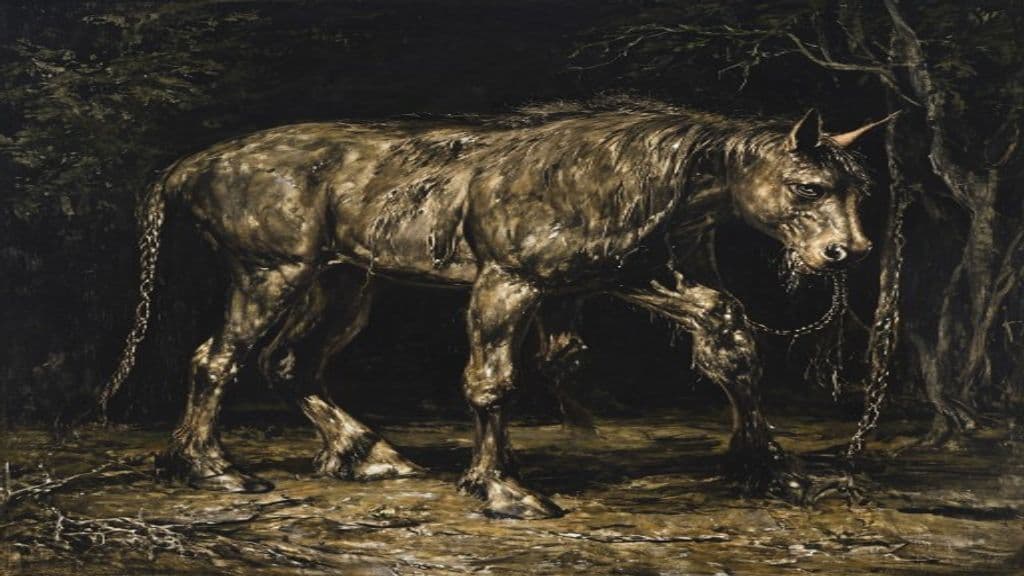
A household-associated hobgoblin from Scottish Highland folklore, the bauchan is portrayed as ambivalently belligerent and helpful; in at least one recorded tale it accompanies a human household across the Atlantic and can shapeshift into a goat.
Boggart
A polyvalent supernatural being in north‑west English and adjacent dialect traditions, the boggart can be a household spirit attached to a family or dwelling or a localized landscape spirit tied to a particular place. Accounts vary widely by locality, recording mischievous, malicious, and sometimes frightening behaviours rather than a single fixed form.
Puck
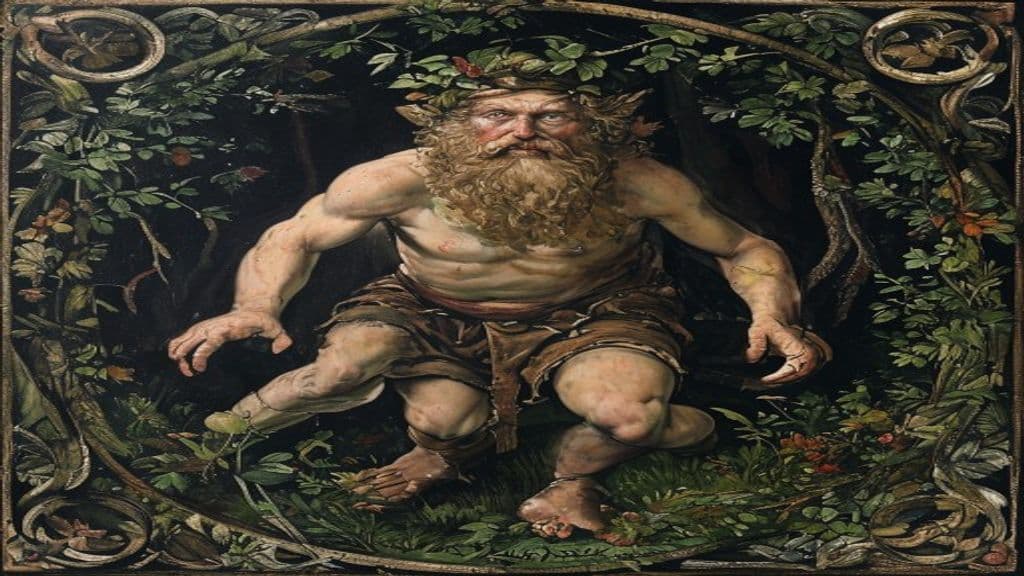
Puck is a northwest European liminal spirit occupying a space between household sprite and wild fairy trickster. Portrayed as a domestic helper who expects food offerings and as a nocturnal jester of the fairy court, Puck performs both useful chores and mischievous pranks in folklore and literature.
Abaddon
In Hebrew scripture Abaddon is primarily a noun meaning 'destruction' or a section/condition of the underworld paired with Sheol; in the New Testament Book of Revelation Abaddon is personified as an angelic figure (Greek Apollyon) described as the king of an army of locusts released from the abyss during the apocalypse.
Abadir
Abadir is a polysemous name attested in distinct cultural contexts: a legendary founding saint and clan ancestor in eastern Ethiopia (Sheikh Abadir Umar Al‑Rida / Aw Abadir), a term applied to cone‑shaped cult stones in Phoenician religious description, and a personal name of a martyr (Abadir/Apater) in the Coptic Synaxarium. The attestations are independent usages of the same name rather than a single supernatural being.
Abadiu of Antinoe
Abadiu of Antinoe was a fourth‑century bishop of Antinoe (Antinoopolis, in Roman Egypt) commemorated as a martyr and saint in the Coptic Orthodox Church, with a feast day on 26 December. Sources record that he was killed during a theological dispute with Arian opponents and reference him in collections of Egyptian martyrs.
Abagtha
Abagtha (Hebrew: אבגתא, ’Ǎḇaḡṯā) is a named human court official in the Hebrew Bible’s Book of Esther, listed among seven chamberlains who ministered before King Ahasuerus and were commanded to bring Queen Vashti before the king. He is attested only in Esther 1:10 and is presented as an institutional palace attendant rather than a supernatural being.
Abandinus
Abandinus is a locally attested Romano‑Celtic theonym known from a single inscribed bronze feather (votive object) dedicated at Godmanchester (the Roman fort Durovigutum) in Cambridgeshire. Scholars interpret him as a local god or male spirit tied to a specific place and possibly associated with a nearby spring or stream; this association is tentative and based on etymological readings of the name.
Abanoub
Abanoub is a 4th‑century Egyptian Christian child martyr venerated in the Coptic tradition. Remembered for his public confession of Christ, miraculous healings associated with his passion, and the translation and veneration of his relics, his feast is observed on July 31 (Epip 24) and his cult centers include Nehisa and Samanoud.
Abarta (Ábartach)
Abarta (also Ábartach) is a figure of Irish myth who, in surviving accounts, tricks Fionn mac Cumhaill's warriors by giving them a supernatural grey horse that bears them into the Otherworld. Sources variably identify him as a member of the Tuatha Dé Danann or as a Fomorian; after the incident he is compelled to release the captured warriors and is refused entry to the Fianna.
Abaskhiron the Soldier
A Coptic Orthodox martyr venerated for refusing imperial idolatry during the Diocletian persecution; reputedly healed by the Archangel Michael, preserved in monastery relics, and commemorated on 14 June (7 Paoni).
Abcán (Abhcán)
Abcán (modern spelling Abhcán) is a named dwarf poet and musician of the Tuatha Dé Danann in Irish myth. He appears in a small number of narratives as a musician whose art has soporific power and as the ferryman who brings the goddess Ruad from the Otherworld to the human world.
Abdel Messih El-Makari
Abdel Messih El-Makari (1892–1963) was a Coptic Orthodox monk and priest venerated as a 20th‑century Coptic saint. Associated with the Monastery of Saint Samuel the Confessor and the Monastery of Saint Macarius (Scetes/Wadi El‑Natrun), he is remembered for humility, asceticism, charity, and reported spiritual gifts such as prescience, discerning of spirits, and healing.
Abdiel
Abdiel (Hebrew עֲבְדִּיאֵל) is primarily a theophoric Hebrew personal name meaning "servant of El/servant of God," attested once in the Hebrew Bible (1 Chronicles 5:15). In later literature—most notably John Milton's Paradise Lost—Abdiel is reimagined as a faithful seraph who opposes Satan's revolt. The provided sources do not treat Abdiel as an autonomous folkloric spirit type or record rituals or wards associated with the name.
Abel
Abel is the second son of Adam and Eve in the Genesis narrative, a shepherd whose accepted offering and subsequent murder by his brother Cain form the biblical account of the first death. Later interpretive traditions expand his role, treating him as an archetypal righteous victim, a postmortem avenging or adjudicating figure, and in some systems (notably Mandaean) identifying him with an angelic lightbeing.
Community Record
- [1]Hobgoblin (Wikipedia). Hobgoblin. Wikipedia. Retrieved from https://en.wikipedia.org/wiki/Hobgoblinwiki