
Attested evidence does not preserve a native Elamite origin myth for Jabru. In Mesopotamian scribal practice the name functions as the label applied to an Elamite high deity: a Šurpu commentary equates Jabru with the Mesopotamian sky-god Anu, while the god list An = Anum lists a variant reading (Yabnu / dia-ab-na) glossed as the 'Enlil of Elam.' Mesopotamian texts therefore use theonymic equivalence to place Jabru within their own cosmological taxonomy rather than preserving an independent Elamite narrative. There is also a geographic note in Assyrian/Tākultu material that an Elamite town named Jabru existed (whose tutelary deity in that text is the goddess Jabrītu), but the deity-name Jabru itself is not otherwise attested in native Elamite inscriptions preserved in the cited scholarship. Scholarly proposals (for example, a speculative suggestion that Jabru might have been regarded as the father of Humban by analogy with Anu–Enlil genealogies) are explicitly treated as hypotheses and remain contested in later literature.
No iconographic or corporeal description of Jabru is preserved in the cited sources. The name appears only in textual contexts (god lists, Šurpu commentary, and an Assyrian Underworld Vision text) and there are no surviving Elamite inscriptions or visual representations in the provided material that record Jabru's appearance.
In Mesopotamian textual usage Jabru is equated with Mesopotamia's highest-order sky deities (Anu in a Šurpu commentary; Yabnu as 'Enlil of Elam' in An = Anum), situating the name conceptually at the top of divine hierarchy when used that way. Separately, in the Assyrian Underworld Vision of an Assyrian Prince (VAT 10057) Jabru functions as one of three gods guarding the corpse of a king (with Humban and Napirisha), indicating a guardian role within a funerary/underworld scene in that literary context. Beyond these equational and literary roles, the sources provide no independent mythic actions, powers, or cultic behaviors attributable to Jabru in original Elamite tradition.
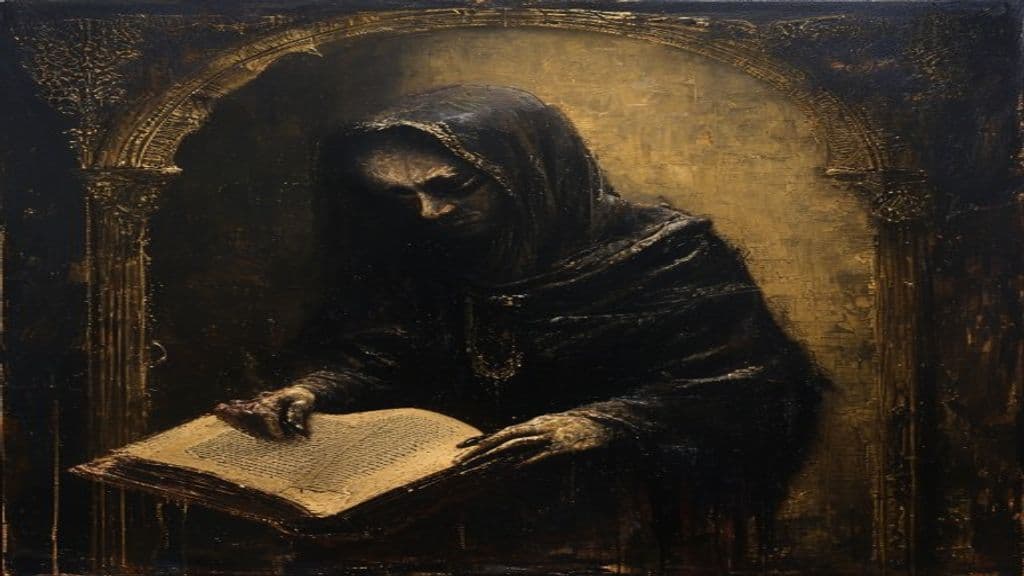
Humban
Ancient Elamite god associated with divine protection and revered as a protector deity. (Note: 1. Power tier: Humban's association with "divine protection" and his importance as a deity suggest he should be placed at Ancient power tier is correct. 2. Weaknesses: absence of specific weaknesses m)
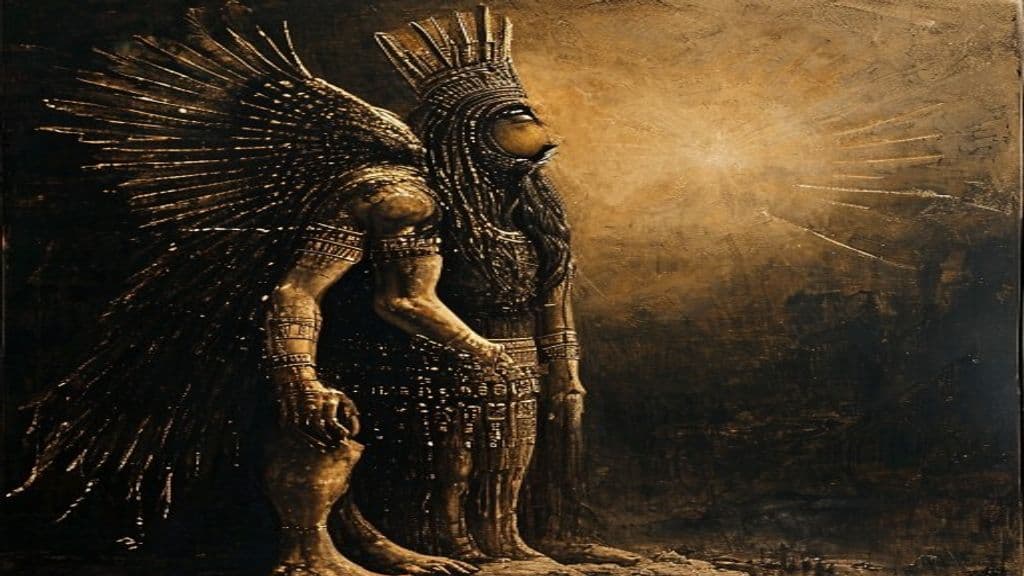
Anu
Anu (Sumerian An; Akkadian Anu/Anum) is the divine personification of the sky in ancient Mesopotamian religion, traditionally ranked at the top of god‑lists as the source of heavenly authority (anûtu/anuti) and the fount of legitimate rule for gods and kings. Though supreme in genealogies and astronomical schema, many periods portray him as a relatively passive or figurehead deity whose active cultic role is limited until a late Seleucid reinvention in Uruk.

Enlil
Enlil is a principal deity of ancient Mesopotamia, originally preeminent in the Sumerian pantheon as a supreme lord who orders the world by separating heaven (An) from earth (Ki). His principal cult center was the E-kur temple at Nippur, and his cult practices focused on daily offerings and priestly care of his cult statue; mythic traditions portray him as both benefactor and punisher in the administration of cosmic and social order.
Izhma (forest spirit)
Izhma is a putative name sometimes discussed in secondary sources in relation to the Izhma River and the Izhma Komi people, but the provided materials contain no primary folkloric attestations describing an entity named Izhma as a forest spirit. References to spirits and landscape beings exist in the regional cultural context, but an Izhma spirit is not documented in the supplied sources.
Iðunn
Iðunn is an Old Norse goddess of the Aesir who keeps ash-wood box(es) of apples that restore the gods' youth. She is attested as wife of the skald-god Bragi and central to a myth in which her abduction by the jötunn Þjazi causes the gods to age until she is returned.
Ištaran
Ištaran is the tutelary deity and divine judge of the Mesopotamian city of Der. He is attested from the Early Dynastic period through the Middle Babylonian period, associated with serpents (especially the snake god Nirah), and was politically important in legitimizing local rulers; his cult statue was at times seized by Assyrians to secure the city's loyalty.
Išḫara
Išḫara is a polyvalent ancient Near Eastern goddess first attested at Ebla in the third millennium BCE, later incorporated into Mesopotamian, Hurrian, Hittite and other regional religious traditions. She functioned as a tutelary royal deity, an authority over love and the institution of marriage, an oath- and divination-linked divine figure, and was associated symbolically with reptiles and, in some Mesopotamian contexts, scorpions.
JATO Rocket Car
A modern Anglophone urban legend and meme about a Chevrolet Impala fitted with a JATO unit that achieves extreme speeds and crashes spectacularly; circulated widely on Usenet, email lists, hacker zines, and popular media and subsequently debunked by authorities and experimenters.
Jabiru
Jabiru primarily denotes a large Neotropical stork species (Jabiru mycteria). The word, from Tupi–Guaraní meaning "swollen neck," is also used as a place-name (Jabiru, Northern Territory) and as a modern commercial/technical name (e.g., Jabiru Aircraft, rocket/vehicle names, and a bacteriophage). The provided sources do not document any supernatural or mythic entity named Jabiru.
Jacawitz
Jacawitz is a Postclassic Kʼicheʼ Maya mountain-and-fire deity, patron of the Ahaw Kʼicheʼ lineage and member of a triad with Tohil and Awilix. Associated with a temple-pyramid at Qʼumarkaj and with foundation myths locating the gods at Tollan, Jacawitz indexes mountain, fire, and lineage symbolism and likely received demanding offerings in ritual practice.
Jack Pumpkinhead
A constructed, magically animated humanoid from L. Frank Baum's Land of Oz, created by the application of the Powder of Life to a body of wood and a carved pumpkin head. Treated as a social resident of Oz, he gardens pumpkins for replacement heads and appears across Baum's sequels and later continuations and adaptations.
Jack the Giant Killer
A cycle of Cornish/British folktales about a clever young man named Jack who, during the reign of King Arthur, outwits, ambushes, and kills a number of man- and livestock-eating giants, freeing captives and appropriating wealth. The tales place Jack in an Arthurian, magical landscape populated by giants, sorcerers, enchanted persons, and magical objects.
Jack-o'-lantern
A jack-o'-lantern refers both to a carved, hollowed vegetable lantern (commonly a pumpkin in North America; historically turnips, mangelwurzels or rutabagas in Britain and Ireland) used at seasonal festivals such as Halloween, and to an older English dialect name for wandering peat-bog lights (ignis fatuus / will-o'-the-wisp). The carved object and the atmospheric phenomenon are related in folk imagination: the older name for ghost-lights helped supply the name and some meanings of the carved lantern used at liminal festivals.
Jackal (folklore)
A liminal canid figure in multiple cultural traditions, the jackal functions as a symbol and occasional ritual embodiment connected to desolation, funerary contexts, cunning wisdom, and in some tantric contexts a manifestation of the goddess Kali. Sources treat it primarily as an animal with layered symbolic and mythic uses rather than a consistently personified independent supernatural agent.
Jacob
Jacob (Hebrew: יעקב, Yaʿaqōv) is a central human figure in the Book of Genesis, portrayed as the third Hebrew patriarch and the progenitor of the Twelve Tribes of Israel. The supplied sources treat him as a legendary/historical ancestor within the Abrahamic family line rather than as a supernatural being.
Community Record
- [1]Jabru. Wikipedia, 'Jabru' (summary of scholarship and attestations)wiki
- [2]Underworld Vision of an Assyrian Prince (VAT 10057) reference. Assyrian literary text VAT 10057 cited in secondary literature describing Jabru as one of three gods guarding a king's corpse (with Humban and Napirisha)literary
- [3]An = Anum (god list) entry: Yabnu / dia-ab-na. Mesopotamian god list An = Anum gloss equating Yabnu (dia-ab-na) as 'Enlil of Elam'; discussed in Lambert and secondary scholarshipacademic
- [4]Šurpu commentary (equation of Jabru with Anu). Šurpu ritual commentary cited in secondary literature identifying Jabru as the Elamite equivalent of Anuacademic
- [5]Tākultu and geographic notes on the town Jabru / Jabrītu. Assyrian Tākultu text noting an Elamite town named Jabru whose tutelary deity is the goddess Jabrītu; referenced in secondary summariesacademic
- [6]Secondary scholarship: Lambert / Koch / Henkelman / Loktionov discussions. Wilfred G. Lambert on name-variants; Heidemarie Koch's speculative genealogy proposal (noted as speculative); Wouter Henkelman and Alexandre Loktionov on contextual interpretation and cautionacademic