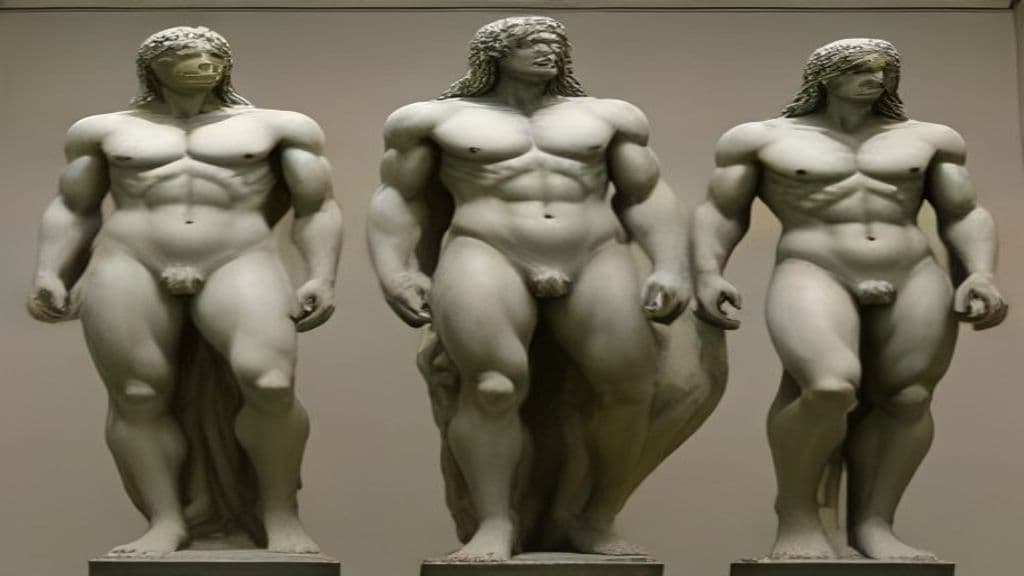
In Greek genealogical tradition the Lapiths are an eponymous people descended from a progenitor Lapithes (Λαπίθης). In some versions Lapithes and Centaurus are given as twin sons of the god Apollo and the nymph Stilbe, making Lapiths and centaurs kindred races in the mythic imagination. Their origin stories function as local founding and heroic-age genealogies for Thessalian groups and connect mortal lineages to divine ancestry.
Literary and visual sources present the Lapiths as human warriors and horsemen of Thessaly. In classical art they are depicted as male combatants — often naked or lightly armed in the heroic style — engaged in mortal combat with centaurs (notably on the south metopes of the Parthenon, on pedimental sculpture such as the Temple of Zeus at Olympia, and in vase and terracotta decoration). Iconography emphasizes horsemanship and martial equipment consistent with Thessalian cavalry traditions rather than any supernatural bodily traits.
Mythic accounts attribute to the Lapiths prowess as horsemen and warriors and credit in mythic tradition certain cultural innovations (for example the bridle's bit is ascribed to them in legendary attributions). Their defining collective behavior is defending social order and civilized norms: at the wedding of King Pirithous they repel the drunken, lawless behavior of centaurs in the Centauromachy. Individual Lapiths appear as notable heroic figures in myth (e.g., Pirithous, Hippodameia as bride associated with horse‑taming imagery, Caeneus who in myth was transformed by Poseidon into an invulnerable male warrior, and commanders such as Polypoetes and Leonteus who appear among those sent to Troy). These accounts are narrative myth, not descriptions of supernatural powers beyond exceptional martial skill and, in Caeneus’s case, a divine transformation.
Weaknesses
- conditionmortal human vulnerability (no recorded magical immunity)
Wards
None recorded.
Centaur
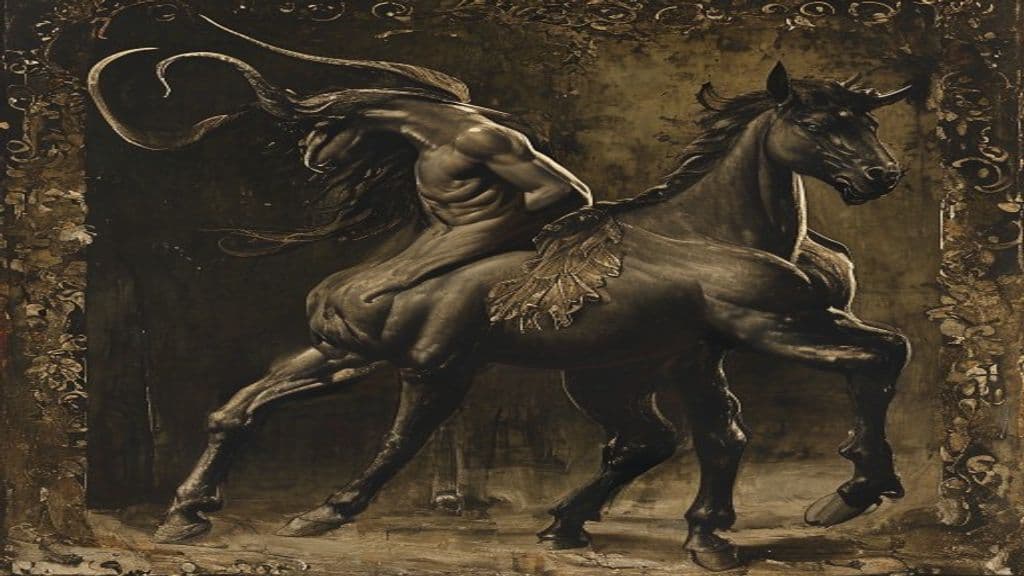
A mythic hybrid from ancient Greek tradition with the upper body of a human and the lower body and legs of a horse. Centaurs appear as a tribal population associated with mountainous and wooded regions of Greece and embody tensions between human social order and untamed nature.
Theseus
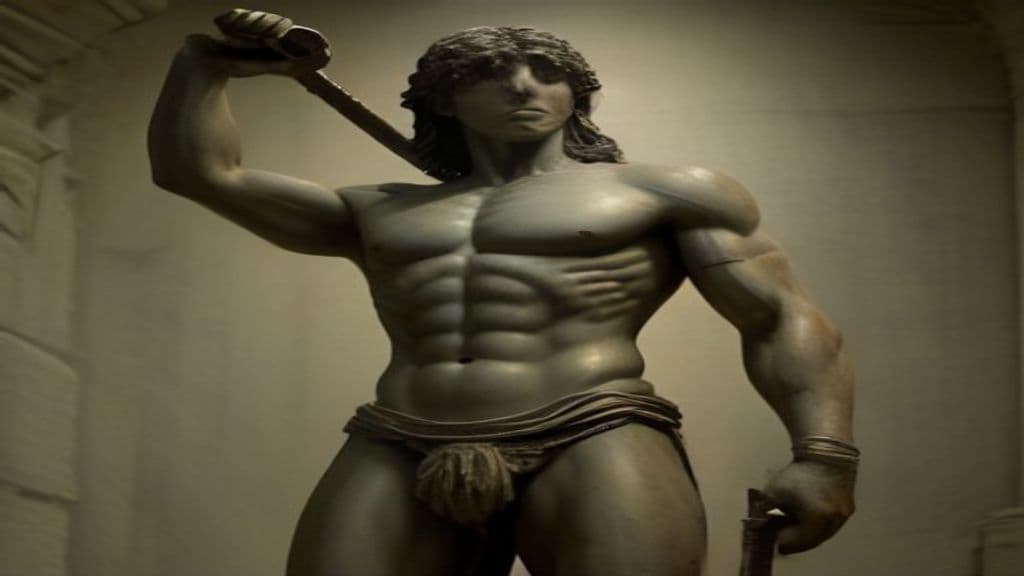
Theseus is a legendary hero of Greek myth credited with clearing dangers from Attic roads, slaying the Minotaur, and performing foundational civic acts for Athens (including synoikismos and establishing cult practice). He is portrayed as of mixed mortal and divine parentage and functions as a culture-hero and exemplar in later authors' moralizing biographies.
Caeneus
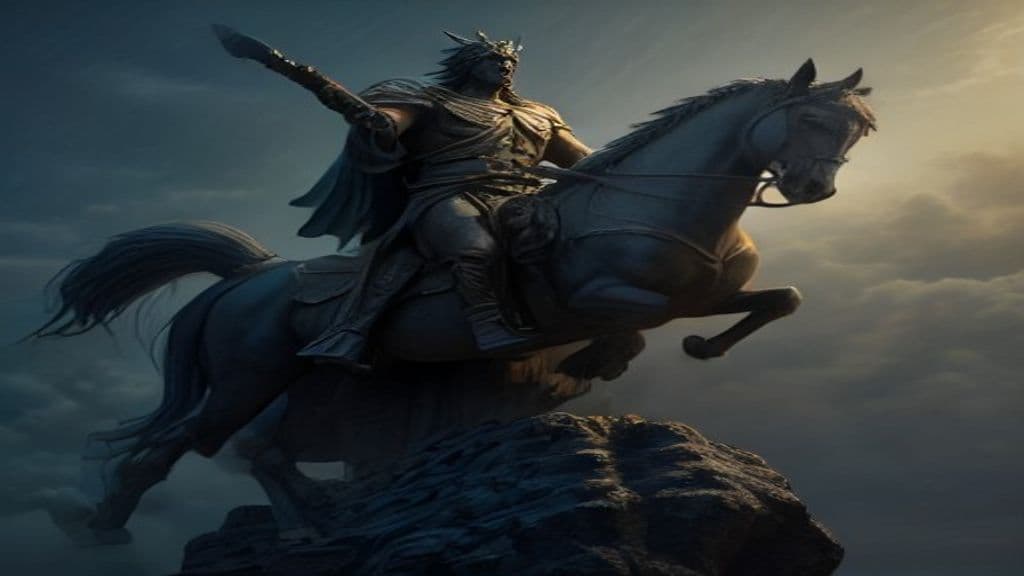
Caeneus is a heroic Lapith of Thessaly in Greek myth, originally born Caenis (female) and transformed by Poseidon into an invulnerable man. Celebrated among the generation of pre-classical heroes, Caeneus is famed for martial prowess and for his death during the Centauromachy, when Centaurs battered him into the earth.
Aegimius
Aegimius (Ancient Greek: Αἰγίμιος) is a legendary ancestral king and lawgiver of the Dorians in Greek tradition. He appears in mythic-historical narratives as the eponymous progenitor of Dorian subgroups, a military leader who enlisted Heracles' aid, and the adoptive guardian of Hyllas, linking the Dorians to the Heracleidae.
Aloeus
Aloeus (Ancient Greek: Ἀλωεύς), sometimes rendered Haloeus, is a mytho-historical/genealogical figure in Greek tradition. Two distinct personages appear in sources: a Thessalian prince (son of Poseidon and Canace) connected to the Aloadae, and a son of Helios associated with sovereignty in Asopia (Sicyon). He functions as an eponymous ancestor and local founder-figure rather than as a supernatural actor.
Amphion and Zethus
Amphion and Zethus are twin brothers of Greek myth who function as the culture‑founding heroes of Thebes: Amphion the musician and Zethus the hunter/herdsman who together conquer Thebes, build the Cadmea, and rule jointly. Their story links human founders with gods (commonly Zeus as father; Hermes, Apollo and Artemis as intervening deities) and ends in later family tragedy surrounding Niobe and divergent accounts of the brothers' deaths.
Autochthe
Autochthe (Ancient Greek: Αὐτόχθη) is a minor mythological princess of the Perseid line, named in classical genealogies as a daughter of Perseus and Andromeda. In some traditions she is said to have married Aegeus of Athens and borne daughters but no sons, and her chief narrative role is as a dynastic connector between ruling houses (Argos/Mycenae and Athens).
Autochthon (ancient Greece)
In ancient Greek myth and civic ideology, an autochthon is an 'earth-born' person or people—literally generated by the soil of a place—to claim the deepest form of indigenous origin and thereby political legitimacy. The term functions as a social-mythic category grounding territorial belonging and priority rather than as an independently acting supernatural creature.
Coresus
Coresus is a name borne by two mortal figures in Greek mythic tradition: an autochthonous founder associated with the sanctuary of the Ephesian Artemis, and a priest of Dionysus at Calydon whose unrequited love and prayer to the god bring a lethal frenzy on the city and culminate in his self-sacrifice. Both roles are attested in summaries of Pausanias' accounts preserved in modern reference works.
Daphne
Daphne (Ancient Greek Δάφνη) is a mythic woman or nymph in Greek tradition who, pursued by Apollo, is transformed by a deity into the laurel tree (Laurus nobilis). The story explains the sacred status of the laurel and its ritual use as Apollo's emblem and as the victor's wreath at the Pythian Games.
Daseatas
Daseatas is a mythic Arcadian prince attested in ancient genealogical lists as one of the many sons of King Lycaon and is reputed as the eponymous founder of the Arcadian city called Dasea. He is known only from brief classical attestations summarized in modern reference works (notably Pausanias and Dionysius of Halicarnassus as cited in modern summaries).
Idmon (Argonaut)
Idmon (Ancient Greek: Ἴδμων) is a figure in the Greek Argonautic cycle attested as an Argonaut with a prophetic association; some traditions name him a son of Apollo. He joins the voyage to Colchis but, in at least one source, dies on the outward journey after being wounded by a wild boar.
Meleager
Meleager is a named mortal hero of ancient Greek myth, a prince of Calydon famed as the leader and host of the Calydonian boar hunt. His life is bound to a prophesied household token (a charred piece of wood), his actions precipitate family conflict and metamorphosis, and he is remembered in local cult at Calydon and in epic and Hellenistic literary traditions.
Mestra
Mestra (Μήστρα) is a mortal woman in ancient Greek myth who, according to surviving sources, was granted the ability to change her shape by the god Poseidon. Her metamorphic gift is used to escape slavery and to provide for her father Erysichthon; in other traditions Poseidon carries her to Cos where she bears a son, Eurypylus.
Nemean Lion
A singular monstrous lion of Greek myth that terrorized the region of Nemea and was slain by Heracles as the first of his Twelve Labours. Noted for an impervious golden hide and claws 'sharper than mortal swords,' its pelt becomes Heracles' emblem and protective mantle.
Community Record
- [1]Lapiths - Wikipedia. Wikipedia, 'Lapiths'wiki
- [2]Lapiths - in ancient sources @ attalus.org. Attalus: Lapiths (collection of ancient source citations)other
- [3]Colors of Ancient Europe – Young Lapith holds a Centaur from behind with one hand.... archive.org video caption describing Parthenon metopes showing Lapiths and centaursother
- [4]Terracotta kyathos (cup-shaped ladle) depiction. archive.org item showing terracotta imagery of Lapiths and centaursother
- [5]Olympia temple of Zeus pediment Apollo Centaurs Lapiths. archive.org image of pedimental sculpture depicting Lapiths and centaurs at Olympiaother
- [6]Ixion, King of the Lapiths, Deceived by Juno, Who He Wished to Seduce - Wikipedia. Wikipedia entry linking Lapith royal lineage and mythic episodeswiki
- [7]Encyclopedia of Greek Mythology: Lapiths (MythWeb). MythWeb, 'Lapiths' entry and galleryother
- [8]Artvee — Centaur and Lapith / Battle of the Centaurs against the Lapiths. Artvee image reproductions of Lapith-centaur scenesother