
The mousquetaire archetype originates in historical-military and literary representations of musketeers; most prominently, Alexandre Dumas's 1844 novel The Three Musketeers depicts mousquetaires as swashbuckling, chivalrous swordsmen operating in early modern France. In modern popular culture the label has been repurposed: in French-language episodes of the children's series La Maison de Mickey a figure or place called "le Mousquetaire" functions as a repository or provider of whimsical tools for the characters. No source provides an origin story for an individual named "Thomas le Mousquetaire," and no folkloric or supernatural origin for such a figure is attested in the supplied materials.
Sources do not describe a physical appearance for any supernatural figure named Thomas le Mousquetaire. Genre descriptions from Dumas evoke the swashbuckler image typical of musketeers—period costume, swords, and martial bearing—while the La Maison de Mickey episode describes the Mousquetaire in functional terms as the place/person where Mickey collects props such as a giant toothbrush, a bag of peanuts, oversized pants and an "outil mystère," suggesting a whimsical tool-bag or storeroom motif rather than a consistent physical portrait. The supplied materials explicitly lack any specific physical description of a person called Thomas le Mousquetaire.
No supernatural abilities are ascribed to Thomas le Mousquetaire in the provided sources. The musketeer archetype in Dumas is associated with martial skills (swordsmanship), chivalry, loyalty and adventuring in service of justice. In the La Maison de Mickey episode the Mousquetaire functions as a supplier of tools and occasional guidance—a narrative device that provides props (e.g., giant toothbrush, peanuts, oversized pants, mystery tool) to help characters solve problems. The sources make no claim that the Mousquetaire possesses magical or otherworldly powers.
Weaknesses
- otherNone attested in sources
Wards
- otherNone attested in sources
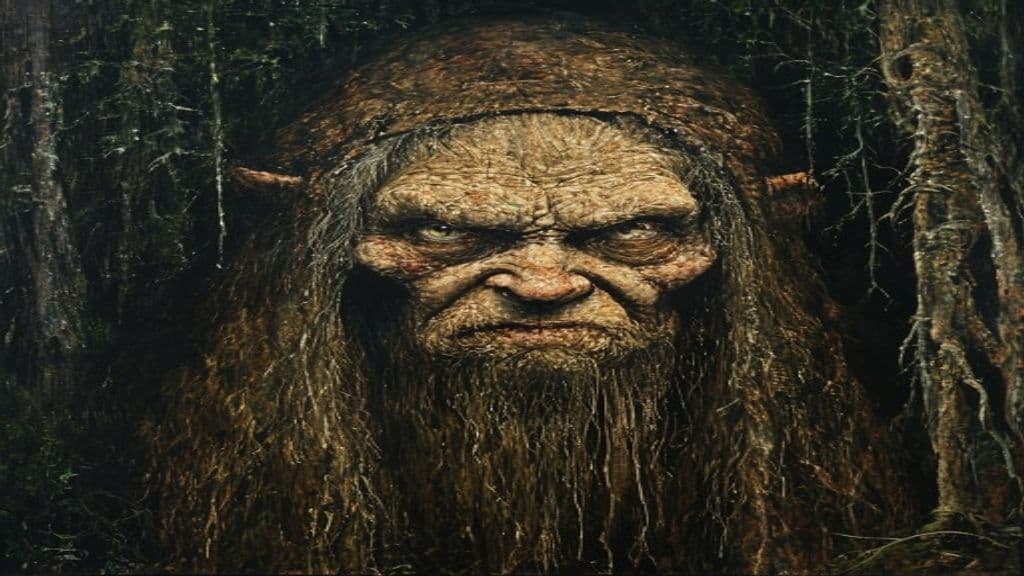
Thetis
Thetis is a figure from ancient Greek myth: a sea-nymph (one of the fifty Nereids) and a semi-divine water-goddess. She is mother of Achilles, a shapeshifter and protector who intervenes for gods and heroes, and a liminal figure tied to older sea-divinities and questions of mortality and divine succession.
Thingol (Elu Thingol / Elwë Singollo)
Thingol is the King of Doriath and leader of the Sindar (the Grey Elves) in J.R.R. Tolkien's First‑Age legendarium. An original chieftain who awoke at Cuiviénen, he became High‑king/Lord of Beleriand, married the Maia Melian, and whose political choices and dynastic actions figure centrally in the tragic history of Doriath.
Thinis (Egyptian tradition)
A significant cultural and administrative center in ancient Egyptian history, mentioned as the capital city of pre-unification Upper Egypt. (Note: - Power tier should be Primordial, not Greater, since it's a significant cultural and administrative center and its decline is tied to pharaonic unification. - Abilities should be stated as "No record)
Thirty-two forms of Gaṇeśa
A canonical set of thirty-two named iconographic and devotional forms of the Hindu god Gaṇeśa, attested in Gaṇeśa‑centered scriptures and later compendia; each form has prescribed visual attributes and associated meditation verses used in worship and temple imagery.
Thoas (multiple figures in Greek myth)
Thoas (Greek: Θόας) is a recurring personal name attached to several distinct mortal/heroic figures in ancient Greek myth and legend — variously kings of Lemnos, the Taurians, Aetolia, and Corinth, and an offspring of Jason — appearing across genealogical and epic cycles rather than representing a single supernatural species.
Thoe
Thoe (Greek: Θόη, Thoê) is a personal name borne by multiple female figures in ancient Greek mythographic name-lists. The name appears as an Oceanid, a Nereid, and as an Amazon; these are distinct bearers rather than a single coherently defined supernatural class.
Thor (Þórr)
Thor (Old Norse Þórr) is a central god in the pre-Christian Germanic/Norse religious framework, primarily associated with thunder, storms, strength, protection, fertility, and the welfare of farmers. He is a hammer-wielding warrior who fights monstrous enemies (notably Jörmungandr) and is widely attested from Roman-era Germania through the Viking Age, with ongoing cultural presence in personal and place-names and weekday nomenclature (Thursday).
Thoth
Thoth is an ancient Egyptian deity of the Moon, wisdom, writing, measurement, and magic, functioning as divine scribe, counsellor, and maintainer of Ma'at; he appears in myth as inventor/author of knowledge and as a recorder in funerary judgment and cosmic calculation.
Thracians
The Thracians were an Indo‑European–speaking collection of tribes and tribal groupings inhabiting large parts of Southeast Europe in antiquity, known from Greek and Roman accounts for their martial reputation, rich musical and poetic traditions, and local religious cults including oracular sanctuaries.
Thranduil
Thranduil is a fictional Elven king in J. R. R. Tolkien's Middle-earth legendarium. A Sindarin Elf who rules the Woodland Realm (Greenwood the Great / Mirkwood), he is depicted in the sources as a hereditary monarch, military leader, and guardian of his people across the Second and Third Ages.
Three Great Onryō of Japan (Nihon San Dai Onryō)
A commonly cited grouping of three historically prominent vengeful spirits (onryō) in Japanese tradition—Sugawara no Michizane, Taira no Masakado, and Emperor Sutoku—whose deaths and subsequent misfortunes were historically narrated as causing calamities and requiring cultic responses to placate them.
Three-legged crow
A recurrent East Asian mythic bird motif: in Chinese sources a tripedal sun-bird (sanzuwu / Jinwu / Yangwu) embedded in cosmology and imperial symbolism; in Japanese Shinto the Yatagarasu functions as a divine guiding crow. The motif appears across archaeological and literary contexts and carries solar and guiding associations rather than being consistently hostile.
Community Record
- [1]The Three Musketeers (summary). Wikipedia, entry for The Three Musketeersliterary
- [2]La Maison De Mickey - Safari Mousketools (episode archive). La Maison de Mickey episode archive listing (Safari Mousketools)other
- [3]La Maison De Mickey - Welcome to The Jungle / The Banana Tree (episode archive). La Maison de Mickey episode archive listing (Welcome to The Jungle / The Banana Tree)other
- [4]La Maison De Mickey - Hula Hibiscus' Dance! (episode archive metadata). La Maison de Mickey episode archive metadata (Hula Hibiscus' Dance!)other
- [5]France Five (musketeer influence in media). Wikipedia, entry for France Five (tokusatsu series titled with a musketeer reference)other