In the Bhagavata Purāṇa childhood cycle, Trinavarta is one of several asuras dispatched by Kamsa to kill the infant Krishna. Some traditional retellings and later Purānic material (e.g., traditions recorded in devotional commentaries and the Brahma Vaivarta Purāṇa tradition) add background motifs about earlier births and curses (for example, a tradition linking the asura's prior life to a cursed king), but the canonical episode situates him functionally as an asura-sent adversary within Krishna’s early lîla.
During the episode Trinavarta assumes the form of a violent whirlwind or tornado that envelops Gokulam in dust and darkness and carries the infant Krishna aloft; descriptions emphasize a swirling cloud of sand and a spinning form. In narrative aftermaths and devotional retellings a physical corpse is reported to appear on the ground after Krishna crushes him, with some accounts adding graphic detail (e.g., smashed limbs, displaced eye-sockets) in later poetic and devotional versions.
Textual accounts attribute to Trinavarta the power to become or generate a violent whirl-wind/tornado capable of lifting and carrying beings and objects high into the sky; some verse translations and devotional retellings describe an ascent of vast/mythic distance (a cited rendering speaks of 'eight hundred thousand miles' in one translation). He was dispatched with the explicit goal of killing Krishna and envelops the village in dust and darkness while abducting the child. His limit in the narrative is that Krishna causes himself to become unbearably heavy; the asura cannot sustain the burden, is choked/halted and brought down, and is physically crushed to death.
Weaknesses
- conditionInability to bear Krishna's divine weight (narrative vulnerability)
Wards
- otherKrishna's direct intervention / devotion to Krishna
Pūtanā
Pūtanā is a female rakṣasī (demoness) in the Krishna infancy cycle who, disguised as a beautiful woman, attempts to kill the infant-god Krishna by breastfeeding him poisoned or drugged milk; when Krishna kills her, contact with the divine cleanses her. She functions simultaneously as a child-killing spirit, a symbolic personification of infant disease, and—in some readings and ritual prescriptions—as a figure whose worship or propitiation is invoked protectively for children.

Aghasura
Aghasura is an asura from the Vaishnava/Hindu narrative tradition (notably the Srimad‑Bhāgavatam) who, at the command of Kamsa, assumed the form of a vast serpent to ambush Kṛṣṇa and the cowherd boys in Vṛndāvana. The episode demonstrates Kṛṣṇa’s protective, divine power as he enters and destroys the demon from within.
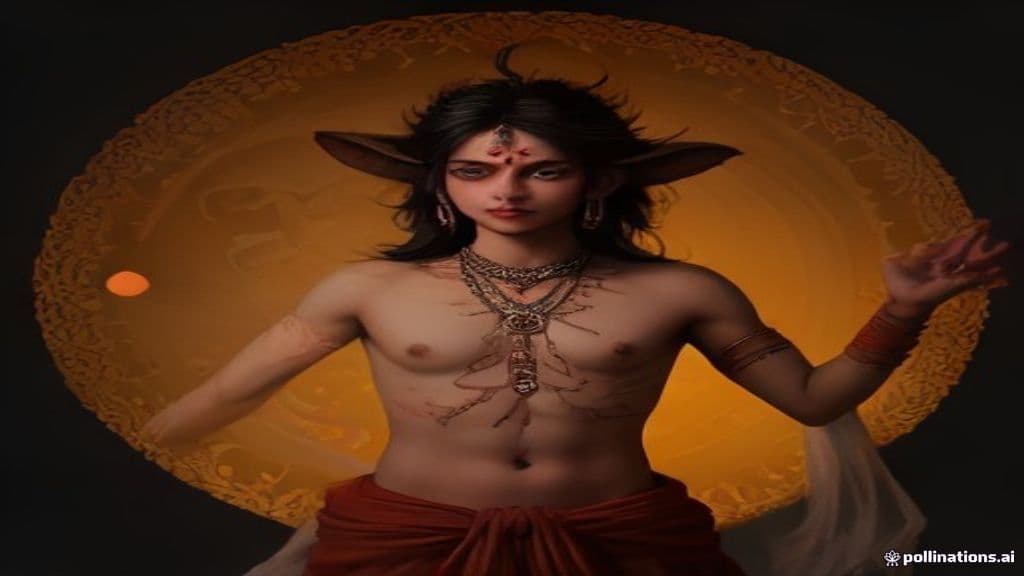
Vyomasura
Vyomasura (Sanskrit: व्योमासुर, Vyomāsura) is an asura in the Bhagavata Purana tradition who, disguised as a cowherd youth, abducts cowherd boys and confines them in mountain caves near Govardhana; he is captured and killed by the child-Krishna, who breaks open the cave seals and liberates the boys.
*Péh₂usōn (reconstructed)
Péh₂usōn is a hypothetical Proto‑Indo‑European pastoral guardian reconstructed by comparative scholars from parallels in Greek and Vedic traditions. Proposed as a Graeco‑Aryan ancestor‑figure, the reconstruction describes a protector of flocks, roads, and travellers rather than an attested historical cultic personality.
Abhimanyu
Abhimanyu is a youthful Kuru/Pandava warrior-hero in the Sanskrit epic Mahābhārata. Son of Arjuna and Subhadra, he is famed for entering the Chakravyuha battle formation on the thirteenth day of the Kurukshetra War and dying at age sixteen; his posthumous son Parikshit continues the Kuru line.
Achyuta
Achyuta (Sanskrit: अच्युत, acyuta) is primarily an epithet/theonym in Vaishnava Hindu tradition applied to Vishnu and Krishna, signifying the divine quality of being 'not fallen' — immutable, infallible, and imperishable. It functions as a devotional name in scripture, liturgy, and Pancharatra lists of divine emanations rather than as an autonomous folkloric spirit.
Acintya
Acintya is an Indonesian Hindu theological-symbolic representation of the ineffable supreme divine principle. In Balinese and Javanese practice it functions as a way to make ultimate reality present in ritual and art—often aniconically as an empty throne (padmasana) or anthropomorphically as a naked, flame-surrounded figure—rather than as a narrative, intervening deity.
Adi (asura)
Adi is attested in modern reference works as the name of an Asura who 'appears in the Matsya Purāṇa.' Beyond this single-line citation in secondary sources, no descriptive material about the figure is provided in the supplied research notes.
Adi Shakti
Adi Shakti (also Adi Parashakti, Mahadevi, Adya Shakti) is the primordial feminine power in Hindu/Shakta theology, regarded as the ultimate reality (Para Brahman) and the source from which all goddesses and gods manifest. She is both an impersonal cosmic principle (Mulaprakriti) and a focus of devotional invocation in temples, mantras, and pilgrimage sites such as Shakti Peethas.
Adi Vinayaka
Adi Vinayaka (Ādi Vināyaka; also called Nara Mukha Vinayaka) is a named iconographic and devotional form of the Hindu god Ganesha portraying the deity with a human head, described in sources as the form before the episode of decapitation by Shiva. It is rarely worshipped and appears in a small number of South Indian shrines and in devotional/musical repertoires.
Aditi
Aditi is a major Vedic goddess in Hindu tradition who personifies the boundless, infinite cosmic principle and functions as the maternal matrix from which many celestial deities (the Ādityas and other groups) are born. In the Vedic hymns she is invoked as a protective liberator who guards petitioners, provides wealth and safety, and frees devotees from hindrances such as sin and sickness.
Agastya
Agastya (also Agathiyar/Agasti) is a revered Vedic and later-period Indian rishi (sage) figure credited in textual traditions as an inspired seer, ascetic, teacher, culture-founder, and attributed author of Vedic, Puranic and Tamil works; in South Indian tradition he is associated with origins of Tamil grammar and Siddha medicine and is identified astronomically with the star Canopus.
Aghasura
Aghasura is an asura from the Vaishnava/Hindu narrative tradition (notably the Srimad‑Bhāgavatam) who, at the command of Kamsa, assumed the form of a vast serpent to ambush Kṛṣṇa and the cowherd boys in Vṛndāvana. The episode demonstrates Kṛṣṇa’s protective, divine power as he enters and destroys the demon from within.
Agiya Baital
The fire-form of the Vetala — a cremation ground spirit of UP and Bihar that manifests as a wandering flame rather than a corpse-inhabitor, leading night travellers off roads and into marshland or flames with a dancing fire that seems always just ahead.
Agneya / Āgneyī
Āgneyī (feminine) or Āgneya (masculine adjective) is a Vedic–Puranic divine figure and ritual principle tied to the fire-god Agni and the southeastern direction. In textual traditions she appears both as a personified daughter/shakti of Agni and as an adjectival/technical term applied to fire-consecrated things (direction, astra, etc.). She also occurs as the name Agneya (or Anala) among items revealed in a Shaiva-Agamic list associated with the Aghora face of Sadashiva.
Community Record
- [1]Srimad Bhagavatam: Canto 10 - Chapter 7. Bhagavata Purāṇa, Canto 10, childhood pastimes (narrative episode of Trinavarta)literary
- [2]Trinavarta — Wikipedia. Wikipedia entry summarizing Purānic material and retellingswiki
- [3]Baby Krishna & Trinavarta The Tornado Demon (devotional retelling). Devotional retelling describing kidnapping, ascent, Krishna's making himself heavy, and the asura's physical death (limbs smashed in some retellings).folk
- [4]The Sampradaya Sun — editorial (July 2025). Independent Vaiṣṇava commentary including a verse citation noting a large ascent ('eight hundred thousand miles' rendering in a cited verse translation).folk
- [5]Inner Meanings of Krishna's Pastimes (Stephen Knapp). Modern devotional/exegetical commentary offering symbolic readings of Trinavarta in devotional literature.folk
- [6]Public Ki Lehar — narration by Prem Sharan Ji Maharaj (archive). Katha-style retelling tying the Trinavarta episode to themes of dharma restoration and remembrance of the Lord's name.folk
- [7]Salvation of Trinavarta — the whirlwind demon. Overview article summarizing the Purānic episode and devotional interpretations.folk
- [8]Wikidata: Trinavarta. Wikidata item collating identifiers and summaries for the Purānic figure.wiki