
No specific physical description is provided in the source material. It appears that this entity can take on various forms or be a more abstract concept, depending on the context.
There is no clear indication of what Vættir do or how they interact with humans.
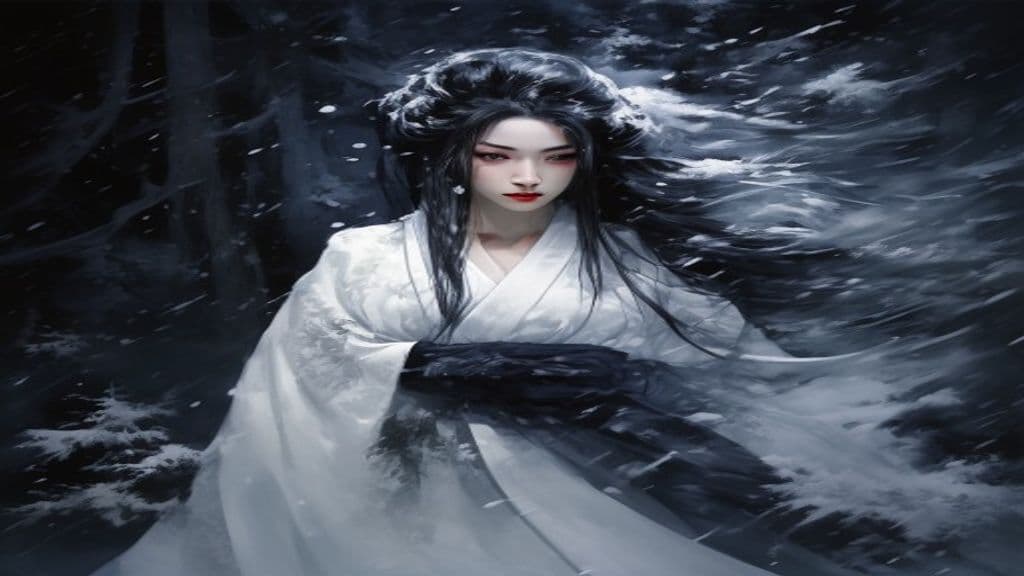
Yuki-onna
The Snow Woman of Japanese folklore — a spirit born of blizzards who appears to travelers lost in snowstorms. Beautiful and lethal, she can show mercy or bring death depending on her mood.

Kami
Kami (神; kami) are the central sacred beings and forces venerated in Shinto, encompassing deities, spirits, natural phenomena, qualities, and the spirits of the venerable dead. They are understood as immanent in nature, morally ambivalent, and inhabit a hidden or complementary existence sometimes referred to as the world of the kami (神界).
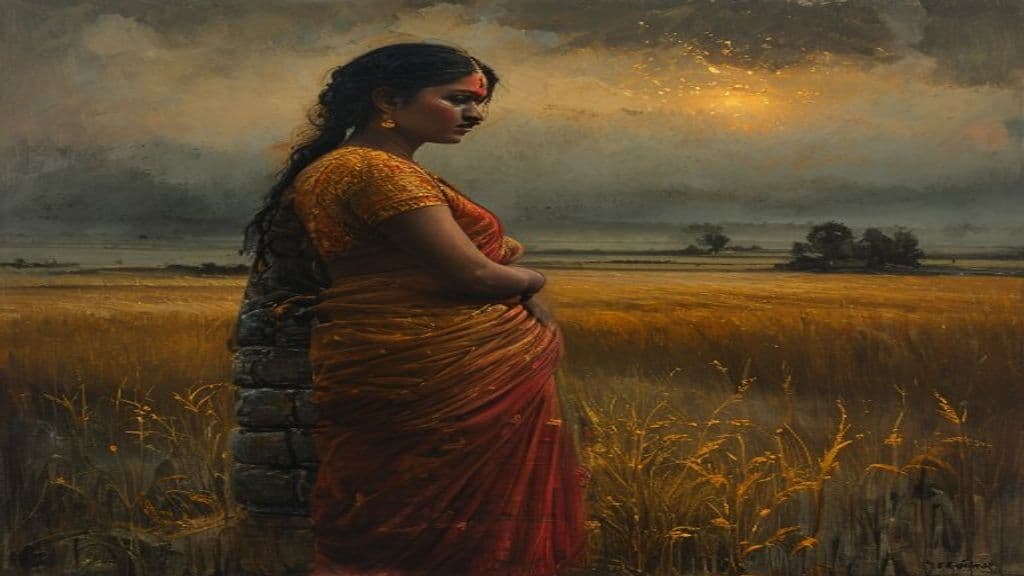
Bhunni
The female guardian-spirit of agricultural fields in Bihar and eastern UP — her presence ensures fertile soil and good harvest, but she is territorial and punishes those who plough without permission, steal crops, or use chemical methods that poison the soil she inhabits.

Tokoloshe (Tokolosh)
A diminutive non-human spirit in Nguni and broader Bantu-speaking Southern African traditions, frequently portrayed as a dwarf-like, sometimes hairy water spirit used by malicious people to harass, frighten, or harm others. It functions both as a bogeyman for social discipline and as an explanatory agent for unexplained illness and death, and communities invoke traditional healers or pastors with an apostolic calling to counter it.
Alberich
In Germanic heroic legend, Alberich is a dwarf associated with elven qualities and power. (Note: 1. Power tier: Reduce to Ancient as Alberich's abilities are not described beyond being a dwarf with elven qualities. 2. Origin story: Clarify that Alberich is mentioned in multiple Germanic texts, bu)
Altgermanische Religionsgeschichte
A historical survey of Germanic religious history, providing an overview of the pantheon of gods and goddesses. (Note: - Power tier is not applicable to historical surveys - The article should reflect that it's a historical survey, not an entity with abilities or appearance - Consider adding information on the signifi)
Anglo-Saxon Deities
A list of deities from the Anglo-Saxon pantheon, likely derived from Old English and other Germanic languages. (Note: 1. Power tier: Primordial seems too high given the sparse written record and limited information on abilities. 2. Appearance: Delete statement as no physical descriptions are provided in available sou)
Eotenas
Eotenas (Old English eotenas) are a race-class of other-than-human beings attested in Anglo-Saxon poetic contexts, notably Beowulf, where they appear among a catalogue of hostile or monstrous stocks. Philological traditions link the term to Old Norse jötnar/ettins (often rendered "giants" in modern summaries), but primary Old English lines give little concrete physical description.
Lime Tree (Germanic Tradition)
The lime tree is a sacred and symbolic plant in Germanic tradition, associated with protection, peace, and healing. (Note: - Power tier: Primordial (Given its association with protection from harm, evil spirits, or negative energies, which suggests a more cosmic level) - Abilities: Remove "good dreams" as it is not suppor)
Mannus
Central figure in Germanic creation myths, entrusted with starting humanity; abilities and characteristics unknown. (Note: 1. Power tier should be Ancient (deity-level) as it's implied that Mannus has a significant role in the creation myth and is entrusted by the gods. 2. No information on appearance, sensory cues, wards)
Neck (water spirit)
A class of humanoid water spirits in Germanic mythology and folklore, often described as shapeshifting; names include nixie, nix, nixy, neck, and nicker. The provided sources give only a brief classificatory statement without extended ethnographic detail.
Nixie
A category of water spirit from Germanic and neighbouring European folklore associated with lakes, streams, ponds and waterfalls. Commonly described as shapeshifting and linked to enchanted music, nixies may be helpful or dangerous to humans depending on local tales.
Rhinemaidens
Three water sprite sisters from Germanic mythology, known for their enchanting singing and association with the Rhine river. (Note: 1. Power tier should be Primordial, as they are associated with a major river and not specified to have regional or local power. 2. Appearance: "No physical description is provided in sources" should )
Väinämöinen's Blood
A manifestation of Väinämöinen's power and wound, bringing about a catastrophic flood in Finnish mythology. (Note: * Power tier: Reduce to Primordial is unclear based on source material; it implies catastrophic flood, which may be more consistent with Ancient or Greater. * Abilities: Specify that flood is not a co)
Väki (Finnish Tradition)
An impersonal, supernatural power in Finnish mythology associated with the natural world. (Note: - The source material does not explicitly state the origin story of Väki. - No physical description of Väki is provided in the source, but it's mentioned that its presence is felt through impact on na)
Völsung Cycle
The Völsung Cycle is a series of Norse legends and stories that form part of the larger mythological tapestry, focusing on the heroic clan Völsungs. It has had significant influence on Western literature and reflects the worldview of medieval Icelandic culture. (Note: 1. Remove "Primordial" power tier as the Völsung Cycle is not a supernatural entity but a collection of Norse legends. 2. Clarify the origin story to specify that it was recorded in medieval Iceland, )
Community Record
- [1]Wikipediawiki