
The lexical root of way/wayob is the Maya verb meaning 'sleep(ing)'; sources do not provide a single creation myth. Instead, the concept derives from this verbal meaning and is used to name a culturally recognized phenomenon in which a person and a non-human companion or alter-form operate together: the human is associated with an animal or apparition that acts while the person sleeps. Ethnographic and Classic accounts treat the relation as a personal, and sometimes contractual, tie but no single origin narrative is recorded in the cited sources.
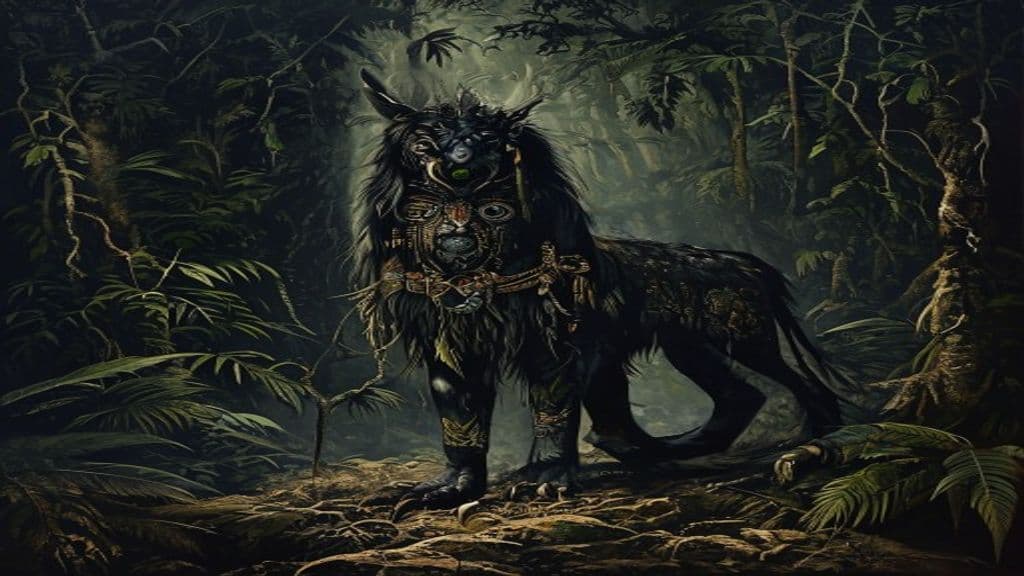
Ethnographic (post-Contact) descriptions, especially from Yucatán, commonly report wayob appearing as familiar domestic or domesticated animals and occasionally as ghostly apparitions (one attested image: a creature with wings of straw mats). Tzotzil terms (wayihel, chanul) also cover animal companions and meteoric/igneous powers. Classic Maya iconography (glyph wa-ya) shows a wider typology: many animals (notably jaguars and birds), hybrids (e.g., deer × spider monkey), walking skeletons, a self-decapitating man, and figures associated with fire; recurring iconographic attributes in Classic depictions include a shoulder cape or scarf tied in front, jaguar-spotting or jaguar traits, an upturned 'jar of darkness' attribute, and fire elements. Some skeletal way figures are explicitly tied to underworld transformer imagery (ah uaay xibalba) and death gods.
Wayob function as personal companions and transformative agents: a sleeping person may become or project an animal or apparition (the way) that acts in the world. Ethnographic accounts attribute harmful uses to wayob — Yucatec descriptions emphasize nocturnal animal transformation used 'in order to do harm'; Tzeltal Cancuc ethnography explicitly describes the animal companion as a 'caster of disease'. Tzotzil sources extend way powers to igneous or meteoric phenomena such as lightning. Classic inscriptions and imagery associate certain way forms with underworld transformation and with rulership emblems, indicating roles in death, otherworld journeys, and elite ritual agency.
Wanjina Wunggurr (unverified)
Insufficient sourced information available in the provided material to describe Wanjina Wunggurr. The only confirmed fact from the source is that the Worrorra (Worora) are an Aboriginal Australian people of the Kimberley region; no reliable details about Wanjina Wunggurr are present in the supplied source.
Warg
A large, malevolent wolf-like being whose modern fictional form was popularized by J. R. R. Tolkien as an intelligent, war‑capable wolf-race allied with Orcs; the term derives from Old Norse vargr and Old English wearh, words that blur natural wolf, outlawry, and destructive agency.
Watcher
Watcher is a polyvalent label applied across religious, literary, and technical domains to beings or systems defined primarily by observation, surveillance, or guarding. In the supplied sources it names an apocryphal class of angels (the Grigori), a localized monstrous guardian in Tolkien's fiction (the Watcher in the Water), a race of cosmic observers in Marvel Comics, and various monitoring programs in computing.
Water deity
A water deity is a god or goddess associated with water or specific bodies of water (sea, ocean, great river, spring, or well). The term is a functional, comparative category used by scholars to group diverse culture-specific divine figures whose primary domain is water.
Way (wayob)
Way (plural wayob) is a Yucatec Maya term denoting a human-linked animal-being tied to sleep; it can mean a person who transforms into an animal while asleep (a Mesoamerican nagual) or the animal transformation/companion itself. Wayob appear in Classic Maya iconography (marked by a special hieroglyph) and are recorded in later Yucatec usage and museum interpretation as both harmful nocturnal agents and as ritual companions for rulers on journeys to the Otherworld.
Wayland the Smith
Wayland the Smith is a legendary master craftsman from early Germanic and Norse tradition, famed for superlative metalwork, cunning devices, and a narrative of capture, mutilation, vengeance, and escape. He appears as a culture-hero/artisan in poetic and saga contexts (not a formal deity) and is later equated with classical craft-figures such as Daedalus in medieval manuscript tradition.
Weather god
A class of deity in many mythological traditions responsible for meteorological phenomena—thunder, lightning, rain, wind, storms and related atmospheric forces—often linked to sky sovereignty, fertility, warfare, or protection within local pantheons.
Wechselbalg
The Changeling of Germanic and Norse tradition — a fairy or demonic child substituted for a stolen human infant, identifiable by its voracious appetite, failure to thrive, and uncanny behavior.
Weiße Frauen
A class of elf-like luminous female spirits in German folklore associated with sunlight, nature, and particular locales (brooks, castles). Scholars (notably Jacob Grimm) interpret them as survivals or localizations of older Germanic light-elves and goddess-figures.
Wekufe
In Mapuche cosmology the wekufe (wekufü) is a class of harmful external force or spirit whose essential quality is to disturb or destroy the natural and social order. The term covers a range of beings and energies—from extracorporeal disruptive forces to material monstrous forms—and is tied to ritual order, sorcery (kalku), and healing practices (machi, machitún).
Wendigo
A malevolent spirit or being from Algonquian-language traditions associated with cannibalism, famine, winter, and insatiable greed. Tales describe humans transformed into wendigos or beings that possess humans, serving social and moral functions within affected communities.
Weneg (Weneg-Nebty)
Weneg, attested as Weneg or Weneg-Nebty, is the throne name of an early Egyptian king conventionally placed in the Second Dynasty. Scholarly sources identify Weneg as a historical/rulerial name, but specifics of his reign length and exact identification with archaeologically attested Horus-named kings remain unclear.
Community Record
- [1]Wayob (Wikipedia). Wikipedia contributors, 'Wayob', Wikipedia, The Free Encyclopediawiki
- [2]Wikidata: Wayob (Q7976838). Wikidata entry Q7976838, Wayobwiki
- [3]Musée de Racine: Mayan Wayob Pipe (museum description). Museum description of a serpentine pipe representing a Wayob (object interpretation cited in dossier)other
- [4]Maya death gods (Wikipedia). Wikipedia contributors, 'Maya death gods', Wikipedia, The Free Encyclopediawiki
- [5]Wayeb / 9th EMC reference (Wayeb project page). Wayeb project conference material noting scholarly interest in wayob and related Classic iconographyother
- [6]VisionForum: Wayob (webpage). Webpage summarizing aspects of wayob across Classic and ethnographic sources (used in dossier corroboration)other