
Traditional and scholarly sources present wrathful deities not as independently originated hostile beings but as fierce manifestations of enlightened Buddhas, Bodhisattvas, or Devas adopted as compassionate, skillful means to guide sentient beings. Historical materials show the development and increasing prominence of wrathful forms within tantric iconography and ritual literature (including bardo texts) as part of medieval Vajrayana formations and their later prominence in Tibetan practice and East Asian esoteric schools. Textual revelation traditions (e.g., materials revealed by the terton Karma Lingpa) integrate wrathful/quiescent deity material into post-mortem liturgies.
Iconography presents them as terrifying, often demonic-looking figures adorned with charnel-ground ornaments such as bone jewelry (Sanskrit term cited in sources), sometimes with skulls and other cremation-ground attributes. They appear in varied colors (notably red and blue in thangka registers), bear ritual implements, and are frequently shown trampling personified obstacles. Many wrathful forms appear in sexually suggestive yab-yum pairings (especially certain heruka and dakini imagery). Named examples include Mahākāla, Yamantaka, Hayagriva, Vajrakīlaya, Vajrayoginī, and Vajravārāhī.
Sources describe their functions rather than autonomous 'powers': as manifestations of enlightened activity they destroy obstacles to awakening, protect the Dharma and its practitioners, and gather or frighten sentient beings into encountering teachings. In tantric practice they are meditational yidams used in deity-yoga sadhanas in which practitioners visualize identification with the wrathful form to transform negative emotions ('poison as its own antidote'). They also appear in protector liturgies and bardo texts where their wrathful appearance serves as an occasion for recognition or guidance of consciousness after death.
Weaknesses
None recorded.
Wards
- ritualPropitiation and deity practice (initiation and sadhana)

Dakinī
A dakini is a feminine spiritual figure attested in Hindu and Buddhist literature and in Himalayan Vajrayāna cultural contexts; sources in this set characterize the dakini as a type or class of goddess and as a figure embedded in tantric and Himalayan religious landscapes. Specific iconography, powers, and ritual formulas are not documented in the supplied sources.
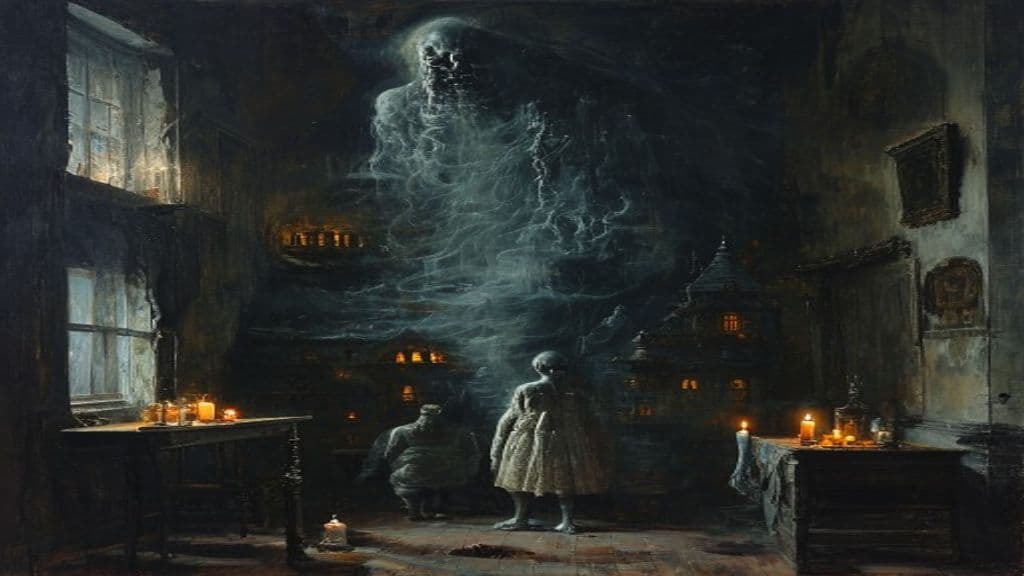
Mahapreta
The 'great ghost' — in Bihar and UP folk classification, a Mahapreta is a preta of exceptional power, born from a death involving multiple injustices simultaneously: wrongful killing, incomplete rites, and unresolved family debt combined. It commands lesser spirits and can cause harm across an entire lineage.
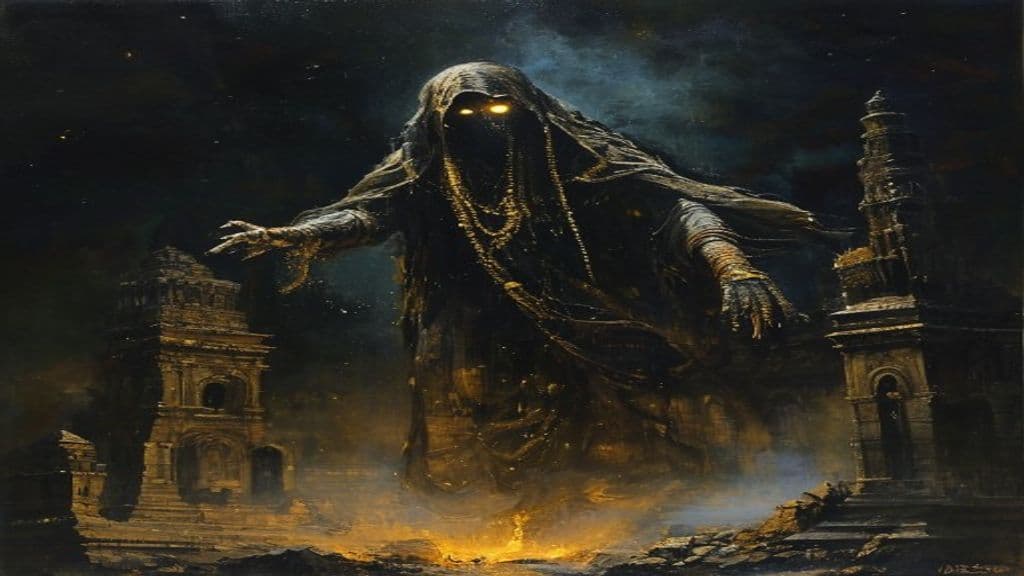
Brahmarakshas
The most learned and terrible of spirits — the ghost of a Brahmin who misused his scriptural knowledge in life and was condemned after death to be both demon and scholar, haunting places of learning.
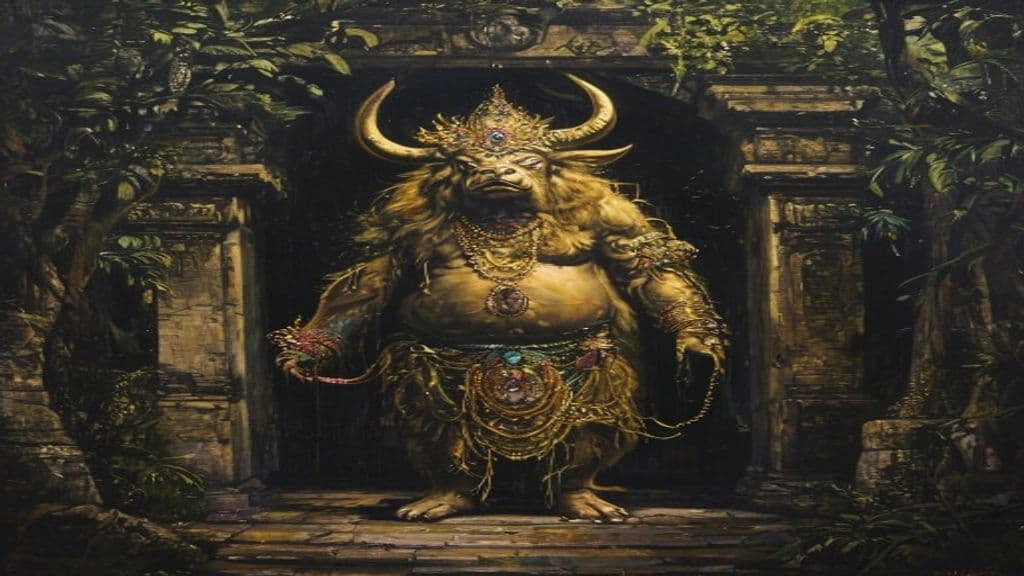
Yaksha
Nature spirits of Hindu, Buddhist, and Jain cosmology — guardians of forests, treasures, and wilderness. Ambivalent beings, capable of great benevolence to the respectful and terrible harm to the greedy.
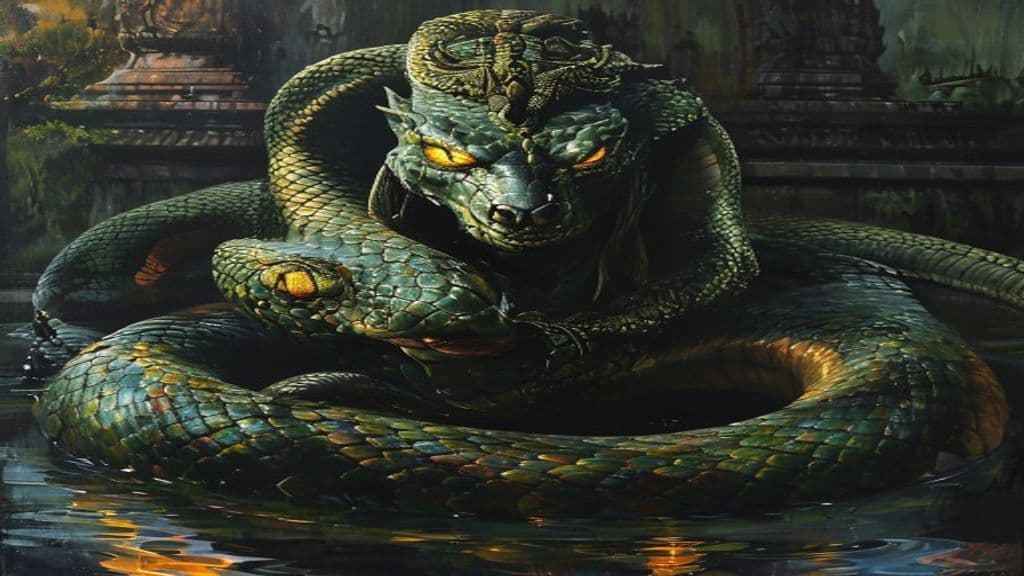
Naga
Divine serpent beings of Hindu, Buddhist, and Jain cosmology — powerful guardians of water, earth, and underground treasures. Revered as deities in South and Southeast Asia.
Yaksha
Nature spirits of Hindu, Buddhist, and Jain cosmology — guardians of forests, treasures, and wilderness. Ambivalent beings, capable of great benevolence to the respectful and terrible harm to the greedy.
Yaksha
Nature spirits of Hindu, Buddhist, and Jain cosmology — guardians of forests, treasures, and wilderness. Ambivalent beings, capable of great benevolence to the respectful and terrible harm to the greedy.
Acalanātha (Acala / Achala)
Acalanātha (also Acala or Achala) is a wrathful deity and dharmapāla — a protector of the Dharma — prominent in Vajrayana and East Asian Mahayana Buddhist contexts. Presented as a fierce, non‑human or semi‑divine protector-figure, Acalanātha functions to defend the teaching and practitioners by removing obstacles and confronting threats to the transmission and practice of Buddhism.
Amida Nyorai
Amida Nyorai (Amitābha / Amitāyus) is a principal Mahayana Buddha venerated across East Asia as the embodiment of Infinite Light and Infinite Life who presides over a Western Pure Land and is invoked as the savior who receives the dying into rebirth there.
Amitābha
Amitābha is a central celestial Buddha of Mahayana Buddhism who presides over the western Pure Land called Sukhāvatī. Devotional practices invoking his 'measureless' light and life (nianfo/nembutsu) are presented in Pure Land traditions as a path by which beings may be reborn in his buddhafield and quickly attain Buddhahood.
Amoghasiddhi
Amoghasiddhi is one of the Five Tathāgatas (Five Wisdom Buddhas) in Mahayana and Vajrayana/Esoteric Buddhism, representing the Karma family and the quality of "unfailing accomplishment". He functions as an archetypal, protective, and contemplative buddha-body within tantric mandalas, presiding over the northern quarter and invoked in mantras and ritual iconography.
Aparajita (Wisdom King)
Aparajita is named in secondary sources as a member of the broad class of East Asian Buddhist 'wisdom kings'—wrathful protective emanations associated with Buddhas and bodhisattvas. The supplied materials do not provide a focused, primary textual profile for an individual Aparajita; most attestations address the wisdom-king category and the protective powers of dharani/mantra (notably the Shurangama Mantra).
Bhagavatī
Bhagavatī is an honorific Sanskrit epithet applied to revered female divinities in Hinduism and Mahayana Buddhism rather than a single individualized spirit. The title functions as a respectful form of address for goddesses such as Sarasvati, Lakshmi, Parvati and certain Buddhist female deities (e.g., Cundā) and is the feminine counterpart to Bhagavān.
Cintāmaṇi
A wish-fulfilling jewel in Hindu and Mahayana Buddhist traditions, described as a pearl-like object. (Note: 1. Power tier: "Primordial" may be too strong; the source describes it as a "wish-fulfilling jewel", which suggests deity-level power (Ancient) rather than cosmic. 2. Origin story: None provided, shou)
Dakinī
A dakini is a feminine spiritual figure attested in Hindu and Buddhist literature and in Himalayan Vajrayāna cultural contexts; sources in this set characterize the dakini as a type or class of goddess and as a figure embedded in tantric and Himalayan religious landscapes. Specific iconography, powers, and ritual formulas are not documented in the supplied sources.
Goddess
A goddess is a female deity — a sacred female divine figure found across many polytheistic and religious traditions. The term functions as a classificatory label for diverse culturally specific female divinities and metaphysical female principles, ranging from local patronesses to supreme cosmic realities.
Huangmei Dawang
A formidable supernatural being in the Buddhist tradition associated with immense power and strength. (Note: - Summary: Inaccurate. Huangmei Dawang is a major antagonist, not associated with "immense power and strength". - Power tier: Possibly incorrect. Although it has significant spiritual authority and ca)
Mahāsthāmaprāpta
Mahāsthāmaprāpta is a Mahāyāna bodhisattva associated with the Pure Land devotional tradition, commonly represented alongside Amitābha and Avalokiteśvara. His name is glossed in sources as 'arrival of the great strength' or 'one who has attained great power' and he is understood as embodying or representing the power of wisdom.
Samantabhadra
Samantabhadra is a sacred name used across Indian-origin traditions. In Mahāyāna Buddhism it denotes a major bodhisattva associated with practice, vows, and the transfer of merit; in Tibetan Buddhism the name (Tibetan: Kuntu Zangpo) is also used for an Adi‑Buddha or primordial principle in Dzogchen contexts; separately, Samantabhadra is the name of a historical second‑century Digambara Jain monk and author of works such as the Ratnakaranda Gaurav.
Community Record
- [1]Wrathful deities. Wikipedia, 'Wrathful deities'wiki
- [2]Fierce deities (Wikidata). Wikidata item Q855733other
- [3]zhi khro dgongs pa rang grol gyi bsnyen yig dang zhi khro'i rdzogs rim skor. Archive catalog entry for Zhitro liturgical collectionother
- [4]bar do'i thos grol chen mo. Archive catalog entry for major Bardo/Tibetan Book of the Dead materialsother
- [5]Portrait of Munchen Sangye Rinchen, the Eighth Abbot of Ngor Monastery. Thangka portrait description noting red and blue wrathful protective deities in lower registerother
- [6]100 Peaceful & Wrathful Deities (Shitro) Puja in Bylakuppe. Ayang Rinpoche website event notice describing Shitro pujaother
- [7]Guru Dragpo and 100 Peaceful and Wrathful Deities Pujas. Ayang Rinpoche website event notice describing Guru Dragpo and Shitro pujasother
- [8]Eulogy to the Wrathful Deities [Chapter 21]. Wisdomlib reference to wrathful-deity eulogies in tantra commentaryother