
In Greek literary and cultural tradition Aidos is presented as a primordial moral presence associated with the Golden Age; sources report she was 'the last goddess to leave the earth after the Golden Age,' a literary motif explaining later moral decline. She appears across classical literature (Hesiodic/Homeric tradition, Aeschylus' Prometheus Bound, Euripides' Iphigenia at Aulis, Sophocles' Oedipus Rex) and is attested in civic cult contexts by Pausanias and later compendia. A minority/one-off attribution in some summaries names Prometheus as a progenitor, but this genealogical claim is not widely corroborated in the sources summarized here.
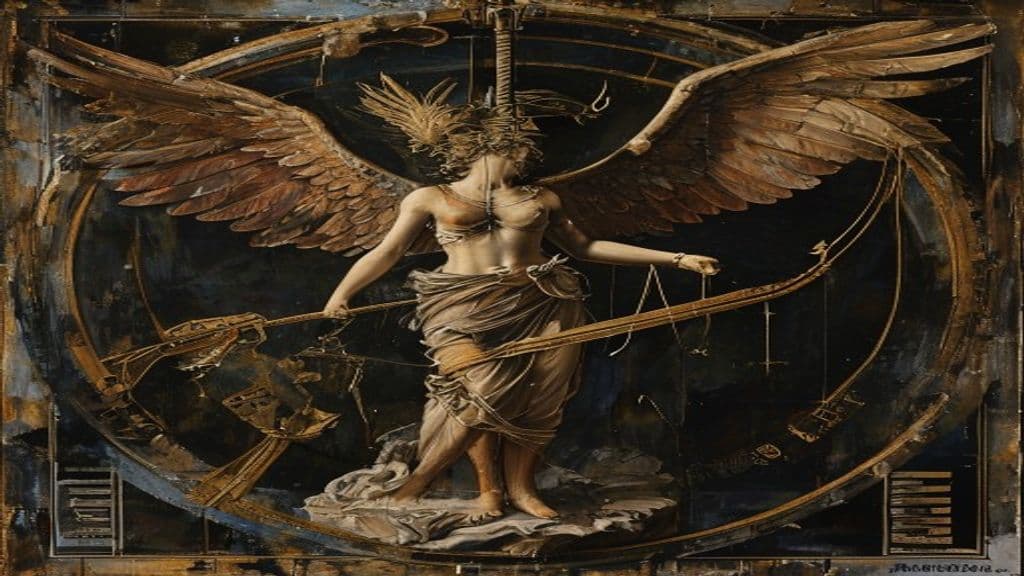
Surviving sources do not preserve a consistent iconography for Aidos; she is normally treated as an impersonal quality personified in speech (referred to with feminine pronouns) rather than as a vividly described anthropomorphic deity. Literary and cult evidence records occasional statues or commemorative monuments (for example, a memorial statue associated with Icarius and Penelope is mentioned in Pausanias), but no standardized visual attributes or ritual costume are documented in the provided materials.
Aidos functions conceptually as the inward feeling of reverence or shame that restrains people from wrongdoing and regulates conduct between social ranks. Sources characterize her influence as producing moral sensitivity (for example, causing the wealthy to feel unease before the poor and recognize undeserved fortune) and as a partner to Nemesis in the system of distributive justice. Philosophical accounts (notably Aristotle) place Aidos as an ethical disposition occupying the mean between vanity and cowardice, framing it as a moderating trait rather than a magical agent that 'induces' states by supernatural compulsion.
Weaknesses
- otherNot an agent with exploitable weaknesses; Aidos is an ethical/personified quality rather than a being susceptible to physical or ritual vulnerabilities
Wards
- ritualCivic commemoration (altars, statues)
Agraeus
Agraeus (Greek: Ἀγραῖος) is primarily an epithet in ancient Greek religion meaning "the hunter," applied to deities (notably Apollo and in feminine form to Artemis) to mark their hunting aspect. The name also appears as a personal name in mythic genealogies and is secondarily attested in a Phoenician context in a late summary source.
Alastor
Alastor (Ancient Greek: Ἀλάστωρ) is a concept-personification in Greek tradition denoting an avenging spirit or personified curse that punishes certain moral offences—especially familial bloodshed—and operates alongside chthonic avengers such as the Erinyes. Over time the term broadened to a secular insult and was reinterpreted in later Christian demonology as a type of possessing evil spirit.
Bacchus
Bacchus is the Roman identification of the Greek god Dionysus, a deity associated with wine, vegetation and fertility, ritual ecstasy and theatrical performance. In Roman religion he is conflated with the Italic Liber and known for rites that induce possession, frenzy (baccheia), and group revelry.
Daemon (classical)
In classical Greek and Roman contexts a daemon (daimon) denotes an intermediary spirit or nature-being that can be benevolent, ambivalent, or morally mixed. Daemons occupy an ontological position between gods and humans and appear as personal guiding signs, place-linked spirits, or participants in local cultic life rather than as categorically evil entities.
Eosphoros
Eosphoros is the classical Greek personification of the planet Venus in its morning‑star appearance, literally the 'dawn‑bringer'. Portrayed as a luminous, winged youthful figure who precedes the chariots of dawn (Eos) and the sun (Helios), the figure was later rendered in Latin as Lucifer/Luciferus and reinterpreted in post‑classical theological and literary traditions.
Aiapæc (Ai Apaec)
Aiapæc (Colonial Mochica: aiapæc, aiapäk) is a prominent mythological figure identified in Moche (Mochica) iconography. Scholarly reconstructions present Aiapæc as a powerful provider and protector associated with mountains, water, food and military success, and also as a feared punitive recipient of offerings including human heads; the exact rank and identity of the figure within pre‑Hispanic Moche religion is debated in the secondary literature.
Aibell
Aibell (Aoibheall, Aoibheal; anglicised Aeval, Eevill) is a powerful female Otherworld figure in Irish tradition, variously described as a pre‑Christian regional goddess and, after Christianisation, as a Fairy Queen and guardian spirit associated with north Munster. She is linked to a specific entrance to the Otherworld at Craig Liath, acts as a patron/guardian of certain kin‑groups, functions as an oracular/prophetic presence, and is famed for a harp whose music is a death‑omen.
Aicha Kandicha (Qandisa)
Aicha Kandicha (also romanized Qandisa/Qandisha) is a female mythological figure in Moroccan folklore described as a jinn-like seductress associated with water. She appears as a beautiful woman with hoofed lower limbs who dwells at rivers, springs, lakes and the sea and is said to use sexual allure to seduce men, sometimes driving them mad or killing them.
Aicha Qandicha
Aicha Qandicha is a female seductress spirit in northern Moroccan folklore, often associated with bodies of water and implicated in harmful encounters with men. She appears both as a wild liminal monster and as a named spirit incorporated into local ritual systems (Hamadsha, Zār, Buffi Sufi orders).
Aigamuxa
Aigamuxa are legendary humanoid man‑eaters from Khoikhoi‑recorded traditions of southern Africa, described in the available sources as desert‑dwelling predators—especially of Kalahari dunes—notable for having their eyes located on their feet and for needing to invert their bodies to see.
Aigosages
Aigosages (Greek Αἰγοσάγες, Latin-alphabet Aegosages) were a Gallic/Galatian tribal group recorded in Hellenistic sources as a recruited mercenary body active c. 218–216 BC. Recruited in Thrace by Attalus I of Pergamon, they were transported across the Hellespont, settled on its shores, conducted raids in the Troad, besieged Ilium, and were annihilated by Prusias I of Bithynia.
Ailill
Ailill (variants Ailell, Oilioll) is an Old Irish male personal name prominent in Irish legendary and early medieval sources. It was borne by numerous kings, druidic figures, and clerics across mytho-historical and historical traditions and is said in the cited material to mean something like "beauty."
Community Record
- [1]Aidos (Wikipedia). Wikipedia article 'Aidos'wiki
- [2]The concept of Aidos in Greek literature from Homer to 404 BC. Douglas Cairns, doctoral thesis (summary cited in research notes)academic
- [3]Wikidata entry for Aidos. Wikidata item 'Aidos'other
- [4]Pausanias (as cited in summaries). Pausanias referenced for altars/statue anecdote (summary in secondary sources)literary
- [5]Classical literary references (Aeschylus, Euripides, Sophocles, Hesiod). Summaries of appearances in Prometheus Bound, Iphigenia at Aulis, Oedipus Rex, and Hesiodic tradition (as noted in source summaries)literary