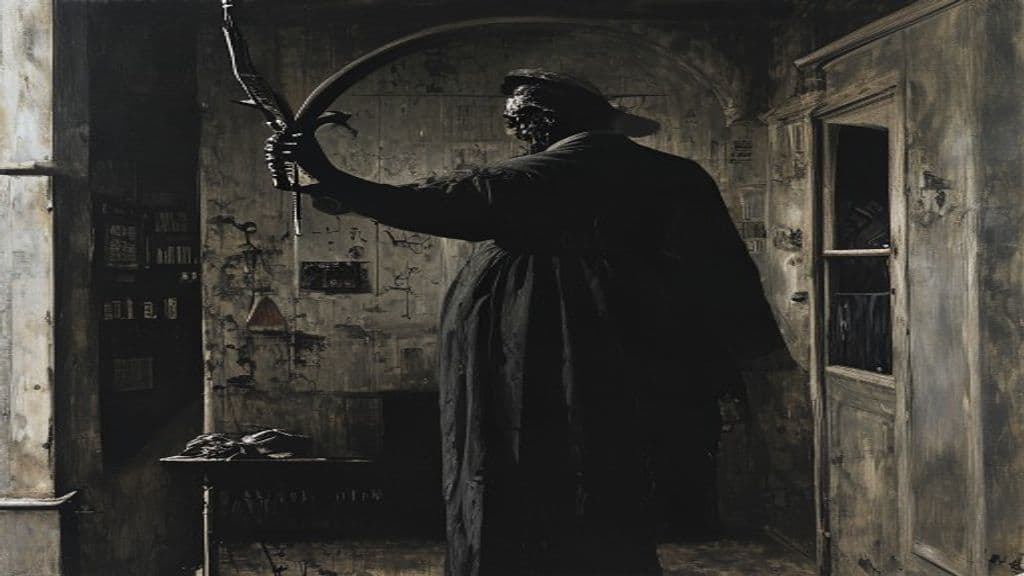
Accounts vary across the franchise. In the original source material and early films the figure is tied to Daniel Robitaille, described as a late‑19th‑century Black artist and son of a slave who was murdered; his violent death becomes the basis of the legend. The 2021 reinterpretation reframes the local retellings within Cabrini‑Green and sometimes identifies a 1970s amputee, Sherman Fields, as a wrongfully murdered man associated with the Candyman story. These differing origin accounts reflect layered, contested oral histories within the narrative world rather than a single uniform provenance.
Across the films the most consistently documented visual element is a single amputated hand associated with or wielding a metal hook. The figure is repeatedly tied to the appearance of a murdered Black man (period dress for the late‑19th‑century origin in earlier material; references to a 1970s amputee in the 2021 film), but specific clothing and facial details vary by installment and by which origin account is being retold.
The franchise presents Candyman as a summoned homicidal presence: in the 1992 film narrative, chanting his name five times in a mirror is the mechanism that calls him and precipitates violent killings, often described as victims being gutted with his hook. He functions not only as a physical killer but as a figure whose existence is sustained and reshaped by belief, storytelling, and communal memory; the 2021 film explicitly interprets him as a reflection of generational trauma and racial violence. The franchise also shows invocation and study of the legend destabilizing investigators, contributing to obsession, mental breakdown, or self‑sacrifice in some narratives.
Weaknesses
- conditionAbsence of invocation (not speaking the name into a mirror)
- conditionTethered to narrative/memory (franchise depicts him as sustained by stories and community belief rather than as an invulnerable cosmic force)
Wards
- ritualAvoidance of mirror‑name ritual
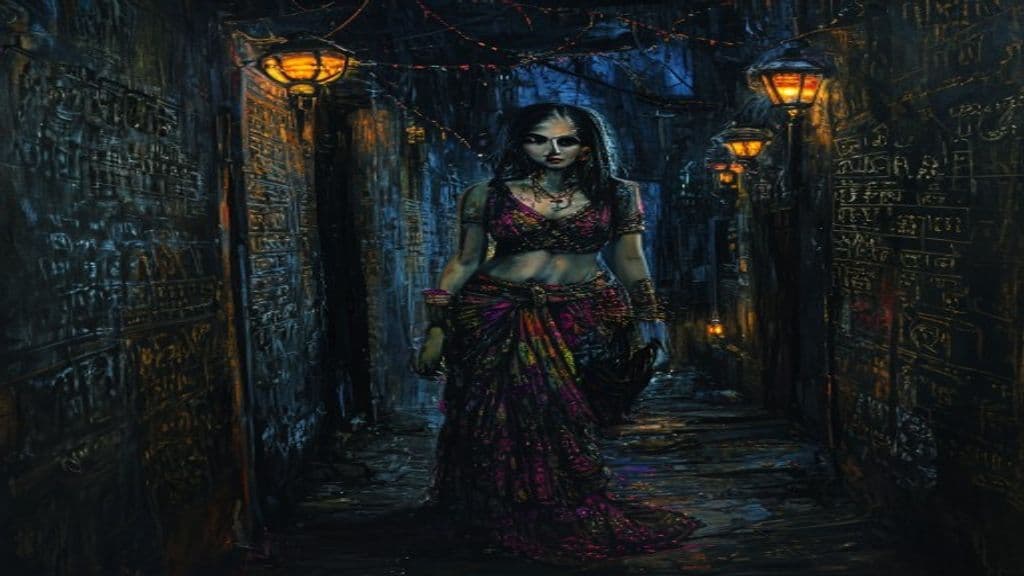
Stree
A vengeful female spirit from Chanderi who abducts men during festival nights. Warded off by the inscription 'O Stree, kal aana' — her legend, still practised on walls across Madhya Pradesh, inspired the 2018 Bollywood horror-comedy.
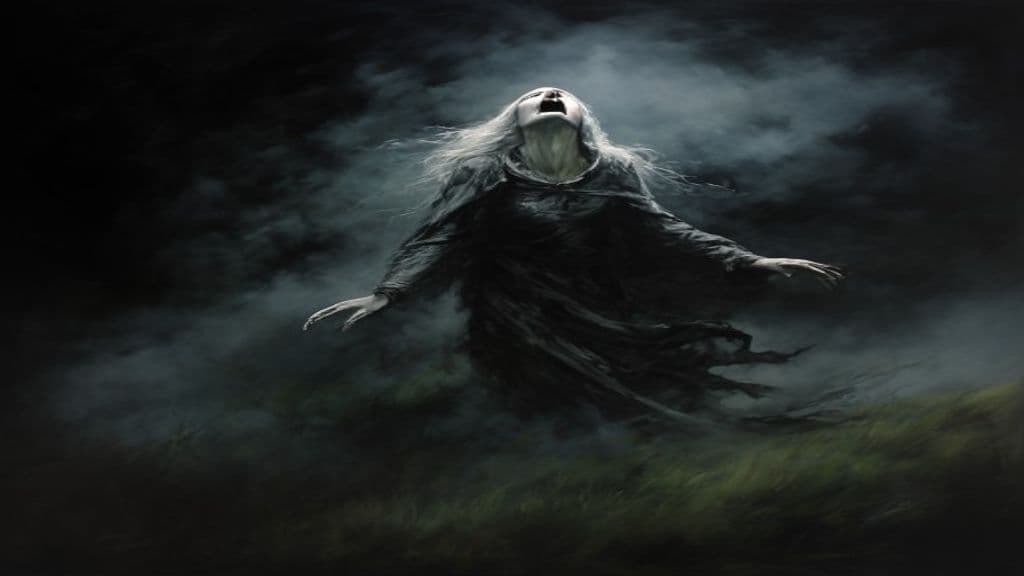
Banshee
A female spirit of Irish and Scottish folklore whose wail heralds an impending death in a family of Gaelic descent. Not a cause of death — a witness to it.
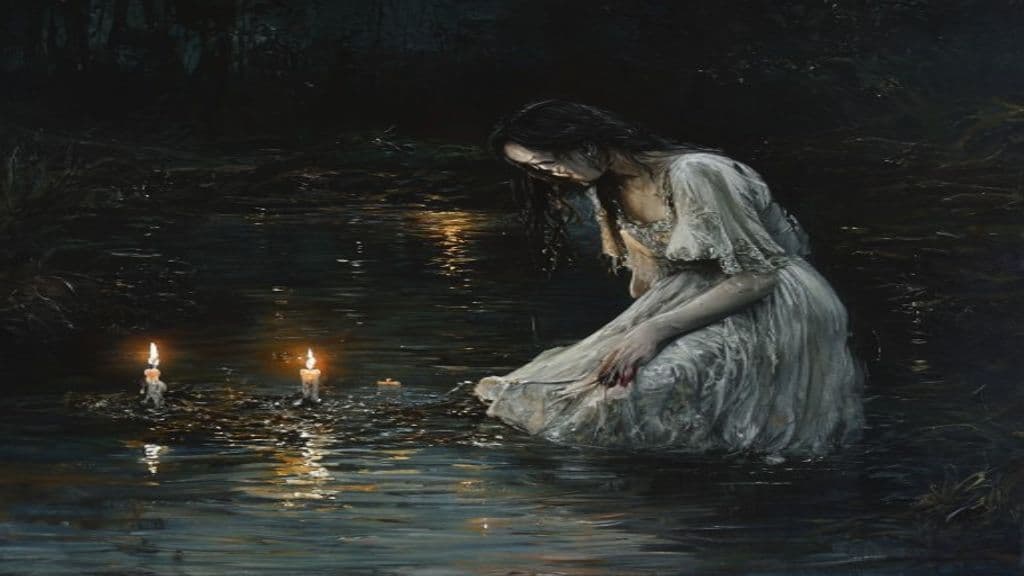
La Llorona
The Weeping Woman of Mexican folklore — the ghost of a mother who drowned her children and now wanders rivers and lakes, weeping for them and taking other children she finds at night.

Ghoul
A ghoul is a demon-like or monstrous humanoid originating in pre-Islamic Arabian religion, traditionally associated with graveyards and the consumption of human flesh. The concept later entered broader folklore and has been widely reused and transformed in modern fiction and popular culture.
Art the Clown
Art the Clown is a fictional recurring antagonist created by filmmaker Damien Leone who functions as a persistent, malevolent slasher figure in contemporary horror films. Within the franchise narrative he is presented as an ambiguous supernatural being who stalks, torments, and murders victims and who resists permanent death across multiple appearances.
Bloody Mary
A mirror-associated apparition invoked by chanting a female name in dim or candlelit conditions. Originating in catoptromantic divination practices, the figure functions in modern youth-lore and urban legend as an ambiguous ghost/witch who may reveal future information or enact violent harm on participants.
Frank Tower
Frank Tower is a 20th‑century urban‑legend figure alleged to have survived multiple major ship sinkings (Titanic, Empress of Ireland, Lusitania). Sources treat the story as a tall tale circulated in novelty and popular‑culture outlets; documentary research finds no evidence that a single person named Frank Tower was aboard and survived all three disasters.
Mothman
A modern American folkloric figure originating from a cluster of 1966–67 sightings around Point Pleasant, West Virginia. Described in press reports and later retellings as a large humanoid or winged creature with notable eyes, the Mothman legend has been variously interpreted as misidentified wildlife, hoaxing/sensationalism, or a paranormal omen linked in some retellings to the Silver Bridge collapse.
Camazotz
Camazotz is a bat-associated spirit in Late Post‑Classic Kʼicheʼ Maya narrative (notably the Popol Vuh) and a recurring bat motif in Classic Maya iconography. In the Popol Vuh Camazotz appears as bat-like beings serving the lords of Xibalba who attack the Hero Twins; Classic imagery links leaf‑nosed bats to night, death, disease, and nahual (way‑spirit) functions.
Camenae
The Camenae are a group of Roman female deities associated with springs, wells, childbirth, and prophetic or poetic inspiration. In Roman literary tradition they were later identified with the Greek Muses and invoked as sources of poetic breath and occasional protectors in labor.
Camilla
Camilla is a legendary Volscian warrior maiden appearing in Virgil's Aeneid (Book 11). Presented as an exceptional human fighter and huntress who leads Volscian forces against the Trojans, she is celebrated for her speed and martial skill and is slain in battle during the Latium wars.
Cancer (the Crab)
In Greek myth and uranography, Cancer is a large crab or crayfish that appears as a minor antagonist in the Heracles cycle (sent against Heracles during the Lernaean Hydra episode) and is immortalized as the constellation Cancer, a member of the Zodiac.
Canotila
Canotila (Lakota: čanotila) are small tree‑dwelling forest spirits in Lakota (Sioux) tradition, described as little tree dwellers who function as messengers from the spirit world and are reported to appear to people in dreams.
Cantabrian Neptune
A Roman-name sea-deity invoked in ritual contexts along the Cantabrian coast; attested in fragmentary sources as the sacred agent associated with the open sea in local ritual taxonomy rather than a richly attested autonomous Cantabrian personality.
Cantabrian brown bear
A remnant population of the Eurasian brown bear (Ursus arctos arctos) confined to the Cantabrian Mountains of northern Spain, treated in scientific and conservation contexts as a distinct local population with significant ecological and conservation importance.
Canterbury Panther
A New Zealand urban-legend of a large black panther or "Canterbury Cat" said to roam the Canterbury Region. Reported sporadically from before the 1970s into the 21st century, the phenomenon is treated in sources as modern phantom-cat sightings subject to civic investigation and scientific demystification.
Community Record
- [1]Candyman (film series) — Wikipedia. Wikipedia, 'Candyman (film series)' — summary material on origins, films, and 2021 reinterpretationwiki
- [2]Agents Of S.H.I.E.L.D. 'Principia' (podcast listing referencing Candyman film discussion). Archive podcast listing — references and discussion of Nia DaCosta's Candyman (2021) receptionother
- [3]Candyman / The Fellowship of the Ring - Episode 445 (podcast). Archive podcast episode listing — discussion of Candyman (2021)other
- [4]Legends Of S.H.I.E.L.D. #71 (archive listing referencing Candyman discussion). Archive listing including discussion and reviews of Candyman (2021)other