
Mentioned briefly in Qur'an 2:102 as two figures at Babylon to whom certain knowledge was sent, later tafsīr traditions develop a narrative in which Harut and Marut are heavenly beings sent to earth as part of a divine testing episode; they teach or are associated with the transmission of sorcery, warn learners 'We are only a trial,' and become the etiological source for illicit magical practices. Some commentators accept them as angels who taught dangerous arts (serving as a moral test), while other readings, resisting the notion of errant angels, reinterpret them as ordinary kings or men or argue they only transmitted lawful knowledge.
The Qur'anic verse and the supplied exegetical summaries do not provide a consistent physical description. Classical commentaries and later tale-like expansions offer narrative detail in some accounts, but the provided sources contain no reliable, specific physical depiction of Harut and Marut.
Classical and modern summaries attribute to Harut and Marut the role of teaching forms of sorcery (siḥr), including methods alleged to cause separation between spouses. In exegesis their activity is framed ambiguously: as agents in the transmission of harmful arts (and thus etiological founders of some magical practices) and as embodiments of a divine test who warn those they teach that they are only a trial. Alternative interpretations in the tradition maintain they could not have sinned and therefore recast their activity as non-culpable instruction or identify them as non-angelic figures.
Weaknesses
None recorded.
Wards
- conditionQur'anic admonition against seeking illicit sorcery
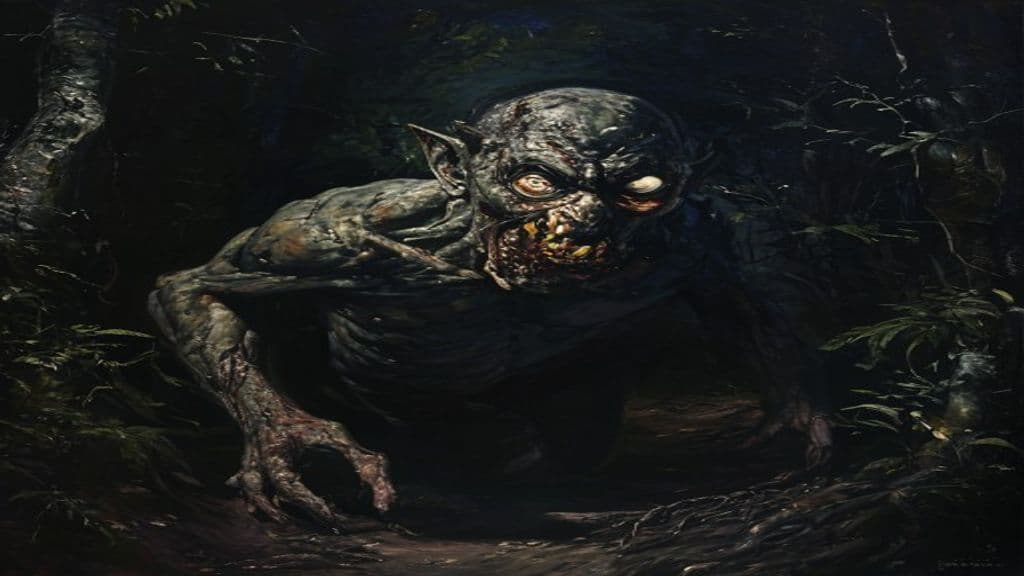
Pishacha
Flesh-eating spirits of Hindu mythology that haunt cremation grounds and are associated with disease, madness, and possession. The lowest class of demon in the Vedic hierarchy.

Djinn
The class of supernatural beings created from smokeless fire in Islamic cosmology — a parallel civilization to humanity, capable of belief or unbelief, with their own prophets, society, and judgment before God.
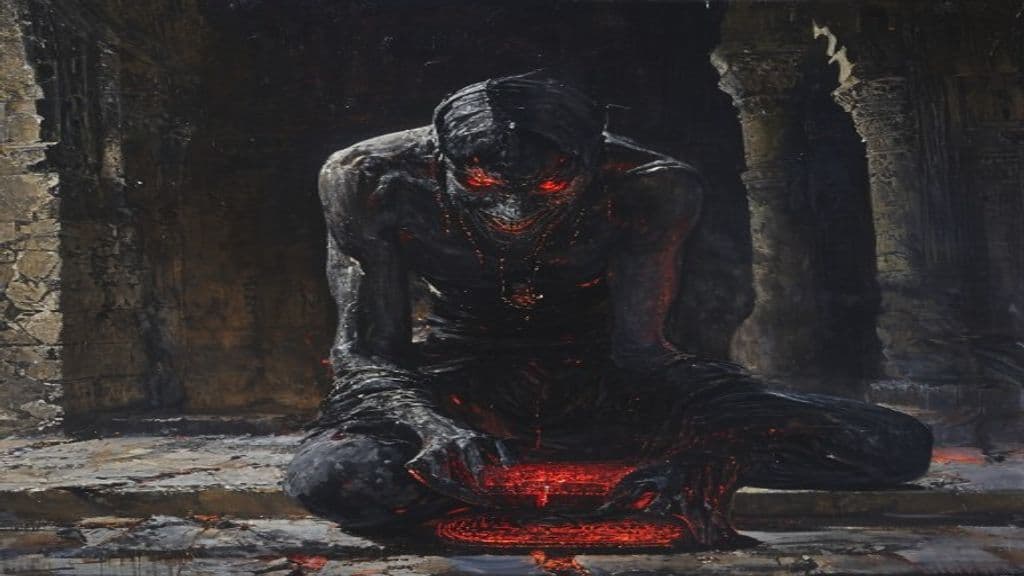
Shaitan
A class of corrupted djinn who follow Iblis and dedicate themselves to leading humans astray — distinct from Iblis himself, the Shayatin are a species of evil djinn who whisper doubts and temptations into the minds of the living.
Harpalion
Harpalion is a personal name borne by several mortal men in Greek mythic tradition. Attestations identify individuals called Harpalion as ordinary human actors — a Lemnian wine-grower and two warriors who fought and died in the Trojan War — without any supernatural attributes in the cited sources.
Harpies
Harpies are winged, half-human/half-bird beings from Greek (and later Roman-identified) myth, commonly portrayed as swift personifications of storm winds and as agents of theft or vengeance in epic and heroic narratives.
Harpina
Harpina is a local Naiad-nymph of the Eleian/Pisatis tradition tied to a spring or stream near Pisa in Elis. In genealogical myth she is daughter of the river-god Asopus (and Metope) and mother, by Ares, of King Oenomaus; her name is given to a nearby town (Harpina/Harpinna) and the stream Harpinates. She is attested in literary topography and as a figure in a Phliasians' sculptural dedication at Olympia.
Harpocrates (Horus the Child)
Harpocrates is the Hellenistic form of the Egyptian Har-pa-khered (Heru-pa-khered), the infant aspect of Horus representing the newborn sun; in Ptolemaic Alexandria he was adapted into a minor god associated with silence, secrets, confidentiality, and the protection of reputations.
Harpy
In Greek and Roman myth, a harpy is a hybrid bird-human creature and personification of storm-winds that acts as an agent of divine punishment — snatching food, fouling victuals, and carrying off or tormenting wrongdoers, sometimes delivering them to chthonic justice.
Harsomtus
Harsomtus (also Harsomptus, Somtus) is an ancient Egyptian child-deity associated with fertility, birth and the solar-primordial creative principle. Worshiped in local temple contexts (notably Dendera and Edfu) and venerated in mammisi (birth-houses), he functions as a youthful or infant form of the Horus/Ra divine line and is integrated into regional triads and family-group theology.
Hashihime
Hashihime (橋姫, "Bridge Maiden/Princess") is a Japanese literary and folkloric figure variously depicted as a poetic emblem of lonely waiting at bridges and, in later tales and drama, as a woman who through ritual transforms into a violent, bridge-associated vengeful spirit.
Hashmal
In the supplied Jewish textual materials, Hashmal (Hebrew חַשְׁמַל; pl. Hashmallim) appears both as a luminous element in Ezekiel's prophetic theophany and as the name of an angelic rank in later Jewish angelology, described in secondary sources as administrative officers of Heaven.
Hasshaku-sama
Hasshaku-sama (八尺様) is a contemporary Japanese urban-legend figure depicted as a very tall, pale womanlike spirit associated with isolated rural zones; circulating since the late 2000s in internet folklore, she is said to target children and young people and is warded in stories by sealed rooms, talismans, salt, and boundary Jizō statues.
Hat Man
A modern popular-paranormal variant of the 'shadow person' phenomenon: described in sources as a humanoid, shadow-like figure discussed in paranormal communities and occasionally linked in contemporary notes to drug- or sleep-related experiences.
Hata no Kawakatsu
Hata no Kawakatsu (秦河勝 / Hada no Kōkatsu) is a semi-legendary Asuka-period courtier and leader of the Hata clan attested in classical chronicles. In the Nihon Shoki he appears as a high-ranking official who received a Buddha image from Prince Shōtoku, founded Hachioka-dera (Kōryū-ji), escorted foreign envoys, and suppressed the popular cult of Tokoyo-no-Kami. Later medieval traditions expand his biography with legendary accretions (e.g., claimed descent or identification with Qin imperial lineage, enshrinement as Ōsake Daimyōjin, and association with performing-arts ancestry).
Hathor
Hathor (Ancient Egyptian ḥwt-ḥr, 'House of Horus') is a major polyvalent goddess of ancient Egypt associated with the sky, maternal and royal motherhood, music, joy, fertility, and the Eye of Ra; she appears in multiple local manifestations and assisted the deceased into the afterlife.
Community Record
- [1]Study Quran (discussion of Qur'an 2:102) and classical tafsīr summary. Study Quran translation quoted in source summaries; exegetical discussion summarized in provided research notes and Wikipedia entrywiki
- [2]Comparative Index and Margoliouth discussions on Harut and Marut. Margoliouth and comparative index materials as linked in research notes summarizing exegetical variants and debatesother
- [3]Related contextual sources on angels, jinn, and broader Islamic teaching (archival media). General contextual material on jinn and created orders cited in research notes to distinguish jinn from angelsother