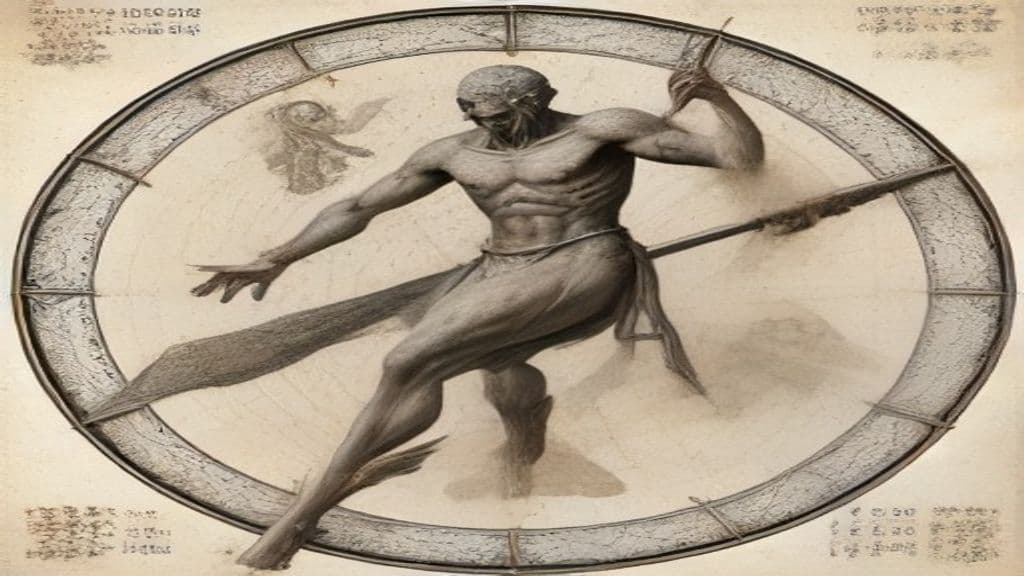
Monopods appear across disparate cultural corpora rather than in a single creation tale. In Greco-Roman natural-history and travel literature (via authors such as Ctesias as reported by Pliny) they are presented as a race encountered in distant lands (commonly India or Ethiopia) and incorporated into catalogues of wondrous peoples. Medieval Christian writers and mapmakers (Isidore of Seville; mappae mundi such as the Hereford Mappa Mundi and Beatus maps) continued to place monopods at the margins of the inhabited world. The Norse saga tradition records a one-footed people (einfœtingr) encountered in western voyages (Eiríks saga rauða). In Chinese literature the figure appears in Zhuangzi as an allegorical creature rather than a traveller's report. These attestations indicate a long-standing, cross-cultural motif used to mark 'other' human types on the edges of known geography.
Sources consistently describe a human-like people with a single leg and one very large foot attached centrally to the body. Classical authors note that they lie on their backs and use the large foot as a shade when the heat is extreme (the Greek name σκιάποδες, 'shade-footed ones', derives from this detail). Medieval maps depict them as wondrous inhabitants of remote regions (iconographic detail varies by map). Norse saga accounts simply note a one-footed person encountered in exploration narrative.
Classical and medieval accounts emphasize surprising agility and leaping ability despite the single leg (Pliny, via Ctesias; Isidore of Seville). Thermoregulatory behavior — lying on the back and shading themselves with the foot — is repeatedly reported and underlies their Greek epithet. In Zhuangzi the monopod appears in an allegorical exchange describing its 'hippety-flopping' gait (used for philosophical illustration rather than natural-history claim). The Norse saga Eiríks saga rauða records a one-footed individual capable of armed combat (shooting arrows and fatally wounding a member of an Icelandic party), indicating they can be dangerous in encounter narratives. No sources attribute cosmic or magical world-altering powers to monopods.
Weaknesses
- otherNo specific weaknesses recorded in provided sources
Wards
- otherNo protective measures or rituals directed at monopods are attested in the provided sources
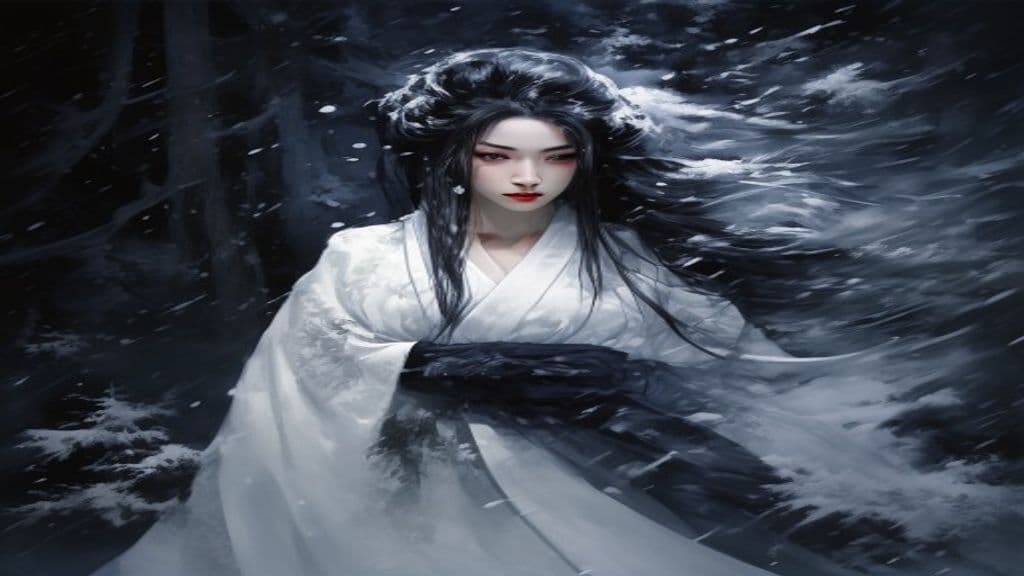
Yuki-onna
The Snow Woman of Japanese folklore — a spirit born of blizzards who appears to travelers lost in snowstorms. Beautiful and lethal, she can show mercy or bring death depending on her mood.
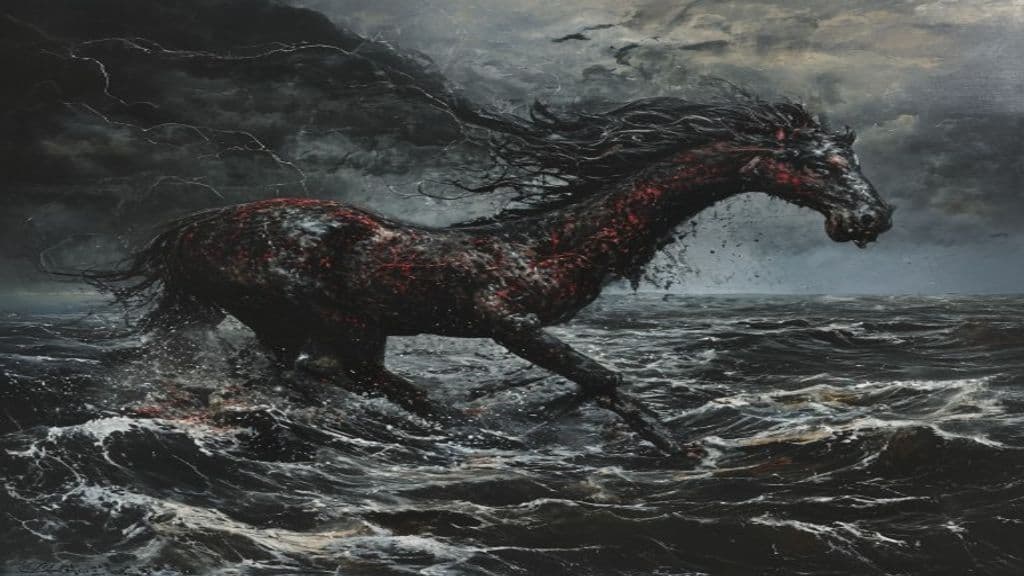
Nuckelavee
The most terrifying creature of Orcadian folklore — a skinless, horse-headed demon of the sea whose breath spreads plague and whose presence causes crops to wither. It cannot cross fresh water.
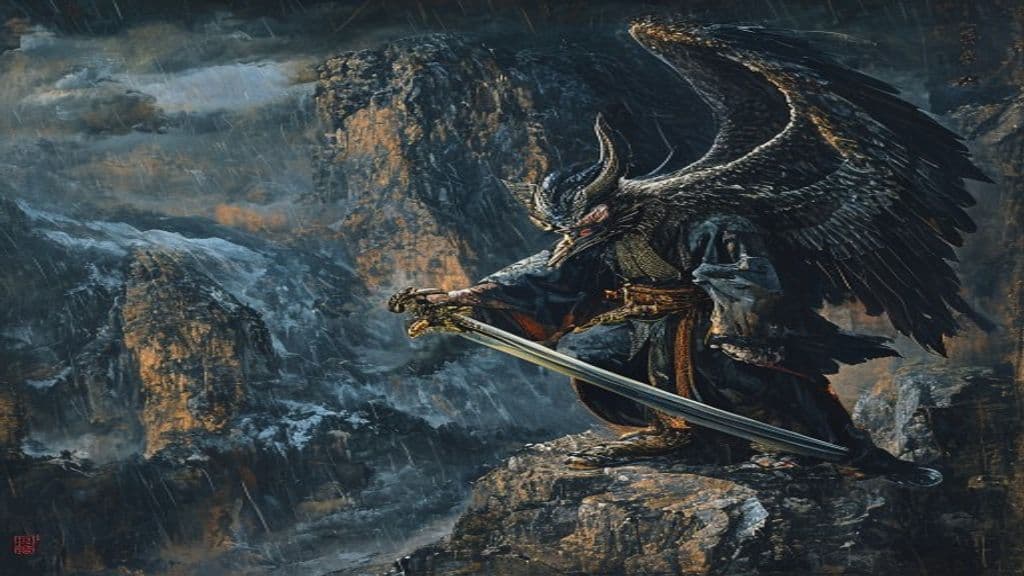
Tengu
Proud, warrior-like mountain spirits of Japan, associated with martial arts, pride, and the wild mountains. Neither fully good nor evil — they test and train warriors and monks, but punish the arrogant.
Molus of Crete
Molus is a figure in Cretan mythic genealogy, presented in surviving sources as a son in the house of Minos and chiefly significant as the father of Meriones, the Cretan warrior at Troy. He is also attested in one account as the subject of a ritual image shown at a Cretan festival: an image of a headless man called Molus, linked to a tradition that he attempted to violate a nymph and was later found decapitated.
Momoy
Momoy is the Chumash lexical term for the sacred/medicinal plant Datura wrightii and, in Chumash contexts, the spirit-power associated with that plant. It is an entheogenic medicine used in ritual and healing contexts to induce visions, support spiritual wellbeing, and to help 'keep the soul in the body' during frightening encounters; it is also recognized as poisonous and dangerous if mishandled.
Momu
Momu is a figure in Chinese legendary tradition described as a legendary empress and goddess, remembered as a wife of the Yellow Emperor and traditionally credited with inventing the mirror and with a healing episode that led to her involvement in divine administration. Later popular traditions also group her among a set called the "Five Ugliest Women of Ancient China."
Monaciello (Munaciello)
A traditional Neapolitan household and city sprite, the Monaciello ('little monk') is a short, stocky, robed figure of local oral lore who inhabits Naples' underground waterworks and who visits homes, sometimes rewarding hospitality and sometimes playing spiteful tricks.
Mongolian Death Worm (Oov)
A cryptid or mythological animal said to live in the Gobi Desert, associated with death. (Note: 1. Power tier should be Lesser (local spirit) since it's a desert-dwelling creature with unproven abilities and no concrete description. 2. Appearance, Abilities, Sensory cues, Weaknesses, and Wards n)
Monkey-man of Delhi
A modern Indian urban‑legend and mass‑panic phenomenon centered on reports of a monkey‑like attacker roaming New Delhi in mid‑2001. Media coverage and eyewitness reports described a frightening, inconsistent figure blamed for nighttime attacks, injuries, and panic; subsequent investigations suggested a mix of hoaxing, copycats and mass hysteria.
Monotheism in pre-Islamic Arabia
Followers of Abrahamic faiths, such as Christianity and Judaism, who believed in a single all-powerful God in pre-Islamic Arabia. (Note: * Power tier: Lesser (not Greater) - monotheistic beliefs were not limited to powerful regional deities but had a relatively local presence in pre-Islamic Arabia. * Origin story: The exact timing is u)
Monster (tradition)
A broad cultural category for imagined creatures that transgress natural and social norms. In literature, mythology, religion, and popular culture, monsters mark otherness, danger, or omenatic significance rather than denoting a single, uniform being.
Monster Slayer (Nayenezgani)
Within the limited sources supplied, 'Monster Slayer' is used as an English label on a Wikipedia disambiguation page to refer to Nayenezgani, identified there only as "a character from the Navajo creation myth." The provided materials contain no narrative, descriptive, or ritual information about this figure beyond that single listing.
Moon Rabbit (Maya Tradition)
A mythical figure associated with lunar mythology, said to pound elixir or medicine for mortals and occasionally foodstuffs. (Note: 1. Power tier: Downgrade to Ancient, as while it's associated with lunar mythology, its abilities are not cosmic in scope. 2. Abilities: Add that the contents of the mortar differ among cultural tradi)
Moon god (lunar deity)
A lunar deity is a divine figure representing the Moon or aspects of it; across cultures such deities personify the Moon, its phases, and its governance of the night and may perform varied functions depending on local tradition.
Mopsus
Mopsus is a legendary seer of the Graeco-Anatolian tradition known from archaic Greek poetry and later Anatolian and Phoenician inscriptions. He appears in myth as a prophetic figure—sometimes son of Manto or of Apollo—and in epigraphic records as an eponymous ancestor (Muksa/Muksos) connected to early Iron Age dynastic houses in southern Anatolia.
Community Record
- [1]Monopod (creature) — Wikipedia. Wikipedia entry 'Monopod (creature)' summarizing classical, medieval, Chinese, and Norse attestations (Pliny/Ctesias; Isidore; Zhuangzi; Eiríks saga rauða).wiki
- [2]Wikidata: Skiapod. Wikidata entry for Skiapod summarizing variant names and attestations.wiki