
No mythic origin tale is recorded in the supplied sources. Lexically, Salesbury's 1547 Welsh–English dictionary records koblyn translating to "a goblin," and modern summaries state the word is related to English "goblin" and may derive via French Gobelin from a Germanic source akin to German Kobold. Beyond this etymological placement, the supplied material does not give a traditional creation or founding narrative for coblynau.
Described as short (between half a yard tall and just shorter than humans), very ugly, and often dressed in miner's clothing while carrying tools which they use to imitate mining work ineffectually. An anecdotal surface sighting recorded a group of fifteen to sixteen coblynau dressed in red with yellow-spotted red handkerchiefs around their heads, one individual described as having a copper-coloured face; this is reported as a single field account rather than a universal costume.
Coblynau produce a peculiar knocking sound underground which miners interpret as indicating rich veins of ore or treasure. They imitate mining labor enthusiastically but ineffectually, and are generally considered helpful or "friendly fairies" and a source of good luck to miners. They are morally responsive: they may cease their helpful knocking if miners appear overly greedy, and may throw rocks at miners if disrespected—these actions are described as annoyances rather than seriously harmful attacks.
Weaknesses
- otherNo recorded vulnerabilities
Wards
- conditionRespectful conduct and avoidance of greed
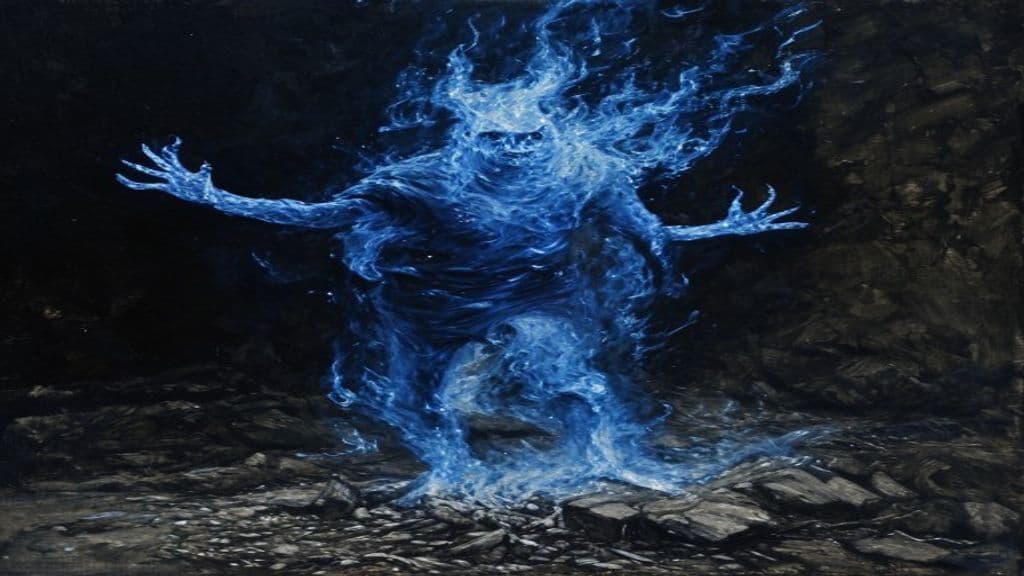
Bluecap
A small blue flame-like mining spirit from Anglo-Scottish border and North East England folk belief that inhabits coal mines and pits. Appearing as a flickering blue flame, Bluecaps guide miners to rich seams, warn of cave-ins, and expect payment in the form of a working man’s wages left in a secluded corner of the mine.

Gnome (tradition)
A class of animate subterranean beings from early-modern European natural-philosophical and miners' lore. Treated by Paracelsus as earth elementals (gnomi) and recorded in German mining tradition as Bergmännlein / Berggeist, these small, humanlike mountain-spirits explain and personify phenomena in mines — from mischief to the discovery of ore.
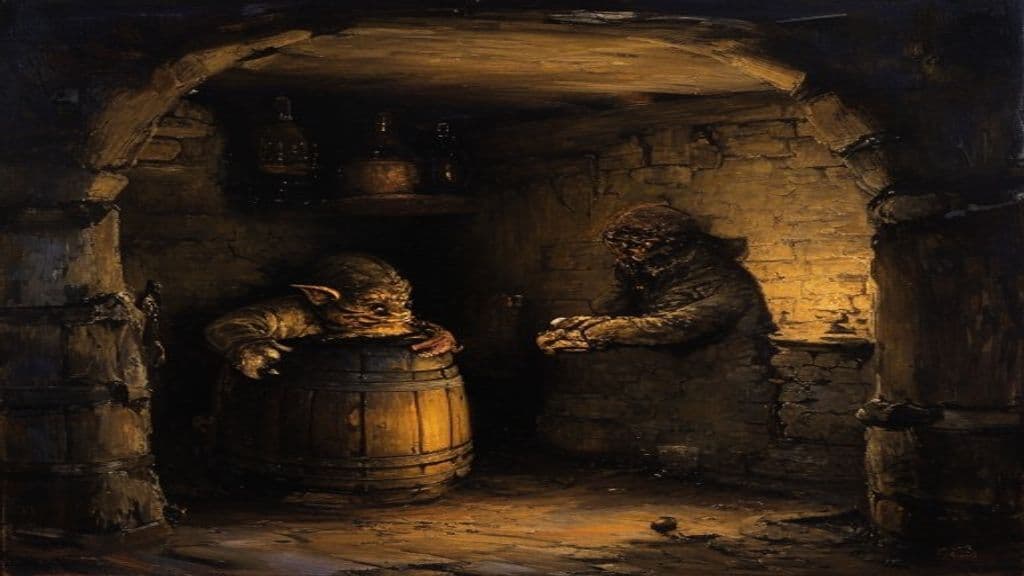
Kobold
The German household and mine spirit — a mischievous but potentially helpful small being who attaches to a household, bringing luck or disaster depending on how it is treated.
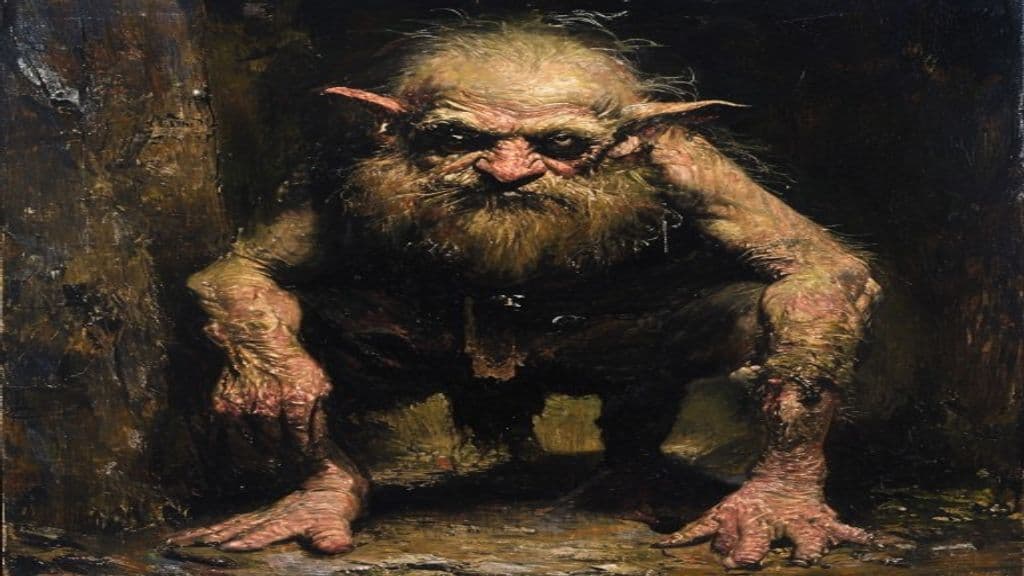
Goblin
A class of small, often grotesque humanoid beings in European folk belief that range from household helpers to tricksters and violent figures. Goblins occupy liminal spaces—hearths, cellars, ruins and wild places—and their behavior toward humans depends on region, story, and reciprocal treatment.
Aderyn y Corff
Aderyn y Corff (literally 'bird of the corpse') is a bird-like death-porter in Welsh folklore said to call outside the door of a person about to die. Described as an avian portent that may lack feathers or wings and as existing on another plane when not manifesting, it is treated in Welsh ghost lore and sometimes naturalized as a screech owl in modern accounts.
Arawn
Arawn is the ruler (king) of Annwn, the Otherworld in medieval Welsh narrative. He appears most prominently in the First Branch of the Mabinogi, where he exchanges places with the mortal Pwyll for a year and a day and is associated in folklore with the Cŵn Annwn (Hounds of Annwn) and other supernatural animals.
Ceffyl Dŵr
A Welsh water-spirit that habitually takes the shape of a horse; tales describe it as a shapeshifting, water‑bound creature that entices or carries travellers and is associated with pools, rivers, waterfalls and stormy shores.
Coblynau
Coblynau (singular coblyn) are small gnome-like mine and quarry spirits from Welsh folklore. They are reported in folkloric summaries as haunting underground workings, making knocking sounds, and—according to some miners' tales—occasionally indicating locations of ore or riches.
Geraint
Geraint is a personal name borne by overlapping human figures in Welsh and Brittonic tradition: a valiant warrior celebrated in early medieval poetry, the protagonist of the Arthurian romance Geraint and Enid, and a king of Dumnonia attested in a saints' vita. The name links heroic, courtly, and hagiographic registers rather than a supernatural taxonomy.
Gwragedd Annwn
In Welsh tradition the Gwragedd Annwn are female Otherworld fairies tied to freshwater—lakes and rivers—counted among the Tylwyth Teg. Depicted as beautiful women (often dressed in green) who live beneath lakes, they herd enchanted white cattle and occasionally cross into the human world.
Knocker
A small mine-associated spirit from British and American mining folklore, known for producing knocking sounds in underground workings that miners interpreted as warnings or communications. Variants and cognates appear across Cornwall, Devon, Wales, Staffordshire and in American mining communities (Tommyknockers).
Clíodhna
Clíodhna is a female otherworld figure from Irish myth and Munster folk tradition, portrayed in medieval narrative as a member of the tuatha dé Danann and later as the queen of the sióga/banshees of South Munster (Desmond). She is associated with healing birds, enchanted gifts (notably three birds and an emerald cup in the Book of Lismore), place‑names in County Cork, and a range of narratives in which she aids, loves, and sometimes harms mortals.
Cnossia
Cnossia is a minor female figure in Greek mythic genealogies, identified in surviving secondary references as either a nymph or a slave associated with King Menelaus of Sparta and named as the mother of his son Xenodamus. Her name links her to the city of Cnossus (Knossos) on Crete, but no independent narratives or cultic roles are attested in the available sources.
Coatlicue
Coatlicue (Cōātlīcue) is an Aztec (Mexica) earth-and-mother deity identified in modern sources as the mother who gave birth to the moon, the stars, and Huītzilōpōchtli; she is also associated with maternal and mortuary aspects through identification with titles such as Toci and Cihuacōātl.
Cocijo
Cocijo is the Zapotec rain, thunder and lightning deity and the personified sacred force of storms and fertility in pre‑Columbian Oaxaca. The Zapotec word cocijo means "lightning" and names both the meteorological phenomenon and this primary divine figure, who is credited in Zapotec tradition with creative acts and who received ritual offerings including bloodletting and human sacrifice.
Cockatrice
A medieval and early-modern Western legendary hybrid beast, typically described as a two‑legged serpent- or dragon‑bodied creature with the head and some features of a rooster; famed in bestiary tradition and later literature for a lethal gaze/touch and for arising from an unnaturally incubated rooster's egg.
Community Record
- [1]Coblyn — Wikipedia. Wikipedia, "Coblyn" (summary citing Wirt Sikes and other folkloric references)wiki
- [2]Salesbury's Welsh–English dictionary (1547) entry 'koblyn' cited. William Salesbury (1547) cited in sources: koblyn = "a goblin" (as reported in the provided research notes)folk
- [3]Wirt Sikes, British Goblins (as cited in Wikipedia summary). Wirt Sikes, British Goblins — folkloric descriptions of coblynau appearance, knocking behavior, and the Bodfari Morris-dancing account (as summarized in the provided notes)folk