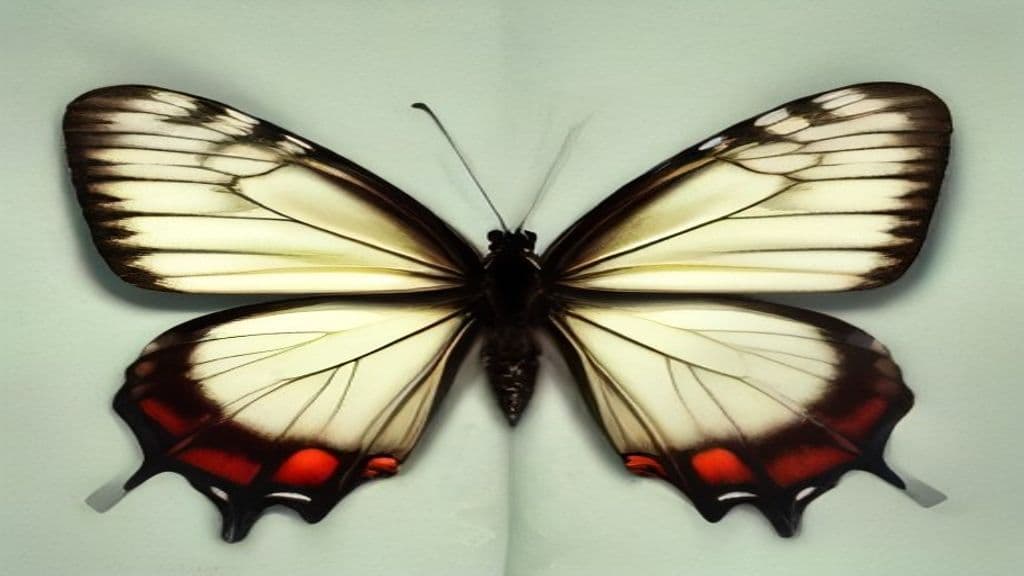
Not applicable — the provided sources are natural-history, hobbyist, and commercial; they present Polyura dolon as a documented biological species rather than a figure of myth or origin narratives.
A medium-to-large Charaxinae butterfly with concave outer wing edges and hindwings bearing two slender tails. The upperside is creamy white widely marked with brown on the forewings and with submarginal taches and lunules on the hindwings. The underside (reverse) is white with brown lines and costal/basal markings; photographic and specimen records corroborate a large size (approximately 7.0 cm recorded for some specimens) and a striking, 'stately' aspect.
Described behaviors are those of a typical large Charaxinae butterfly: flight across woodland/forest habitats, occasional movements to different elevations (recorded as stragglers from higher elevation in at least one faunal note), and adult feeding that can include carrion-derived fluids in addition to other typical butterfly resources. No supernatural powers are attributed in the sources; information is ecological and observational.

Djinn
The class of supernatural beings created from smokeless fire in Islamic cosmology — a parallel civilization to humanity, capable of belief or unbelief, with their own prophets, society, and judgment before God.

Jann
The weakest class of djinn in Islamic tradition, associated with desert winds and taking the form of snakes or whirlwinds, dwelling in empty wilderness and posing little threat to those who know the proper invocations.
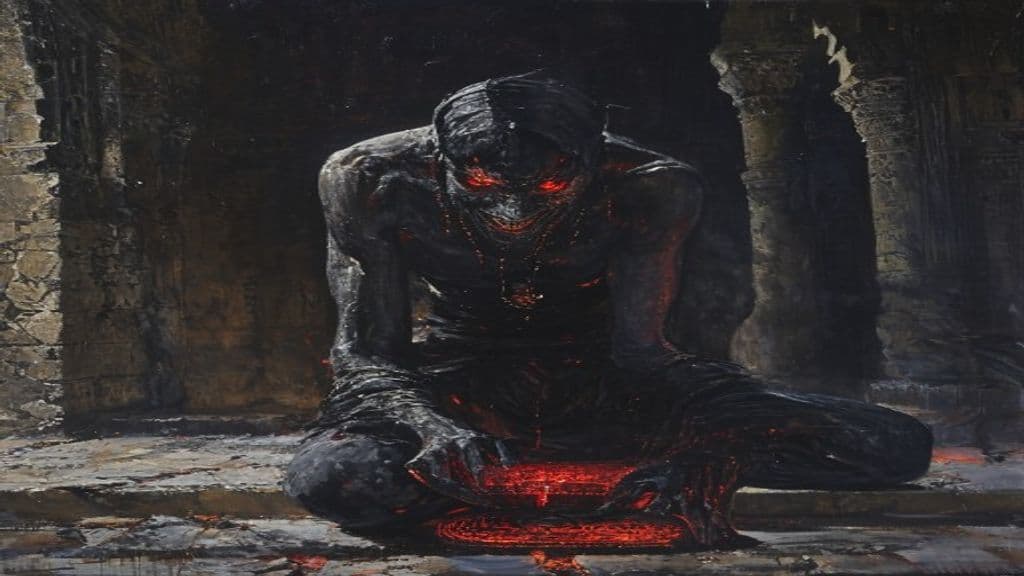
Shaitan
A class of corrupted djinn who follow Iblis and dedicate themselves to leading humans astray — distinct from Iblis himself, the Shayatin are a species of evil djinn who whisper doubts and temptations into the minds of the living.
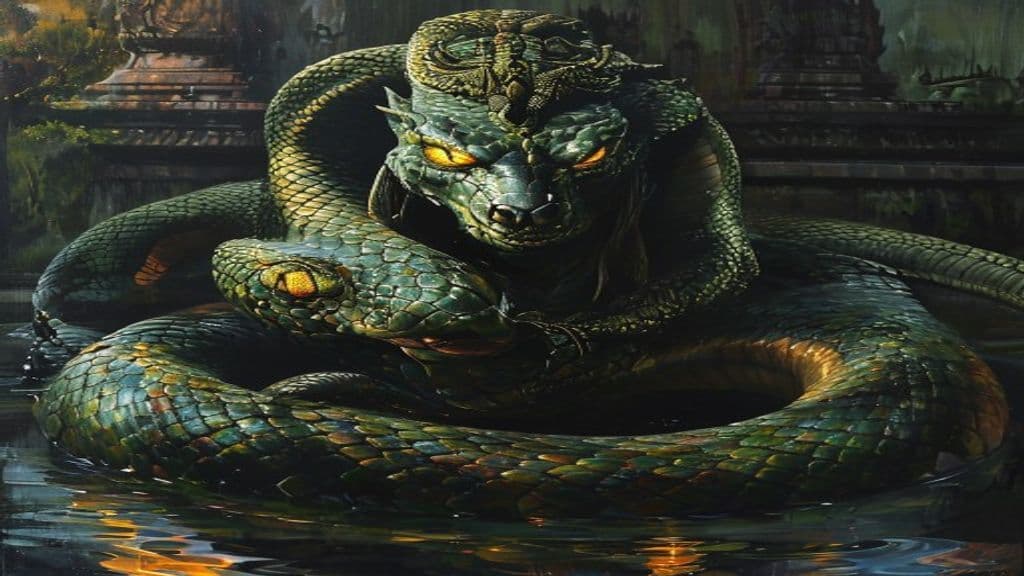
Naga
Divine serpent beings of Hindu, Buddhist, and Jain cosmology — powerful guardians of water, earth, and underground treasures. Revered as deities in South and Southeast Asia.

Apsara
Celestial dancers and water nymphs of Hindu cosmology — beautiful semi-divine beings who dance at the court of Indra and, by his command, descend to earth to distract sages from excessive asceticism.

Naiad
A class of female nature-spirits in ancient Greek religion whose being is bound to particular bodies of fresh water (springs, wells, fountains, streams). Naiads are local, embodied presences venerated in community cults and invoked in rituals of purification, healing, and life-cycle events, yet they may also act harmfully toward humans.
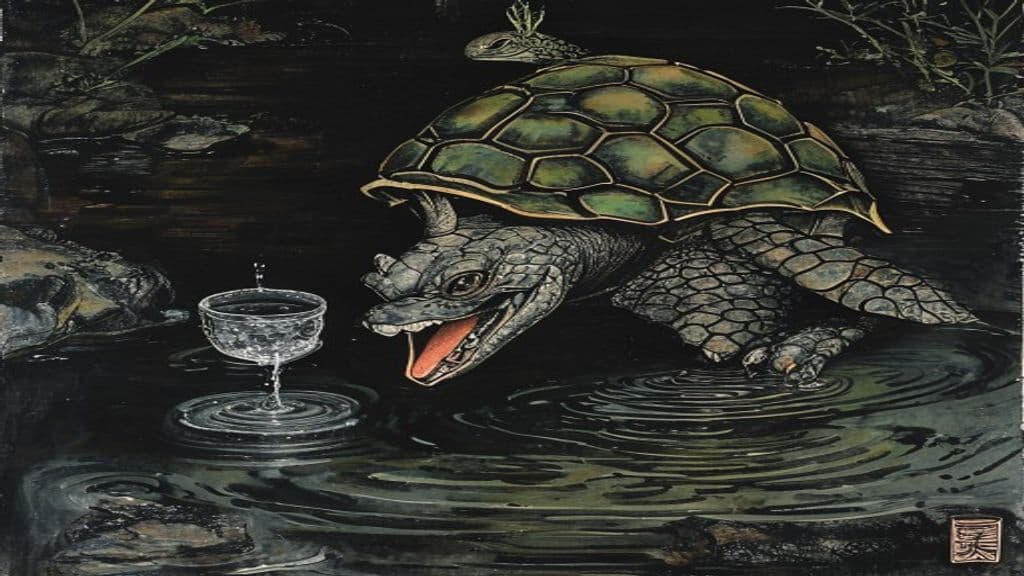
Kappa
A water-dwelling imp of Japanese folklore with a bowl of water on its head. Mischievous but bound by strict codes of politeness; dangerous near rivers.
Diana monkey
The Diana monkey (Cercopithecus diana) is an Old World monkey native to West African primary forests. Treated in the supplied sources as a biological species of conservation concern, it is notable for a white crescent browband, complex vocal alarm system, frugivorous diet, and sociable group structure.
Grass snake (Natrix natrix)
A Eurasian semi‑aquatic, non‑venomous colubrid snake (primarily Natrix natrix and closely related taxa) commonly found near water, compost heaps and field edges. Treated in the provided sources as a biological species with well‑documented natural history rather than a mythic or supernatural being.
Pallas's cat (manul)
Pallas's cat (Otocolobus manul), commonly called manul in Mongolian, is a small wild felid of Central Asian montane and steppe ecosystems. Sources treat it as a biological species with distinctive long dense fur, a stocky build and specialized ecological adaptations to cold, rocky habitats; it is not presented in the provided materials as a supernatural being.
Polymede
Polymede (Ancient Greek Πολυμήδη, Polymēdē) is a mortal woman attested in Greek mythic genealogies. She is named in some traditions as the daughter of Autolycus and as a possible mother of the hero Jason by Aeson, and in other lists as a mother of Nestor by Neleus; her role is primarily genealogical rather than active or divine.
Polymele
Polymele (Ancient Greek Πολυμήλη, also Polymede/Polymela/Polymede/Polypheme) is a name borne by multiple mortal women in Greek mythic genealogies; she appears in variant local traditions as daughter, wife, or mother of heroes and occasionally as a mortal beloved of a god. Her role is genealogical and narrative rather than supernatural.
Polynices
Polynices is a mythic human prince of Thebes in the Greek Theban cycle. Son of Oedipus, he contests the throne with his brother Eteocles, leads the Argive expedition known as the Seven against Thebes, dies in single combat with Eteocles, and becomes the focal point of the funerary and legal conflict dramatized in Sophocles' Antigone.
Polypheme (Polyphemus)
Polypheme (Polyphemus) is a name applied in Greek mythic and later artistic traditions primarily to a cyclops figure tied to the Acis and Galatea narrative and secondly as a variant personal name in heroic genealogies (including as a female name-form associated with Jason's mother). Sources show the name used variably across monstrous, mortal, and artistic contexts rather than as a single unified theological being.
Polyphemus
Polyphemus is the Homeric Cyclops — a one‑eyed giant shepherd who lives outside Greek civic norms, notorious for refusing hospitality and for blinding and being blinded by Odysseus. Later literature reframes him variously as comic, rhetorical, or lovesick, but the core tradition presents him as a liminal, semi‑divine monstrous figure (son of Poseidon).
Polyxenus
Polyxenus (Greek Πολύξενος / Πολύξεινος) is a personal name attested across multiple mortal figures in ancient Greek mythic-historical tradition — notably early priests of Demeter, kings of Elis, a suitor of Helen who fought at Troy, and an alternate name for a son of Jason and Medea. The bearers are placed within legendary genealogies and cultic topography rather than the category of supernatural beings.
Polyxo
Polyxo (Greek Πολυξώ) is a recurring personal name in ancient Greek mythic genealogies and narratives. Rather than a single consistent supernatural being, multiple distinct figures bearing this name appear as Oceanid or Naiad water-nymphs, a Lemnian seeress/nurse, a Maenad, and mortal queens or wives tied to cycles such as the Argonautica, the Danaids, and the aftermath of the Trojan War.
Pomba Gira
Pomba Gira is an Afro-Brazilian female spirit invoked in Umbanda and Quimbanda who personifies feminine sexuality, desire, and liminality; she functions as a consort to Exu, is petitioned for matters of the heart, and is treated with respect because of her reputed wrath and power in ritual possession.
Pombero (Pombéro)
The Pombero is a small-statured nocturnal humanoid figure from Guaraní-derived folk belief in Paraguay and neighboring regions. Portrayed as a forest-dwelling trickster and interlocutor with domestic animals and rural households, the Pombero is blamed for mischief (loosed cattle, stolen eggs) and, in some accounts, for unexpected pregnancies; he is commonly appeased with nightly offerings.
Community Record
- [1]Polyura dolon - Wikipedia. Wikipedia: Polyura dolonwiki
- [2]Wikidata: Polyura dolon (Q3010578). Wikidata entry Q3010578other
- [3]Polyura dolon grandis (Rothschild, 1899) - Wingscales. Wingscales: Polyura dolon grandisother
- [4]Thorne's Insects Shoppe - Polyura dolon listings. Thorne's Insects Shoppe specimen listing for Polyura dolonother
- [5]Thorne's Insects Shoppe - Polyura dolon ssp listing. Thorne's Insects Shoppe specimen listing (subspecific)other
- [6]Gardening for Butterflies - Appendix 1 (mentions rajahs/nawabs group). ANPSA Gardening for Butterflies Appendix 1other
- [7]Thailand Butterflies - North Thailand Birding (Charaxinae gallery). North Thailand Birding: Charaxinae gallery (Polyura records)other
- [8]Fighting over a dead frog! – Ray Cannon's nature notes (carrion-feeding observation). Ray Cannon nature note mentioning 'Stately Nawab, Polyura' among species recorded on carrionother
- [9]Khun Nan Butterfly Checklist - North Thailand Birding. North Thailand Birding: Khun Nan Butterfly Checklist (records of Polyura dolon)other
- [10]JoTT Communication: Butterflies and other protected fauna of Jone... (regional checklist). JoTT Communication 4(9): regional butterfly checklist including Charaxinaeacademic