
Within the story-world Dante is presented as an ancient leader among beings classified as devils or demons who once fought energy-based invading beings characterized as 'gods.' In the 1971 story Dante is said to have been active in a high-technology Sodom/Gomorrah, defeated by God and sealed in the Himalayas; that narrative also links Dante's human incarnation to Judas Iscariot and describes his later rebirth/possession of a modern character (Ryo Utsugi). In the later reboot continuity Dante's legacy endures as part of a war between gods and humans, with human technicians or pilots (e.g., Dante Luther) using or merging with super-weapons called 'demons.'
Descriptions differ by version. The 1971 plot depicts Dante as an ancient demon who can take gigantic, hybrid forms—including a canonical sequence where he is fused with a jet fighter and two prehistoric reptiles (a Pteranodon and a Tyrannosaurus rex) to produce a demonic form. In modern-set episodes/incarnations Dante also appears via human guises/hosts (Judas Iscariot historically; Ryo Utsugi in 1971) and in the reboot a human technician (Dante Luther) is associated with 'demons' that function as weaponized constructs and may alter the user's outward form when merged.
Across versions Dante exhibits consciousness transfer/possession (human incarnations and hosts), fusion/transformation with machines, creatures, and weapons, and battlefield-scale destructive power. In the 1971 narrative Dante transfers human soul/body connections (explicitly linked to Judas Iscariot and Ryo Utsugi) to return in the modern era and can manifest in hybrid giant forms. In the reboot, 'demons' are super-weapons that magnify a user's mental energy and, under extreme conditions such as near-death, cause the user to merge with the weapon and become an actual demon. Dante functions as a military and charismatic leader able to rally other demons against the gods.
Weaknesses
- conditionDefeat and sealing (narrative containment)
- otherOpposition by organized human forces (Army, religious organizations such as 'God's Association'/'God's Soul')
Wards
- otherMilitary and organizational opposition (Army intervention, Guardian Justice/paramilitary divisions)
- ritualSealing (as performed in the past; Dante is described as defeated and sealed in the Himalayas)
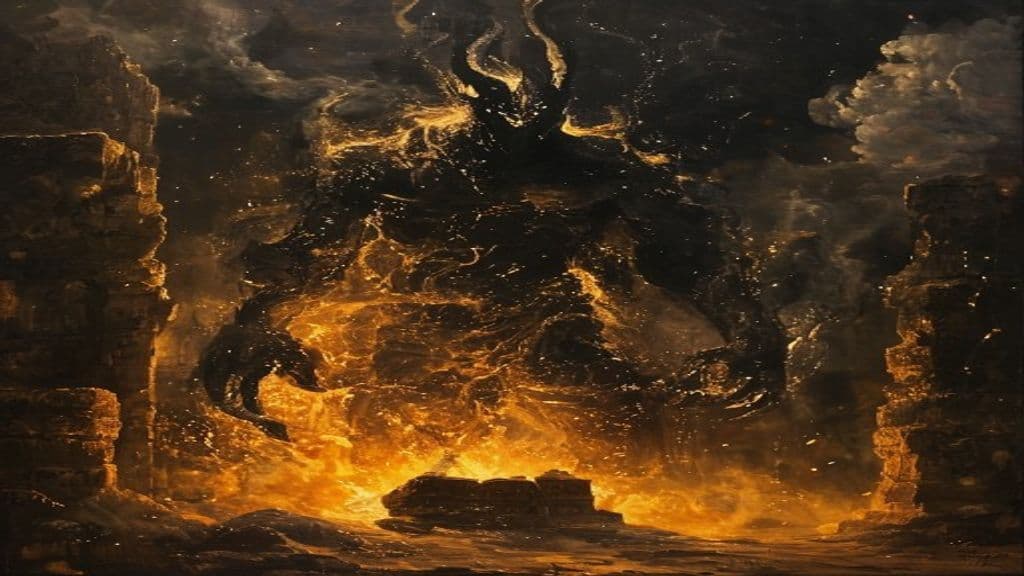
Ifrit
One of the most powerful classes of jinn in Islamic and pre-Islamic Arab tradition — a fire-born being of immense strength and cunning, capable of great works of engineering and terrible violence.
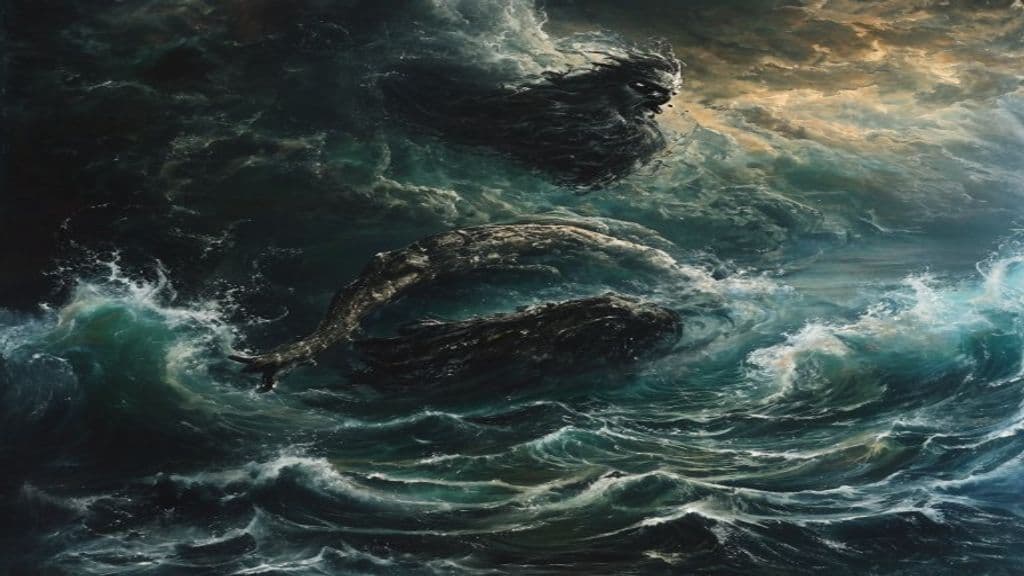
Marid
The most powerful class of jinn in Islamic tradition — beings of the sea, associated with the deep ocean, storms, and the granting of wishes at terrible cost. The classic genie of the Arabian Nights.
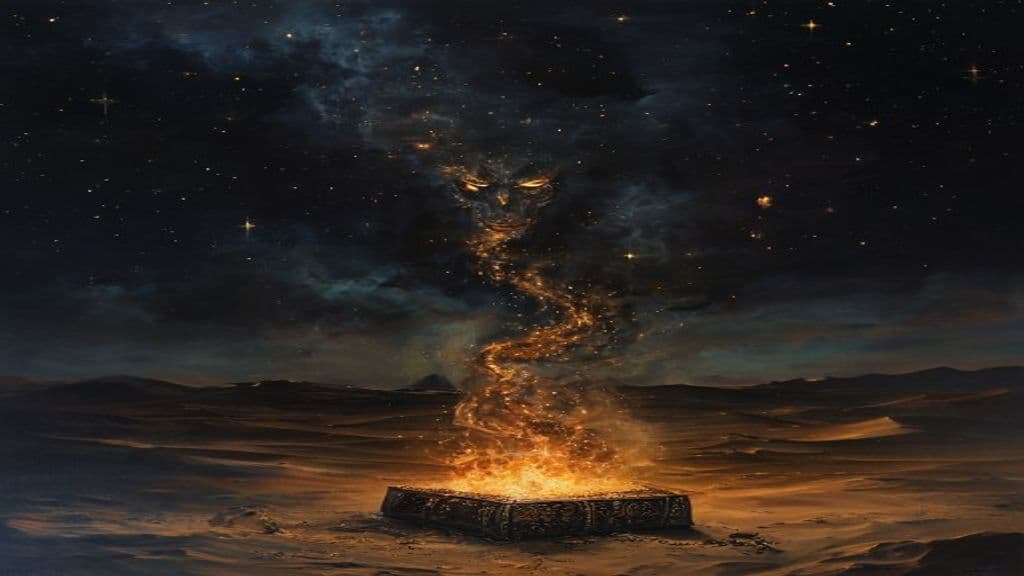
Djinn
The class of supernatural beings created from smokeless fire in Islamic cosmology — a parallel civilization to humanity, capable of belief or unbelief, with their own prophets, society, and judgment before God.
Jann
The weakest class of djinn in Islamic tradition, associated with desert winds and taking the form of snakes or whirlwinds, dwelling in empty wilderness and posing little threat to those who know the proper invocations.

Beelzebub
Originally the name of a Philistine city-deity of Ekron recorded in the Hebrew Bible (2 Kings), Baʿal-zəḇūḇ was later used in Jewish polemic as a derisive title and appears in Christian texts as a designation for a principal demonic figure (rendered Beelzebul/Beelzebub) often called the 'prince of demons.' Over subsequent centuries the name is incorporated into medieval and early modern demonological hierarchies and literary depictions of infernal powers.
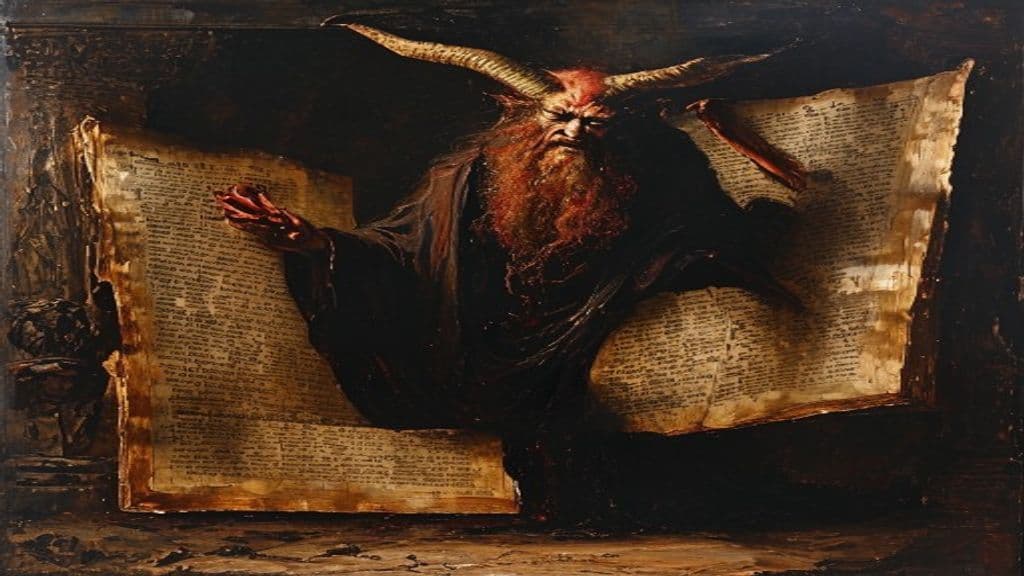
Satan
A central oppositional figure in Abrahamic traditions who functions variously as an accuser, tempter, tester, and rebel. In earliest Hebrew Bible contexts the term functions as a role within the divine council; in later Jewish, Christian, and Islamic developments the figure becomes a more fully personified adversary who incites humans to sin and leads hostile spirits.
Demogoblin
Demogoblin is a Marvel Comics demonic, goblinoid supernatural being associated with Limbo. Presented in 1990s Spider-Man storylines, he is a self‑proclaimed holy avenger who kills those he deems sinners, and who has fused with and later been separated from the human villain Jason Macendale (Hobgoblin).
Demogorgon
A name that emerged in Latin medieval commentary and was later taken up in Renaissance and early modern literature and demonology as a powerful, primordial subterranean or infernal figure associated with fate and accountability. Modern popular culture reuses the name for monsters, but those visualizations are distinct from the medieval and Renaissance textual tradition.
Demoleon
Demoleon (Ancient Greek Δημολέων) is a mortal Trojan warrior of the Homeric tradition, named as a son of Antenor and Theano. He is portrayed as a valiant, defensive fighter who is killed by Achilles during the Trojan War; later tradition links his family to postwar foundation legends (e.g., Patavium).
Demolition Team
The Demolition Team is a fictional mercenary crew in the DC Comics universe, assembled to perform large-scale destructive operations using specialized heavy-equipment. Introduced in Green Lantern #176 (May 1984), they operate as hired specialists who clash with superheroes and law enforcement in urban settings.
Demon (tradition)
A broadly attested category of harmful or malevolent supernatural beings found across many cultures, used to explain illness, death, misfortune, temptation, and social disruption. The concept is historically flexible, ranging from neutral intermediary spirits in ancient contexts to negatively valenced agents in many later religious traditions, and is the object of ritual responses such as exorcism or magical conjuration in some traditions.
Demon Cat
The Demon Cat (also called the D.C.) is a legendary ghostly feline in Washington, D.C. folklore said to haunt government buildings—most notably the United States Capitol and the White House. Tales describe ordinary cat-sized sightings that allegedly swell to enormous proportions and appear as omens before major political events; skeptical accounts attribute sightings to misperception or occupational prank culture among guards.
Demonassa
Demonassa (Ancient Greek: Δημώνασσα) is not a supernatural being in the supplied sources but a personal name attested to several mortal women in Greek mythographic and literary traditions and later reused in biological taxonomy. Attestations include multiple mythic genealogical figures, a rhetorical anecdote of a Cypriot lawgiver, and later literary stock-character uses (notably Corinthian sexualized roles). The same lexical form is also applied in modern zoological nomenclature (a beetle genus and insect species epithets).
Demonice
Demonice (Ancient Greek: Δημονίκη, romanized Dēmoníkē) is the personal name of two mortal women recorded in Greek mythographic and prosopographical sources: one a daughter in a Pleuronian genealogy and the other a maiden of Ephesus associated with an anecdote about Brennus. The sources treat Demonice as named human/legendary figures rather than a class of supernatural beings.
Demonice of Aetolia
Demonice (Ancient Greek: Δημονίκη, also attested as Δημοδίκη / Demodoce) is a mythic Aetolian princess in Greek genealogical tradition. She is presented as a mortal daughter of King Agenor of Pleuron who consorted with the god Ares and bore sons whose names serve as eponyms for local rivers, cities, and peoples of Aetolia and neighbouring regions.
Demons in Mandaeism
In Mandaean cosmology, 'demons' are the hostile inhabitants of the World of Darkness, a structured underworld of kings, paired rulers, guards and lesser spirits that oppose the beings of Light. They appear throughout Mandaean scriptures (notably the Right Ginza and Diwan Abatur) as named personages, consorts, matarta (gate) guards, devourers and other functionaries encountered in mythic descent narratives.
Demophon of Athens
Demophon (Δημοφῶν / Δημοφόων) is a legendary Athenian hero and king of the heroic age whose narrative links the Theseus-cycle, the post‑Trojan War returns, and foundation stories for Athenian institutions. He appears in varied traditions as a Trojan War veteran, host to the Heracleidae, founder of the court of the Ephetae after an accidental homicide, and as party to the Phyllis/Acamas cycle of tragic return.
Demoptolemus
Demoptolemus (Ancient Greek: Δημοπτόλεμος) is a mortal figure named among the suitors of Penelope in the Homeric epic tradition. He is listed as one of the suitors present in Odysseus’s hall and is reported in the narrative tradition to have been killed during Odysseus’s slaughter of the suitors (Odyssey Book XXII).
Community Record
- [1]Demon Lord Dante - Wikipedia. Wikipedia. 'Demon Lord Dante'.wiki
- [2]DEMON LORD DANTE - Enoki Films Co., Ltd.. Enoki Films company page for Demon Lord Dante.other
- [3]Wikidata: Demon Lord Dante. Wikidata entry for Demon Lord Dante.other