
The tradition groups multiple genealogies and origins: primordial water powers such as Oceanus, Tethys and Pontus stand as foundational or cosmogonic figures; the Olympian Poseidon functions as the chief god of the sea and is associated with horses and civic patronage; elder prophetic sea‑figures (Nereus, Proteus, Glaucus, Phorcys) occupy an archaic 'Old Man of the Sea' type and father clusters of nymphs and monsters; heroized mortals like Ino are transformed into cult figures (Leucothea) and receive worship. Together these figures map water as both a material and symbolic source in Greek cosmology and ritual life.
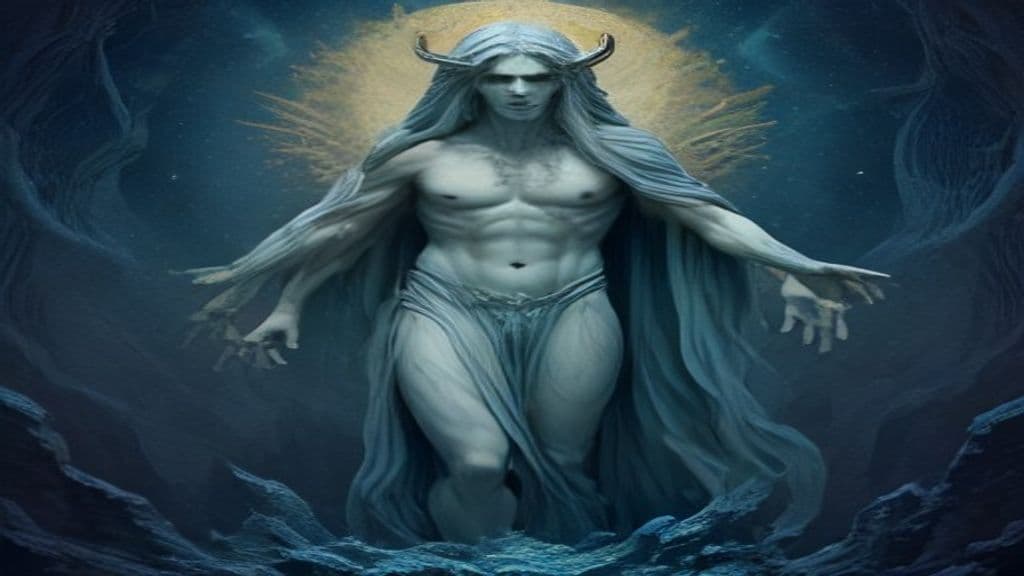
No single uniform iconography is prescribed across the class. Sources portray the 'Old Man of the Sea' figures as shape‑shifters who may appear variably and father either 'radiantly beautiful' nymph daughters (the Nereids) or hideous monsters; nymphs are presented as beautiful female figures; Phorcys is linked to monstrous progeny while Leucothea is described in sources as a 'shadowy sea‑deity' and her name glossed as 'white goddess'. Detailed visual attributes (specific garments, colors, hybrid anatomies) are not supplied in the cited material.
Members of the class exhibit a range of mythic functions: the Old Man figures are shape‑shifters and prophets; Poseidon is mythically credited with control over the sea and creation of horses and functions as a major patron of cities and seafaring; elder sea powers father nymphs and monsters whose names often encode metaphorical or geographical meanings; liminal figures like Leucothea mediate thresholds to the Otherworld and receive ritual offerings in contexts that mix mourning and worship. The tradition also frames human maritime skill—shipbuilding and navigation—as a principle for negotiating these powers.
Weaknesses
None recorded.
Wards
- ritualsacrificial propitiation to Poseidon
- ritualinvocation of Castor and Pollux against shipwreck
- ritualparadoxical offerings and mourning to Leucothea (sacrifice combined with frenzied lament)
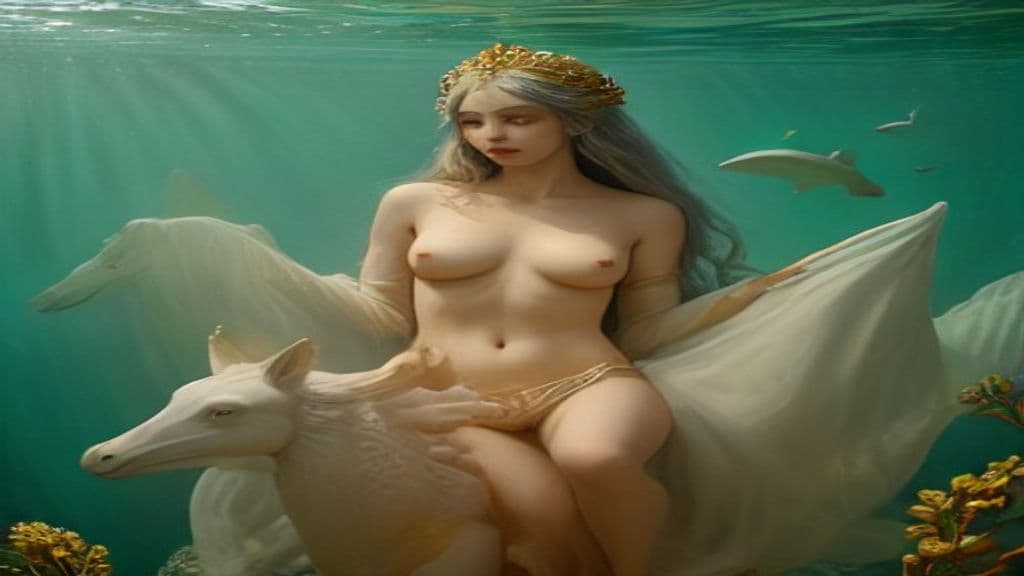
Nereids
Nereids are the class of female sea-nymphs in Greek myth, traditionally the fifty daughters of Nereus and the Oceanid Doris, associated especially with the Aegean Sea. They appear as beautiful young women who dwell in the sea and form the retinue of major sea-deities, acting as benevolent helpers of sailors and participants in mythic narratives.
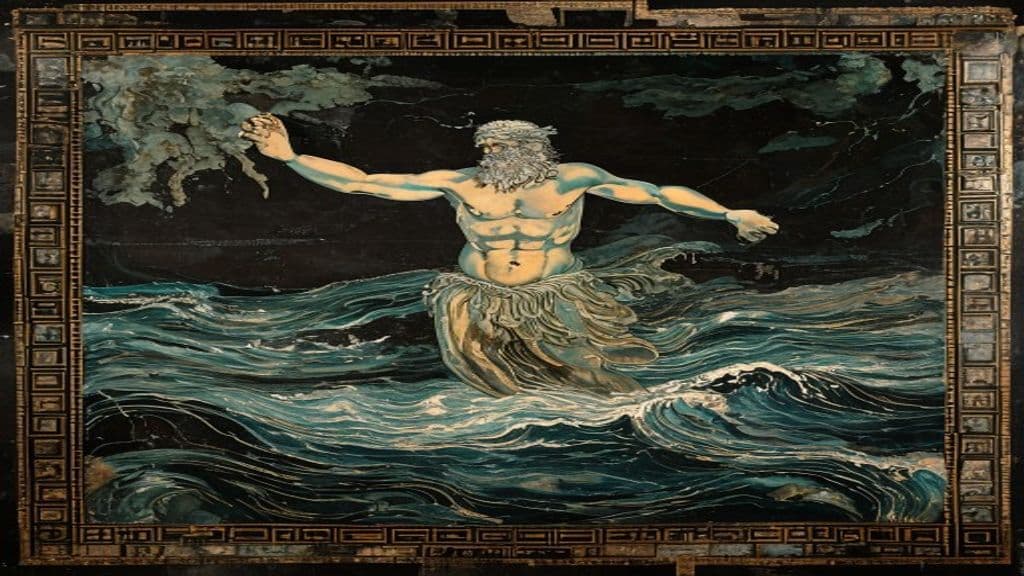
Oceanus
Oceanus (Greek: Ὠκεανός) is a primordial Titan in ancient Greek cosmology who personifies the great river that encircles the world and is named as father of the river gods (potamoi) and the Oceanids. He functions as a cosmological boundary-stream and genealogical progenitor in multiple Greek traditions and appears in literary theogonies and Greco-Roman art.

Tethys
Tethys is attested in the provided materials primarily as a Titaness of Greek mythic tradition who in a modern children's retelling is presented as an elderly storyteller and mediator among gods. The name is also widely reused in scientific and cultural contexts (a Saturnian moon, a gastropod genus, the ancient Tethys Ocean, and various institutions), usages which are naming transfers rather than continuations of the mythic figure.

Pontus
Pontus is attested in the supplied sources primarily as a Greek theonym meaning "sea" (Πόντος, Póntos) and as a geographic/ethnic designation for the region on the southern coast of the Black Sea. The corpus does not provide evidence of Pontus functioning as a discrete, living folkloric spirit with attendant rituals or abilities.
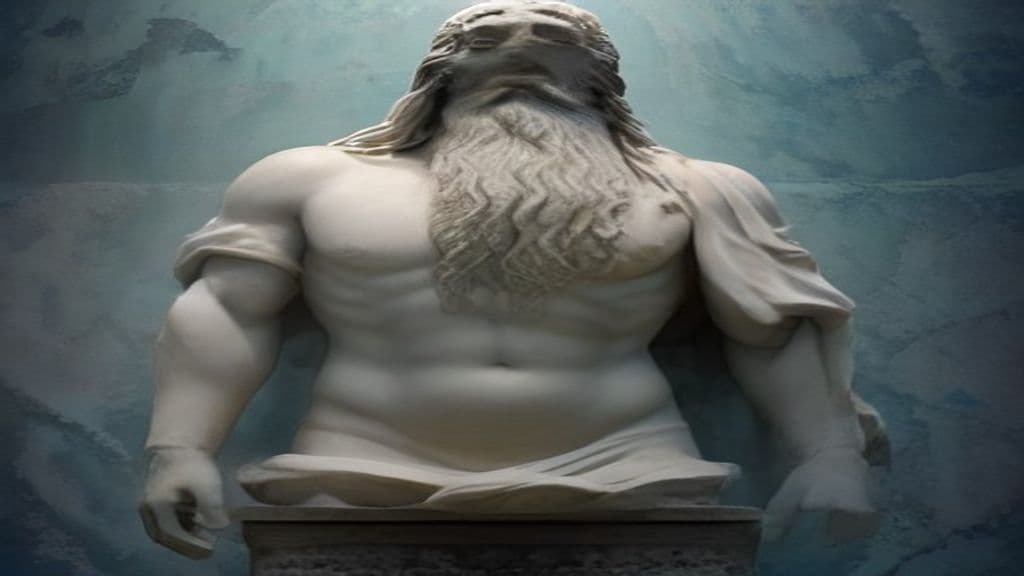
Poseidon
Poseidon is a principal deity of the ancient Greek pantheon, counted among the Twelve Olympians; he presides over the sea, storms, earthquakes and horses and functions as protector of seafarers and guardian of cities and colonies.
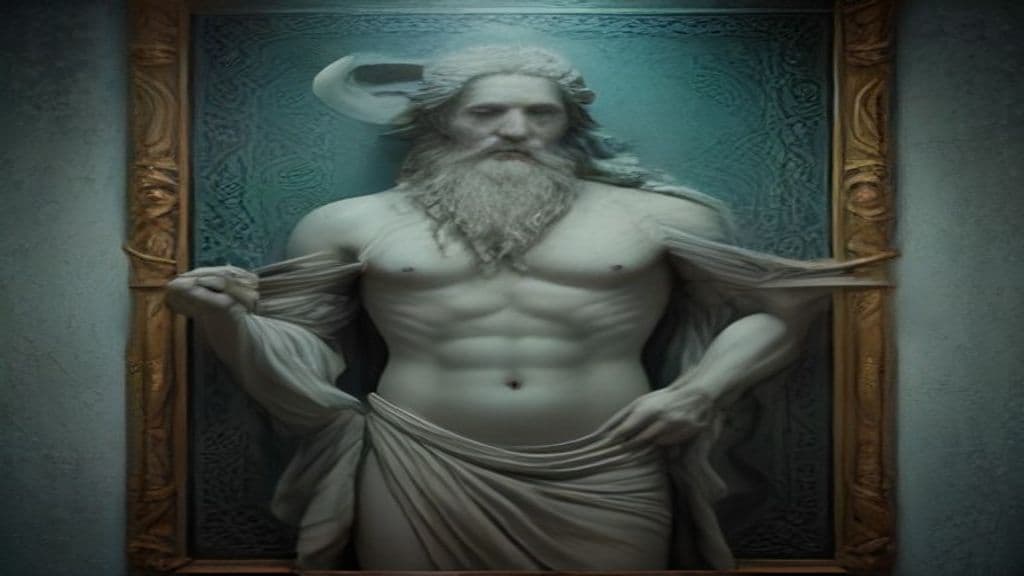
Nereus
Nereus is an archaic Greek sea-god, eldest son of Pontus and Gaia, known as an aged, truthful 'Old Man of the Sea' who fathers the Nereids and functions as a source of prophetic counsel; he shares traits with other sea-elders like Proteus and later recedes in prominence beneath Poseidon.
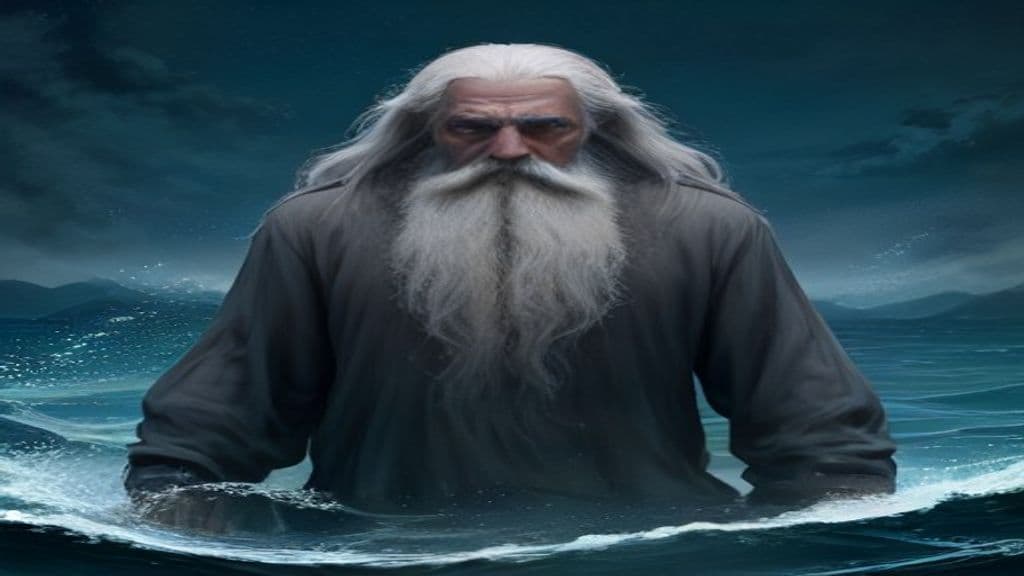
Proteus
Proteus is an ancient Greek sea-associated divine figure—an 'Old Man of the Sea'—noted for prophetic knowledge and the ability to assume many forms. He is typically portrayed as a subordinate sea-deity (often described as a son of Poseidon) who resists disclosure of hidden truths unless compelled by capture.
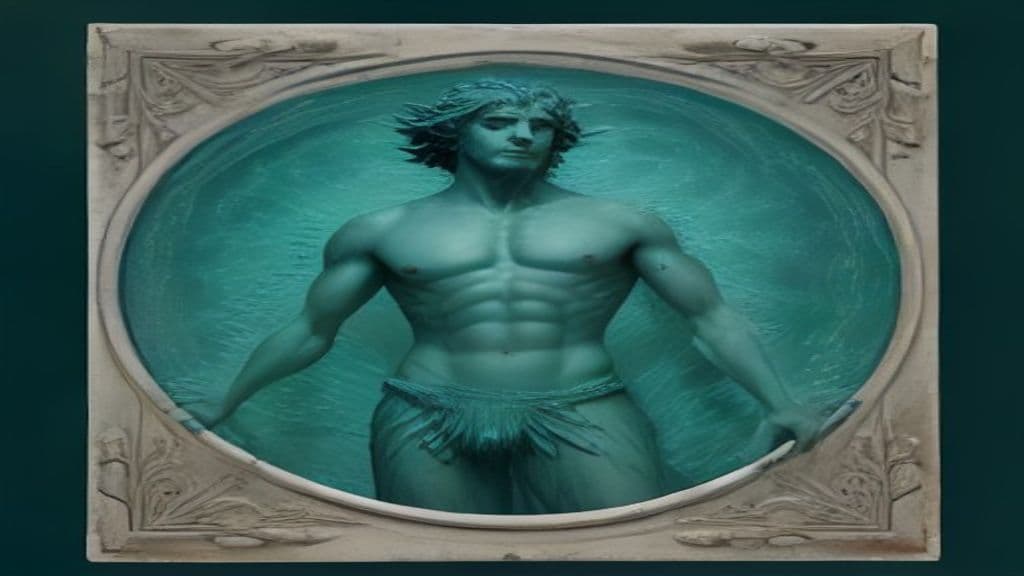
Glaucus
In classical Greek myth, Glaucus is a former mortal fisherman who became a sea-associated divine figure after contact with a magical herb. He is portrayed as a prophetic sea-being who dwells among the Nereids, is consulted by sailors and voyagers for prophecy, and appears in episodic myths (Argonauts, Menelaus, the Scylla/Circe cycle).
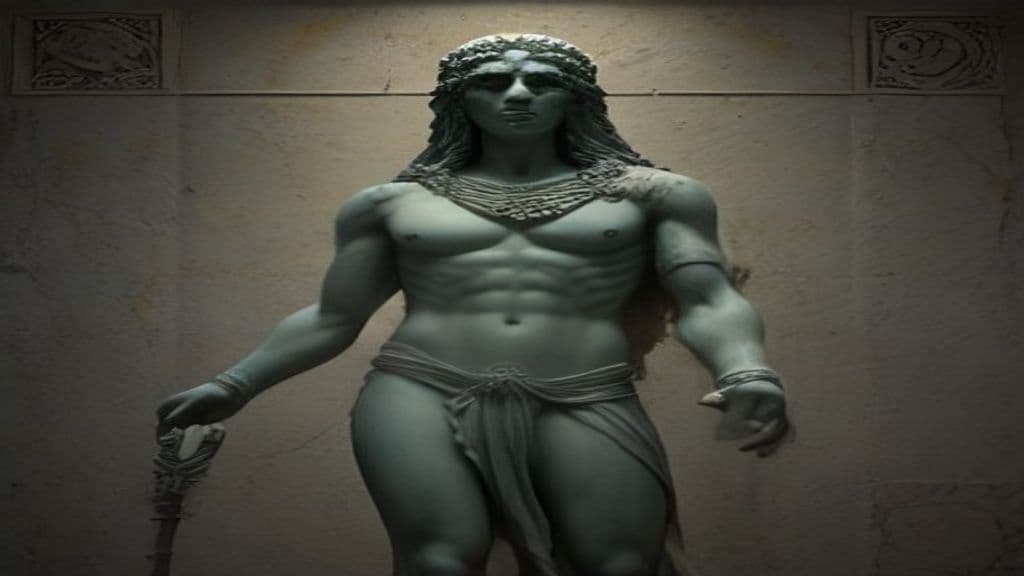
Phorcys
Phorcys (Ancient Greek: Φόρκυς) is a primordial sea deity in Greek myth, presented in Hesiodic genealogy as a son of Pontus and Gaia. Paired with Ceto, he is chiefly noted as the progenitor of a brood of archaic, often monstrous marine and chthonic beings and appears in iconography as a hybrid merman-monster in Hellenistic–Roman art.
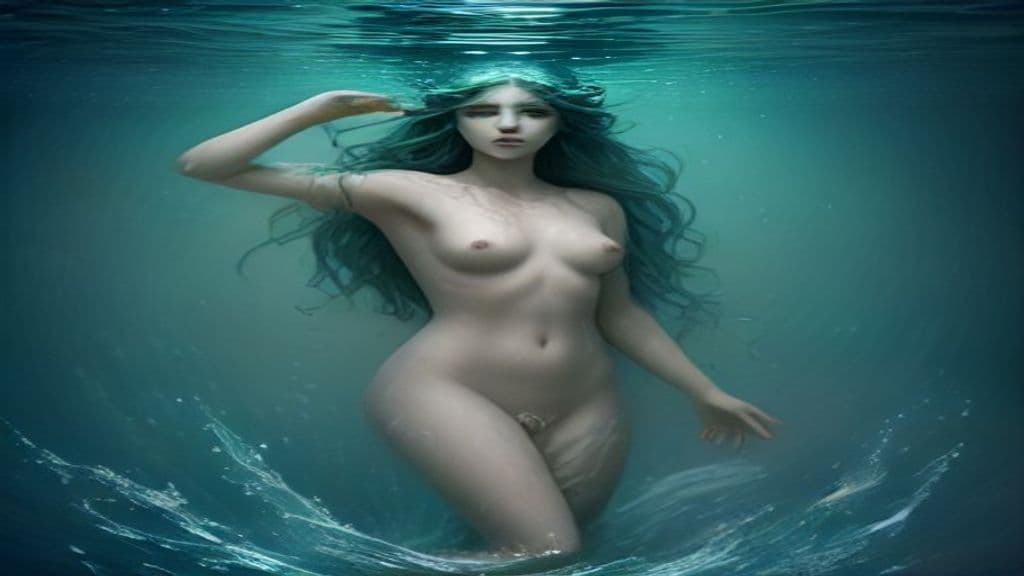
Thetis
Thetis is a figure from ancient Greek myth: a sea-nymph (one of the fifty Nereids) and a semi-divine water-goddess. She is mother of Achilles, a shapeshifter and protector who intervenes for gods and heroes, and a liminal figure tied to older sea-divinities and questions of mortality and divine succession.

Castor and Pollux (the Dioscuri)
A pair of mythic twin brothers of Greek and Roman tradition (the Dioscuri/Gemini) who occupy a liminal heroic/divine status. They function as patrons and protectors of sailors, travellers, horsemen and athletes, and are ultimately placed among the stars as the constellation Gemini.
Ceto
Ceto (Ancient Greek: Κητώ, Kētṓ) is a primordial sea goddess in Greek mythic cosmology, daughter of Pontus and Gaia, primarily notable as the maternal progenitor of various named monstrous beings (e.g., the Graeae and Gorgons) by Phorcys. Her name is etymologically linked to the common Greek term for sea-monster (kētos), and she functions chiefly as a genealogical and cosmological figure rather than an active, individualized actor in surviving narratives.
Athena
Athena is a major ancient Greek goddess associated with wisdom, handicraft (notably weaving), and warfare; she serves as a tutelary protector of cities—most prominently Athens—and is central to myth, cult, and civic identity in the Greek world.
Cebren
Cebren (Ancient Greek: Κέβρην) is a Greek river-god (potamos) of the Troad, a divine personification of the river Kebren near ancient Troy. He is named as a son of Oceanus and Tethys and as the father of naiads such as Asterope/Hesperia and Oenone; the nearby city Cebrene took its name from him.
Cepheus (son of Aleus)
Cepheus (Ancient Greek: Κηφεύς) is a mythic king of Tegea in Arcadia attested in classical Greek legendary cycles. He is portrayed as a mortal heroic-age ruler and warrior—an Argonaut and participant in pan-Hellenic heroic lists—who was killed, along with most of his twenty sons, during Heracles's campaign against Hippocoon of Sparta. The name Cepheus is also shared by another mythic king (the king of Aethiopia, father of Andromeda) and by a northern constellation; some later summaries conflate details between these figures.
Greek Mythology
A collective body of myths and stories that convey the cultural and religious beliefs of ancient Greeks. (Note: - Power tier: Incorrect (Ancient refers to a deity-level power tier, but the article mentions gods, goddesses, and heroes which have varying levels of powers) - Appearance: Not present in source mater)
Hades
In ancient Greek religion and mythology, Hades is the god who rules the subterranean realm of the dead and presides over all things beneath the earth, including subterranean riches. He is a son of Cronus and Rhea and one of the generation of Olympian gods, allotted the underworld after the Titanomachy.
Melete
Melete (Ancient Greek: Μελέτη) is one of the original triad of Boeotian Muses—Aoide (song), Melete (practice/contemplation), and Mneme (memory)—personified in ancient Greek cultic contexts as the principle of practice, meditation, or rehearsal necessary for poetic and musical performance.
Meliboea
Meliboea (Ancient Greek: Μελίβοια) is a personal name borne by multiple mythic women in classical Greek tradition: chiefly two Oceanid nymphs (an Arcadian/Okeanid of Mount Kyllene and a Syrian Oceanid loved by the river-god Orontes), a Niobid who survives the slaughter and becomes known as Chloris, and several mortal/eponymous heroines associated with places such as Ephesus and the Thessalian town Meliboea. The name functions across local genealogies and foundation stories rather than indicating a single coherent supernatural entity.
Miasma (Ancient Greek)
In ancient Greek religion, a miasma is a malevolent force arising from human wrongdoing that can cause catastrophe and has an independent life. (Note: - The draft states that a miasma causes catastrophe, disease, famine, or war, which is not supported by the source material. - Power tier: Primordial (not Ancient), since it's described as having an ")
Phoebe
Phoebe (Ancient Greek: Φοίβη, 'bright') is a first‑generation Titan in Greek mythology, daughter of Uranus (Sky) and Gaia (Earth). The name Phoebe is also used as an epithet for lunar goddesses (Artemis/Diana, Selene/Luna) and has been recycled in modern taxonomy and nomenclature (a moon of Saturn, plant and animal genera), but these are distinct referents rather than a single supernatural persona.
Polyhymnia
Polyhymnia (Greek: Πολυύμνια), also Polymnia, is one of the nine Muses in ancient Greek myth and cult, traditionally associated with sacred hymn, contemplative eloquence, and solemn poetic praise. As a daughter of Zeus and Mnemosyne she functions as a divine inspirer whose presence belongs to the sanctuary world of the Muses (notably Mount Parnassus and the spring above Delphi) and to the institutionalized practice of sacred song and oracular ritual.
Rhea
Rhea is a principal mother goddess of the Titans in ancient Greek religion and mythology, daughter of Gaia and Uranus, sister and consort of Cronus, and mother of major Olympian deities. In Roman reception she is identified with the Magna Mater (the Great Mother), reflecting continuity of her maternal and cultic role across Greek and Roman traditions.
Selene
Selene is the ancient Greek goddess and personification of the Moon, who drives her moon-chariot across the heavens. Daughter of the Titans Hyperion and Theia and sister to Helios and Eos, she embodies both the luminous aspect of the Moon and its function as regulator of the month.
Community Record
- [1]Greek water deities (Wikipedia). Wikipedia: 'Greek water deities' entry summarizing classical-era figures including Oceanus, Tethys, Pontus, Poseidon, the Old Man of the Sea figures, Nereids, Leucothea, and ritual notes such as Poseidon's horse-sacrifice and Leucothea's paradoxical festivals.wiki
- [2]Wikidata: Greek water deities. Wikidata item for Greek water deities, linked to related canonical names and identifiers.other